Patrick, GUGP's 2015 Guide Dog Puppy

Patrick, GUGP's 2015 Guide Dog Puppy
GUGP Website
Showing posts with label puppy raising. Show all posts

15 March 2016

My puppy keeps barking!

Barking is a natural behavior for dogs, and some dogs bark more than others. Some bark at certain things, some bark at everything. Sometimes it is an alert bark, sometimes a happy bark, or sometimes a protective bark. But for a service dog, barking is almost always a no-no. Nobody wants to be seated in a restaurant at a table next to a dog that barks because they heard a noise or someone that looks weird to them walks by. Or be in a hotel room next to another room that has a dog staying in it that barks at every bump or noise. One of the worst is walking with your own dog and having someone else walk by with a crazy reactive dog that goes nuts when it sees your dog. Unfortunately, I seem to be the poor person walking by with the crazy dog-reactive dog.
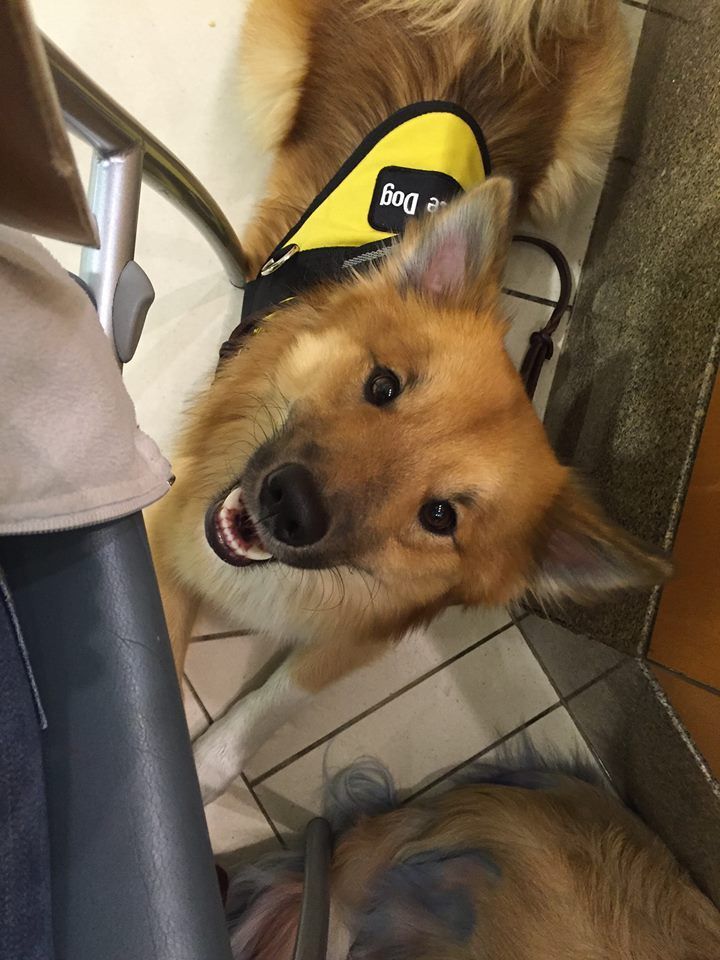
Patrick barking at other dogs has been an issue since we got him as a baby puppy. He is great with dogs he knows but very reactive when he sees dogs he doesn’t know. Around 14-16 weeks of age he was making pretty good progress and doing better and we were very excited by his progress. And then while on a hike (on a trail where dogs are supposed to be leashed) an off-leash Golden came running up to Patrick, Ricki, and me. It stood in front of us and stared. Well, Patrick really didn’t like that and went into a huge barking fit that went on even after the owner of the dog came and took it away from us. That one moment set Patrick’s progress back—all the hard work and training seemed to just disappear. After that day, Patrick was very reactive with almost every dog he saw on a walk or out in public. We had to start our training all over again.
How can you fix this issue? Every dog is different and will respond to training differently. This is our first time working a puppy through this specific issue. I have raised puppies in the past that were very fearful of different situations and the best thing for them was to take a break for a few weeks and not expose them to what was bothering them. Patrick, on the other hand, does better the more stimuli you give him. As an experiment I decided to take him to a pet expo a few months ago where we knew lots of dogs would be there. He barked a little bit with excitement when I got him out of the car, but then no more while we were there. Although I had a hard time keeping him from pulling at times while walking, to my surprise he was quiet despite being around over 100 strange dogs. Now this hasn’t fixed the problem but it was definitely a step in the right direction. 
Since then I have been working Patrick to walk quietly around dog parks—not in them, just around them. There are multiple dog parks close to where we live, so it is easy to work him at many different locations. My goal is to be able to walk Patrick up to the fence and have him watch the other dogs inside running and playing, all while being able to remain calm and quiet. We aren’t there yet but making baby steps. 
We are also making trips to pet store, where the goal is to be able to walk calmly and quietly through the store even if he sees another dog. Once again, he isn’t perfect at this yet, but making progress. For me, it is a lot less embarrassing to be in a store that allows dogs if Patrick lets out a bark or two, than in a store where we may run into a pet dressed as a service dog and he lets out a couple of barks (and yes, this has happened). 

Patrick can smell if there is a dog close by him and his body language does change. One time, we were shopping in Target and I noticed his body language change. Sure enough, someone was passing by with a small dog in the shopping cart. I got lucky that Patrick didn’t see it in the cart and we were able to continue without any outbursts. 
We are also now attending dog training classes to get Patrick around other dogs in a controlled setting. I purposely put him in a class called “dogs with attitudes” so that he would at times be “set up” to be around other dogs that bark at things, because he will often bark if another dog by him barks first. After attending two classes I already see some improvement. I did have to laugh a little bit when I first joined that out of the seven dogs in attendance five of them were German Shepherds.

I will admit that I do get a little anxiety when working Patrick in public. I never know when we will come across another dog. While Patrick is doing much better when multiple dogs are around him, it seems to be the surprise appearance of a single dog that sets him off the most. His barking is embarrassing at times.One time we were walking in a mall and he saw another dog across they way and barked. He completely frightened the people walking in front of us, who had no idea that Patrick was behind them. Not to mention that a 65-pound Shepherd barking can be a little scary to some people. 

Another time we were having lunch with a friend and were seated outside on the sidewalk because Ricki and Ozzy were there as well. Along came a person walking down the sidewalk with their dog. That dog barked at us and then everyone was barking. That was probably our most embarrassing moment.
Patrick’s barking issue isn’t going to away overnight. Issues like this take a lot of time, work, guidance, and patience to get through. Despite this issue being frustrating and embarrassing at times, I still have high hopes for Patrick. He has been making progress in the right direction and he is so solid on almost every other aspect a working service dog needs. He settles nicely, has great relieving habits, is very confident, super smart, loves to learn new things, and most of all seems to love to work. I hope that by sharing some of my struggles with Patrick’s training I can help other people who are raising not feel so alone with their struggles. Puppy raising is a journey with good days and, well, let’s just say not so good days. I have learned with past puppies not to give up when things are hard—sometimes they will really surprise you. Some puppies take a little longer to mature and learn, so give them a chance to grow and learn at their pace.

Amie

19 January 2016

New Year's Resolution

Part of being a service dog handler is transitioning from one dog to another. Unfortunately for us, service dogs can't work forever. Each dog has his or her own quirks, strengths, and weaknesses, and the transition can be hard.

You're with your service dog practically 24/7 for years on end, which means you both get used to each other's needs, signals, likes, and dislikes. Changing partners is a huge adjustment, and it's nearly impossible not to make comparisons between your previous and current dog (usually in the older dog's favor).
At Muir Woods with baby Kaline (then still in training) and Juno
(then still working mostly full-time).
Which brings me to my New Year's Resolution, which I'm going to do my best to keep: I want to stop (as much as I can) comparing my current partner, Kaline, to his predecessor, Juno. Well, except for right now, since I think it'll be interesting to do in a blog post!

Juno started service dog training when she was an adult, nearing middle age. Even when she was a pet, when we first adopted her, her general M.O. was to follow me around until I sat down somewhere, then curl up at my feet until I was ready to go somewhere else. You can see how that was a really handy tendency when she started working.
Juno during her training period at the San Francisco zoo with
her mentor, Jolanda (front), and SDIT pal, Hunter (left).

Though she was something of a hot mess as an under-socialized adolescent, by adulthood, Juno had grown to be an unflappably calm, solid presence. The only thing I can think of that ever fazed her during her working career was a performer cracking a whip on stage during a Cirque du Soleil show in Las Vegas.
Juno ignoring the festivities of Gay Pride in San Francisco
to pose for a photo.
Juno is also an extremely eager, creative learner. Not only will she do almost anything for food, she also took readily to clicker training. If she doesn't get rewarded for one behavior, she'll start running through a repertoire of behaviors and even think up new ones. Teaching her to do new things—like retrieve, carry objects around, and open and close drawers—was nearly always delightful and struggle-free. (Extinguishing bad behaviors, like her adolescent dog reactivity, was a struggle, though we eventually succeeded!)
With Juno in Las Vegas.
And another fabulous thing about Juno: Being part Lab, she has a basically Lab-shaped body, and thus every single piece of gear I ever got her fit her like it was custom-made for her. You don't appreciate that until you get a weird-shaped dog, let me tell you!
"Everything fits me, and I fit anywhere."
As you can see, Kaline had very big shoes to fill.

Kaline started training as a baby puppy. I like training dogs in general, but I especially love training puppies. They're a blast. But I'd never had my own puppy—Juno was adopted at 18 months, and my first dog, Angel, was about two when we got her. As a puppy, Kaline was a pretty quick learner, food-motivated like Juno, but it was exhausting being out and about with him. I thought I'd been pretty vigilant when working Juno—you're always on the lookout for possible distractions or threats to your service dog—but I didn't have to worry about her behavior. Not so with a puppy! Everything we encountered was a training opportunity: both a blessing and a curse. I quickly learned to wear a bait bag at all times so as not to miss one of these opportunities.
SDIT Kaline works on blocking (also known as covering).
He also wasn't, and isn't, nearly as creative about learning as Juno. Kaline does very well with luring (using a treat to help show him the desired behavior), but becomes easily bored and frustrated if he isn't getting hints. He won't just come up with new behaviors; he'll sit there and stare at you, then decide that your food isn't actually that enticing and go find something else to do.

Did I mention that nearly all of Kaline's gear beyond simple cape-vests has to be custom made? There's a reason he's lovingly known as the Princess Diva.

Where Juno is fairly aloof with strangers, Kaline is a social butterfly with both dogs and people. He just assumes that all new dogs and people are going to love him and be his new best friends. It was much harder for him to learn to ignore people trying to distract him, and it's something we are constantly working on. So many things that just came naturally to Juno, Kaline had to learn, sometimes laboriously over weeks. He had trouble learning to hold a long down-stay, so I began attending the "classic" movies religiously with him every Wednesday night. The ticket packages were cheap ($30 for six movies) and the movies sparsely attended—fewer people to notice if we had any trouble! I think we ended up getting three of those packages, and by the end his long down had improved markedly.

Teaching him to retrieve to hand seemed to take forever. What Juno picked up during one slow night at work, back when I had a job that wasn't dog-centric, Kaline took over a year to put together. Juno is very quick and doesn't need much amping up; once she realized there was a cookie in it for her if she picked things up and gave them to me, all I had to do was point, receive the object, and feed her. What Kaline needed was his Auntie Sonja, a soft zip-up pencil case full of high value treats, and for me to get SUPER EXCITED about everything to do with retrieving. Food just wasn't enough when it came to learning that. He needed me to be far more demonstrative than I'd ever been with Juno. Once Sonja helped me come to that realization, his retrieve improved swiftly and we're now to the point where I can use retrieving an object as Kaline's reward for doing something else.
During a long, boring airport wait, I can now
entertain Kaline with retrieving games.
Enough about Kaline's shortcomings. Now that we've had our own place for a year, I've come to realize anew just what a fantastic partner he is. For one, he is just about the most hilarious dog, service dog or pet, I've ever met. He makes me laugh every single day. Much of the time he falls asleep with all his feet in the air. Sometimes he finds tennis balls on our walks and, since he knows if he can get it home he can keep it, will doggedly carry the slimy object for a mile or so and then cuddle with it when we get back. He also has a huge obsession with sardines, and watching him struggle to contain himself while I make his dinner is endlessly entertaining. Kaline is quite a silly boy when he's not working, and he has no inhibitions about showing it!

Things that Juno does because I ask her, Kaline does because he absolutely loves to do it. Juno is not, in general, a cuddler. She would do deep pressure therapy for me, but she would get off whenever I told her and be very glad to be finished. Kaline will sometimes just do DPT, because he already knows I need it, and he will refuse to get off if he senses that I am still not calmed down enough. As an added bonus, he adores cuddling in bed and basically sleeps on me or pressed against me as tightly as possible. This might sound like annoying bed-hog behavior, but for me, it has improved my sleep tremendously.
Kaline delights in snuggling (off duty) and deep pressure therapy
(on duty).
Momentum pull, a task I use a lot and which Juno never found all that wonderful, is Kaline's calling. Where Juno never really got past needing a target person to follow, Kaline learned to pull in a straight line, follow directional commands, and seek out the path of least resistance in record time. He loves it. He's great at it. It's something you can end up taking for granted, since it seems so natural for him (much like holding long downs was natural for Juno).
Kaline in the early stages of his
momentum-pull training.
And while as a puppy, Kaline could be momentarily unnerved by random things—a fire in a fireplace, period costumes, large plastic figurines—as an adult, I think he's even more solid than Juno.
Kaline as an adult in front of the fireplace that scared him
as a SDIT.
His reaction (or lack thereof) to fireworks never fails to amaze me. We can be in the lower deck at a ballpark, with fireworks being set off on the field, and he just chills out on his mat, either watching the show or staring at me in hopes of getting rewards. I taught him early on that loud noises of all sorts mean he's probably going to get food, and have never regretted this!
Fireworks in Toledo—"Food now?"
He lay by my feet in the front row of Odysseo, a Cavalia show featuring about 30 horses performing each night, and had no problems (well, he didn't really like being splashed by cold water at the very end of the show, but can you blame him?). He still doesn't particularly like trucks rumbling by very close to us, but otherwise, nothing fazes him.
At Odysseo.
Learning to teach the way Kaline learns best—which is not always the way Juno learns best—was a really big part of us becoming a good working team. In some areas he needs more or different motivation than she does, while in others, where Juno needed a ton of encouragement, Kaline's got it, thank you very much, and please stop chattering, Mum. It took a long time, but for about a year and a half or so, we've been working smoothly as a team. It's become much less me showing him what to do and how to do it, and more both of us just knowing what needs to be done.

He now knows all my weird little signals, and I know his. For example, I taught him to shake off on cue because 1) I really don't like it when he does that inside restaurants and 2) even when he's out of gear, each shake off seems to last several minutes, like I just soaked him in water. Kaline knows he isn't supposed to shake in restaurants or when he's doing harness work, so he'll let me know if he needs a quick "shake break" by doing what looks like a head tremor. He'll just twitch his head a couple times, and then wait for me to take him to an appropriate place and give him his cue.

It takes a long time to reach the level of comfort and trust with your new dog that you had with your previous dog. And even though I've had that for a while now with Kaline, I still compare him to Juno (along with other friends' service dogs) far too often. Sometimes you forget that your previous partner had some things they struggled with, and some working quirks you found annoying. No dog is completely perfect, and even the ones you think can do no wrong have off days. It's important to appreciate everything that's wonderful about your current partner, and that's what I've set as a goal for 2016.

Because one day, I'm going to be training NextDog. (Hang out around service dog handlers enough, and you realize that we are constantly thinking about and tweaking plans for NextDog. It never stops.) And when that day comes, I know I'll be wishing I could just work with Kaline forever.

Colt

12 January 2016

Choosing a service dog breed

Editor's Note: Not all of the breeds pictured are suitable for inexperienced handlers/trainers. However, in the right hands, they can be excellent working partners.
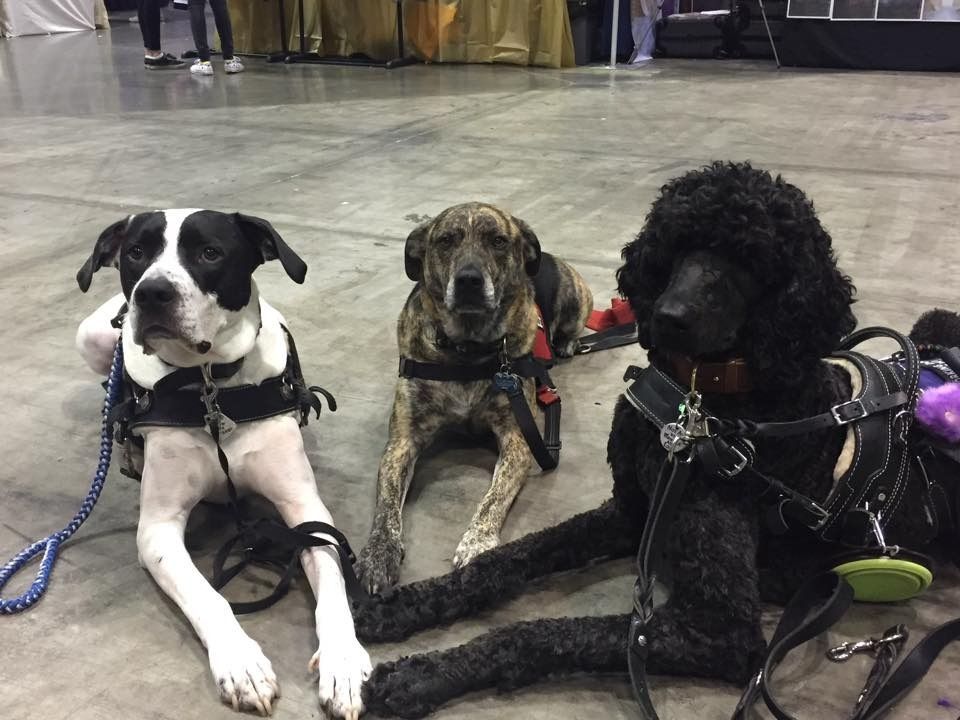
Service Dog Cow, Pointer/American Bulldog Mix
Service Dog Luke, Plott Hound/Lab Mix
Service Dog Watson, Standard Poodle
You've done your research, spoken to family and friends, and you've decided a service dog will be a valuable part of managing your disability. Now you need to pick a breed.

First and foremost, the most important tip you'll ever hear: Do not assume you'll be the exception to the rule. 

The goal of having a service dog is to be able to gain back some independence. Getting the same high-energy breed you had and loved as a kid now that you're an adult couch potato is not such a good idea. Just like when training our dogs, you want to set yourself up for success.
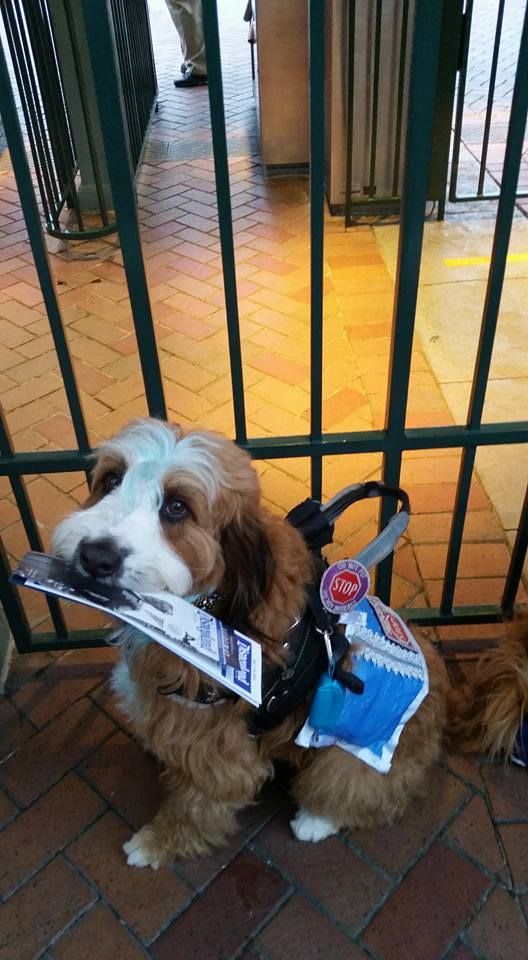
I'll mention this a lot throughout the article: It's about the specific dog, not the breed. It's important to remember that dogs are living creatures. They will all have their own personalities. Knowing the common issues for breeds is going to help you narrow it down from all to a few, and from there you can start to look at the individual dogs instead of individual breeds.

You'll also need to research your breeder and the lines they have. Just because a breeder is registered or has papers for their dog does not mean they're a responsible breeder. Take the time to ask questions, see where the dogs are raised, ask around.

Good First-Time Service Dog Breeds

These are just examples, and good first-time breeds are not limited to those mentioned here.

Labradors: There's a reason these are some of the most commonly used dogs. While not all Labs will be happy-go-lucky lovers, there are a lot of responsible breeders out there with some fantastic working lines.
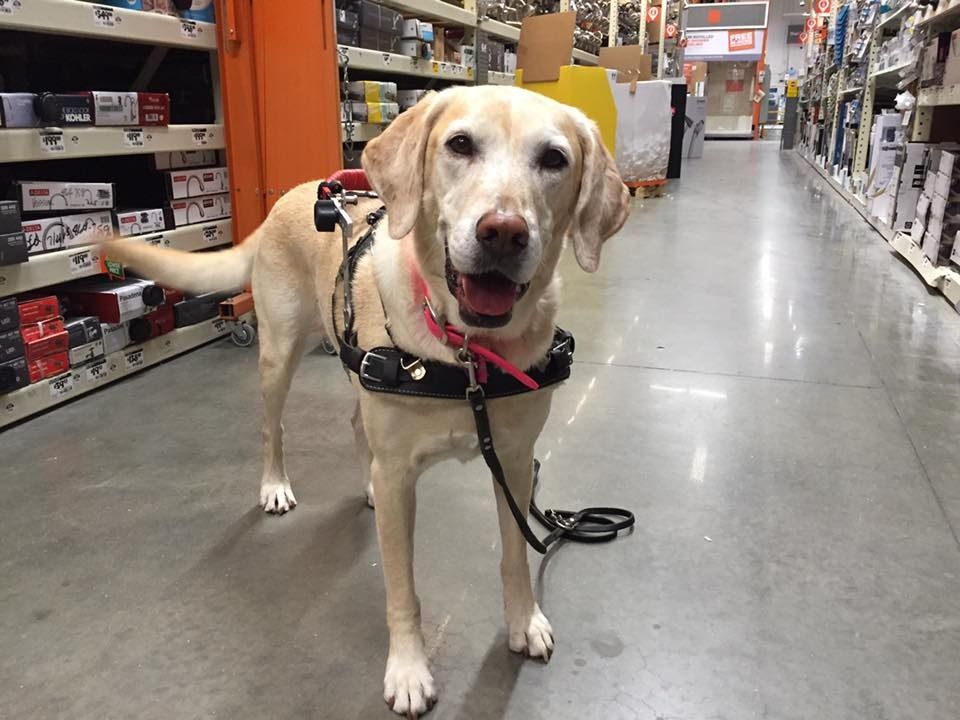
Service Dog Daphne, Yellow Labrador
One of the best things about these dogs is the general public recognize them as "working dogs." Yes, they generally recognize them as guide dogs, so you may get a few comments about that. However they're also likely to instantly connect a guide dog handlers' well-known right for public access to you and your dog, causing you fewer issues.

Golden Retrievers: Again, there's a reason they're common. While grooming maintenance will be a little more for Goldies than Labs, they tend to be a willing and loyal breed.
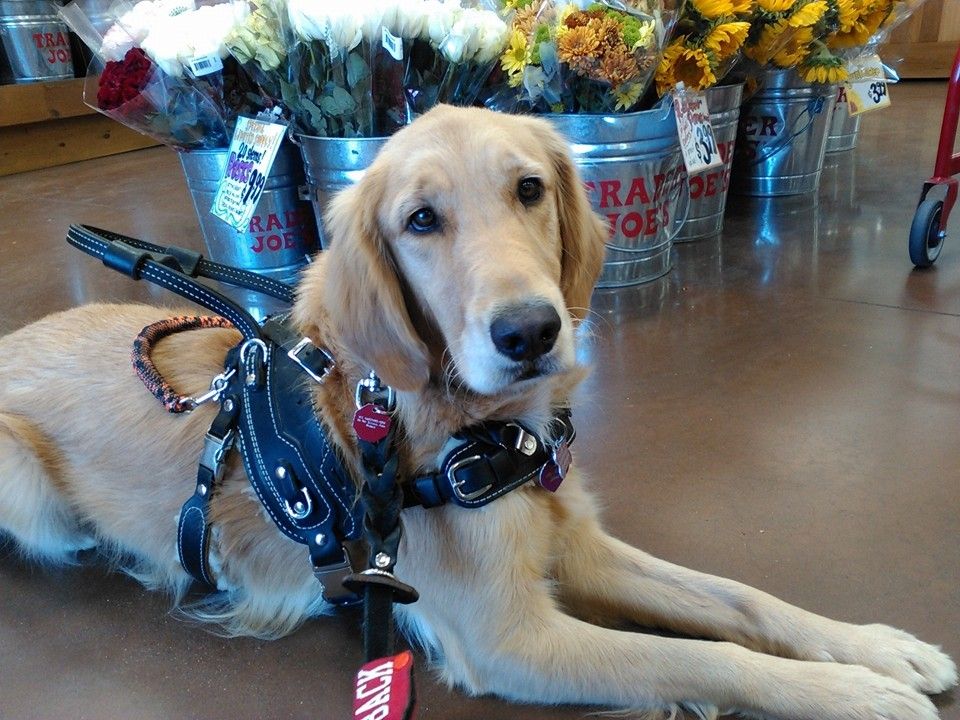
Service Dog Sky, Golden Retriever
Standard Poodles: A wonderful breed, but do take a lot of grooming. Keep in mind as well that a service dog's level of hygiene and grooming compared to a pet dog are generally worlds apart.
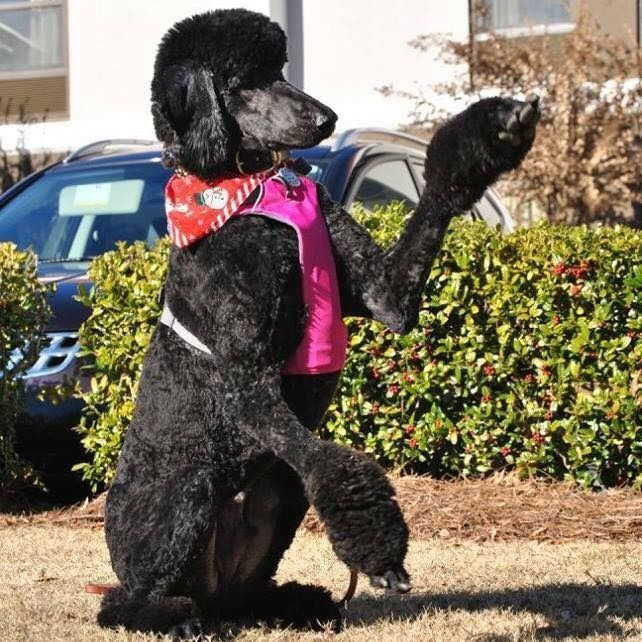
Service Dog Watson, Standard Poodle
Some lines of Poodles have shown aggression issues stemming from fear. So, as with all dogs, well-balanced socializing is key.

Collies (Smooth & Rough): An incredibly smart breed with a good will to work. However, if you can't keep up with them, they'll leave you in the dirt. Remember to match your potential breed with your own lifestyle. Don't get a Collie if you're hoping to go from a couch potato to a world class mountain climber. Because if you don't make it to be a world class mountain climber and this dog is left to sit around all day, you will suffer. They will find their own thing to do and you will most likely not enjoy it. There are very few dogs out there who wouldn't love to go exploring with you, no matter their breed. So be sure to match a potential dog with your potential worst day to give you the best chance of success.
Service Dog Lucas, Rough Collie
Service Dog Billy, Smooth Collie
Greyhounds: A newer breed in the world of service dog work, they're quickly picking up popularity. More and more people realize these dogs are bred for sprints, not endurance. They give you the large size which most people appreciate, without the buckets of energy.

However, they are restricted in some countries. So please be sure, no matter what breed you get, to think long term. Do you plan on travelling? Ask around and see if there are any odd breeds that are restricted in places you're likely to go. In Australia, unless a Greyhound has passed a special test they must be muzzled at all times. Will a muzzle get in the way of your dog's tasks?

This leads me to an important tangent. It's important to be honest with yourself about the impact a dog's breed/looks will have on your life.
Service Dog Cow, Pointer/American Bulldog Mix
You're about to start going out into public areas with a dog, like it or not people will stop, they will point, they will try to take photos, they will notice you more.

The breed you choose will affect things like public access. Cold hard truth here, and I'm sorry, but if you go for a bully breed type dog over a Lab, you may find more people acting like morons around your service dog. Of course that's not always the case. I had a Shar Pei service dog in training that I worked with briefly. A lot of people would take the time come over and express how wonderful it was to see a "bully breed" out in public working so nicely.
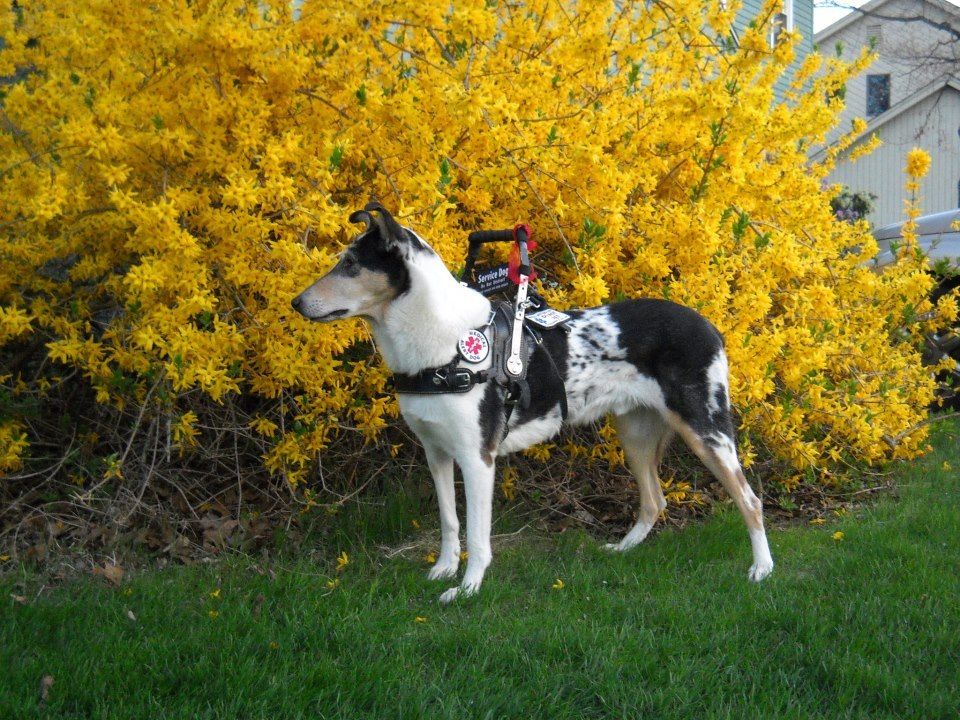
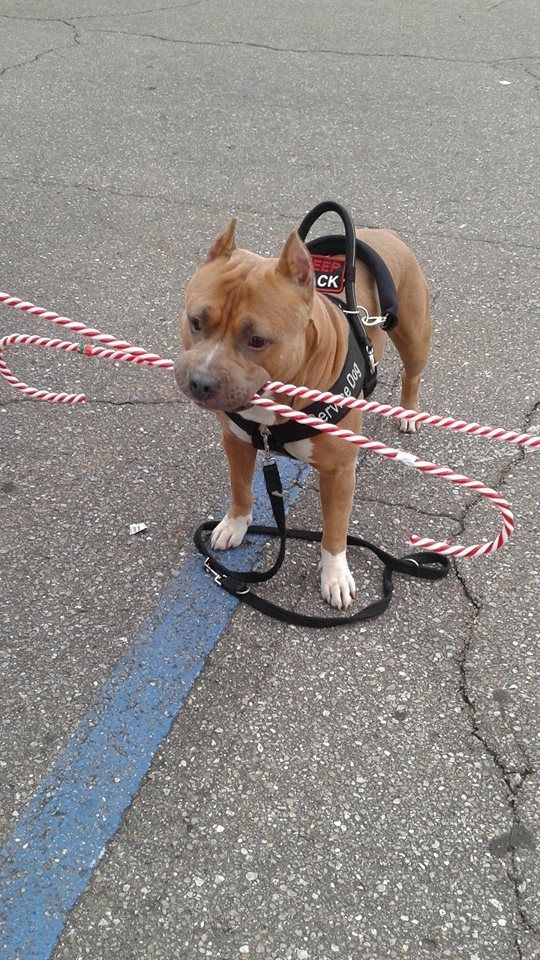
Service Dog Doogan, American Pit Bull Terrier
So the public may not always have the reaction you think they will. Nonetheless, it's something you have to be willing to consider in great detail. Once again, please don't assume you'll be the exception to the rule. Going off of that belief will only heighten your chances of failure, especially if this is your first service dog. Please think about your options and set yourself up for a win.

Poor Breed Choices for First-Time Service Dog Handlers


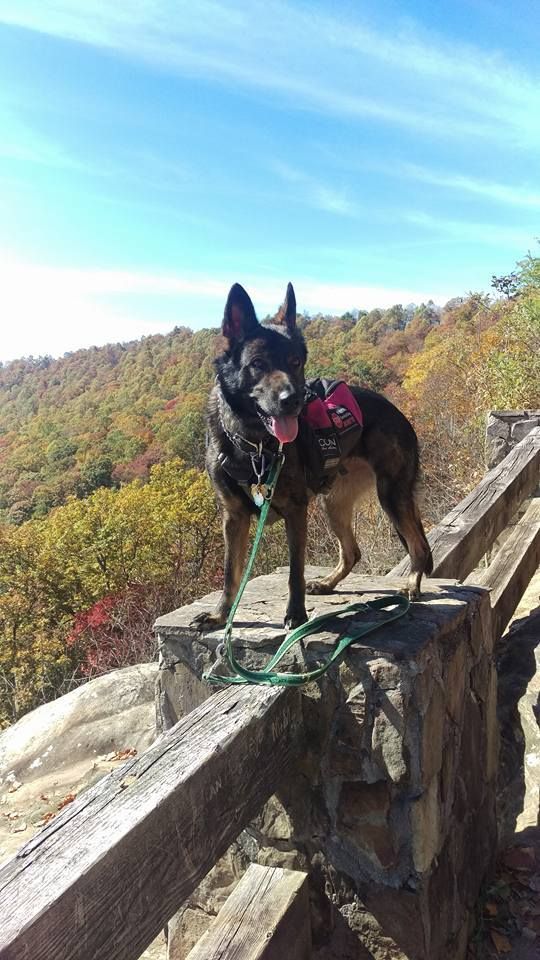
Service Dog Shanti, German Shepherd Dog
German Shepherds
Dobermans
Rottweilers
Huskies
Belgians
Malamutes
Any brachycephalic breed
Any breed that will have a short working career such as a Dane or Mastiff

I won't go into all of the reasons for these because basically they're all the same. These are breeds that are incredibly intelligent and often this intelligence comes with a lot of free thinking.

These breeds can without a doubt make wonderful working dogs, but you need to know how to work with them. Experience is important here. You can, of course, be one of those people who just gets on with it and does fine, but you're trying to set yourself up for a win, remember. So take steps towards these breeds by all means! But don't just jump in because you saw one on a show once and they were amazing.
Service Dog Link, Icelandic Sheepdog
Brachycephalic breeds are not on here (squashed-faced dogs, like Boxers, Bulldogs, Pugs, etc) because they can't make wonderful working dogs. They can. However, if you don't know how to work a dog and condition them and read their body language, you'll likely miss the important warning signs of their health issues and they'll be washed out earlier than need be. These types of breeds take a lot of care and usually for a first time service dog handler, it's a bit overwhelming.

Finally, the slow-to-mature breeds. Again, there's always the exception, but on a whole these types of breeds tend to be more difficult for first-time service dog handlers because they can take longer to mature, which can be tricky when you're hoping to have a dog to support you.

If you're going to go with a giant breed, it is even more important to make sure you find a very reputable breeder and know your breed inside and out. The bigger the dog, the bigger the health issues they tend to have.

Factors To Consider When Considering a New Prospect

Size at maturity: What is the size of the breed that interests you? Keep in mind that males and females can often differ in sizes. It may not be much, but those extra three inches can be the difference between a safe working dog for mobility support and a huge vet bill. Please don't go to a breeder who breeds above-standard sizes—this is a dodgy way of breeding and I can guarantee they're not a reputable breeder if they do such things.
Service Dog Rico, Papillon, and Service Dog Travi, Chocolate Labrador
Longevity: This is a big one to consider when thinking of larger breeds for mobility assistance work. Another factor to investigate is the average lifespan of a breed. Please be sure, once again, to be honest with yourself about this issue. You may have heard of that one exception to the rule, a Great Dane who lived to be 10, but know that as a whole the breed on average lives for 5-7 years.

A larger or giant breed dog may not mature until well after their second birthday. Make sure to consider its working longevity as well as its general life expectancy. Most Great Danes, while living for 5-7 years, only get 2-5 years of solid mobility work in, as they take longer to mature and if pushed into work too young will need to retire sooner as well.

Hereditary breed traits: Each breed was developed for a purpose. While there are always an exceptions to the rules, you need to think about the general standards of breeds. This dog will be there to make your life easier. Picking your breed based on false or unrealistic possibilities will likely lead to issues for both you and your future partner.
Service Dog Apollo, Australian Shepherd
If considering a breed developed for hunting, herding or guard dog work, realize that the traits that made a dog of that particular breed an excellent hunting dog, an effective sheepdog or a successful guard dog do not disappear just because the traits are no longer highly desired by most dog owners. The ancestral urges to hunt, swim, chase livestock, sound an alarm, kill predators or drive away strangers that dare approach are likely still there lurking under the surface.
Service Dog Gir, Shetland Sheepdog
Guardian breeds or breeds originally bred for fighting/aggression can be a little more difficult for the newer handlers to train. If you choose to ignore this warning and work with a stronger breed, please respect their heritage. Learn how to train with their breed traits, using their weak points to turn into strong points and strengthening the traits you were attracted to originally.
Service Dog Evan, Doberman

Be sure to consider the traits of your own disabilities as well. Breeds with these types of instincts are not generally suggested for people with psychiatric issues as they can become overly protective in times of trouble.
Coat Care: A simple point that a lot of people don't take into full consideration when making the final choice on breed is that a service dog must be kept at a very high level of grooming and hygiene as they're in areas not usually open to dogs. Once again, please be brutally honest with yourself about this.
Service Dog Sulley, Mixed Breed (aka Slovakian Mop Dog)
Picking a service dog takes a lot of planning and thought. If you don't think you'll have the financial or physical ability to manage the grooming needs of your final chosen breed possibilities, then take some time to reconsider.

Age: One of the most important decisions to make is whether to start out with a young puppy or to seek an adult dog, 18 months to three years old, which can commence training immediately. This is a huge thing to consider and has its pros and it's cons.
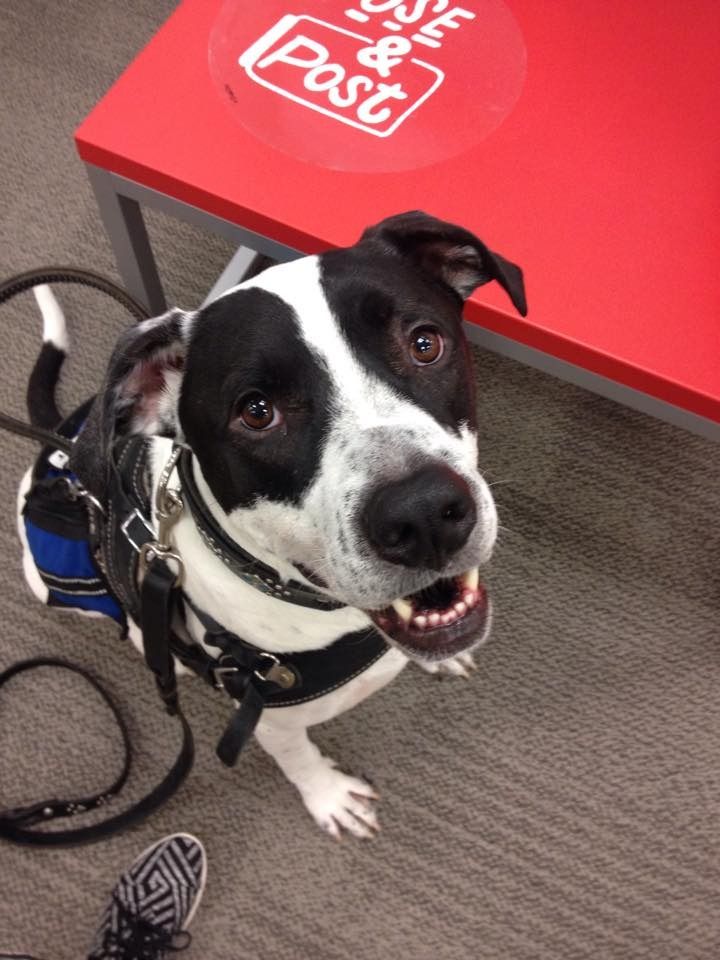
Service Dog Willow, Bully Mix
If this is your first service dog, I would suggest starting with a young adult so you have more of an idea what you're working with by way of temperament etc. While training can take up to three years to transition from service dog in training to Service Dog, it's generally easier for an adult dog to get into work sooner as they're physically and mentally more mature.

Gender: A female usually is smaller and has a shorter coat/less feathering when compared to their male counterparts if spayed. A female is equal to a male in terms of competency in this career. Both genders tend to be pretty even in temperament, but do take into consideration desexing (neutering/spaying).
Service Dog Bindi, Kelpie
Females who are intact may have issues with hormones and spot bleeding, whereas males who are intact may have issues ignoring other female dogs who're in heat.

Keep in mind, there's a lot of interesting research being done about when and how to alter dogs. So please consult a vet and/or do some research online for further information about the pros and cons of these choices to make sure you have the latest information.

Bottom line, everyone is different. Just as every dog is different.

Please take all of these things into consideration when choosing a breed. It's not a decision to take lightly.


Robbi Flynn
Robbi is a service dog handler in Australia who owner-trained her dog, Musa. She can be reached through her website.


05 January 2016

When not to crusade

One day, I was browsing through my newsfeed on Facebook, as per usual, when an interesting photo popped up. It was a peer of mine holding her dog in a locally owned arts and crafts store. I looked at the comments, and the most recent was one of her friends asking: “Wow, they let you bring him in the store?”

For some people, this would have alarm bells ringing in their head. Because somebody is obviously going to reply, “They asked me if he was a service dog, I said yes and that’s all I had to do,” or “Ha ha, yeah, I just say he’s a service dog and they can’t kick him out.” It’s a struggle many handlers have come across. “Fake” service dogs, or more accurately, pets that are portrayed as service dogs, are certainly a problem for service dog teams. I know of some teams where the service dog has had to either go through retraining or be retired from work entirely, due to an unfortunate encounter with a pet dog in a place where the pet should not have been.

Yes, it would be a real kick to the face for this peer of mine to have responded with affirmation that she had, in fact, misrepresented her pet as a SD. Considering we have had classes and outings together, before and after Velvet and I were a working team; I should have every right to go in tooth and nail, bombs away, right? How dare she do this to me, to other teams?

No. All I had seen was a photo and the poster had not responded with any indication that she had posed her companion dog as a service dog. In fact, my phone had a notification that there was an additional comment on the photo. Scrolling down, she had responded to the person asking how she took her dog into the store. Her response: “I asked the owner if it was okay if I brought him in.” Bingo! Some stores, as long as they are not violating health department codes, are pet friendly. I commented explaining how some non-pet stores can be pet-friendly, and was thanked for the explanation.

Now, imagine if I had gone in prepared to start a war over this. Feelings probably could have been hurt over my assumption. Rather than being known as a friend who would gently educate, I would be known as a trouble-maker who can’t enjoy a good photo of a cute dog in a dog-friendly store. Also, this person knows I am a service dog handler. What example would I be setting for her as one of her few, possibly only, friends who uses a service dog to mitigate a disability?

How long did it take to avoid potentially starting a fight? About five minutes. Unless a person is blatantly saying, “I’m just saying my pet is a service dog to get him into stores,” we cannot know the full story behind a picture. Many people are uneducated about the laws behind service dogs. How many handlers knew all of the laws before utilizing a service dog to improve their daily life?

I am not saying to sit every person down and start with the history of service dogs being utilized. You do not have to go out of your way to educate, especially when you have your own daily life schedule to attend to. All I am saying is, be kind and do not make assumptions. Proper education of service dog laws in America is desperately needed. Simple misunderstandings due to  lack of service dog education are experienced by different teams every day, such as a greeter saying “Dogs aren’t allowed in here,” or a child exclaiming, “I didn’t know they let dogs in here!” It doesn’t take an entire lecture to gently educate these simple misunderstandings.

With the emergence of social media, many people have assigned themselves the task of hunting down fakers. Do some people blatantly pose their pets as service dogs, knowing exactly what they are doing? Of course. There are also many other cases that could be the story which people do not know. What if the person has been advised by their health professional to get an emotional support animal and is not educated about the different between ESAs and service animals?  What if the individual does have a disability that could be mitigated by a service dog specifically trained to assist with the individual, but doesn’t know how to get started? Until the full story is posted, assumptions should not be made about a snapshot.

Many misunderstandings service dog users encounter with the public are not direct insults to the team, but simply a lack of education. This is why I am glad Growing Up Guide Pup is dedicating themselves to educating the general public in various ways. Aside from laws, Growing Up Guide Pup also showcases the adventures of puppy-raising, introducing readers to the various types of service dogs, and much more. Even as a service dog handler, I love reading the articles that are posted by guest bloggers and watching Matt and Amie’s vlogs of their puppy raising adventures. The website, videos, and social media tools utilized by GUGP are a vault of valuable educational tools.

Sara

17 November 2015

The Gift

I sometimes find it ironic that one of the biggest gifts I’ve ever received was given to me by complete strangers. I usually reserve the most valuable, time-consuming presents for my close family members, so the idea that someone would put such great effort into a gift for a stranger is, at times, baffling to me.   


The idea that someone would prepare such a gift 38 times is downright mind-boggling.


But that’s exactly what my dog, Roja’s, puppy raisers did. They raised 38 puppies prior to Roja. Of course, not all of those became guide dogs and not all of them were long-term raising situations, but from what they shared, they have seen a significant number of their pups graduate as guide dogs. In Roja’s case, they actually co-raised her with another family, due to work scheduling issues. The cooperation of two remarkable families resulted in the creation of a very adaptable, calm guide dog, which is exactly what I needed.


My raisers’ hours of work and play with Roja resulted in a  4-legged angel with a set of eyes that help me move smoothly through life. As if that gift weren’t enough, my raisers gave me other gifts on graduation day. They brought a toy they made for Roja, but more meaningful to me, they gave me the words I needed to hear that day. They told me that they could tell Roja was meant to be a guide dog from the time she was a puppy.


Before meeting them, I had been nervous that the interaction would be difficult, that maybe they’d be sobbing over the sadness of saying goodbye to her, as I had heard some classmates describe about their graduation day meeting with their previous dogs’ raisers. Such a reaction would have been understandable to me. I know that puppy raisers wake up in the middle of the night with their puppies in the early days, that they spend countless hours working with and training these pups that are constantly by their side and become part of their families. It wouldn’t have surprised me nor annoyed me in the least if there had been tears.


One of my classmates had told me that her first raisers had told her they had hoped the pup would never make it as a guide dog so that they could have adopted it instead. She felt bad taking their pup as her guide dog. Even this remark, as awkward as it sounds, is understandable to me. I could see how the sheer amount of time and effort spent raising a puppy could evoke such feelings. But I had also heard about raisers who gave incredible reassurance and encouragement to new guide dog users on graduation day.        


One classmate told me that his first puppy raiser’s parting words were: “She may be our puppy, but she’s your dog.” I appreciated hearing the distinction put in those words.


And I appreciated the words of encouragement from Roja’s raisers. I think after raising so many dogs, they had learned to detach themselves emotionally, and maybe since she was co-raised, they weren’t as attached. But they put a tremendous amount of time and effort and love into a puppy that they eventually gave up for a complete stranger. And then, as if that weren’t enough, they drove several hours to send Roja off with a proper farewell, and they offered that same stranger the gift of letting yet another puppy go graciously and with meaningful words.


They later sent me an email, telling me that they both felt that Roja seemed happy with me. They had no idea how much I doubted Roja’s and my bond at the beginning, so the idea that they would encourage me in that exact area  meant so much to me, especially since they had spent enough time with her as a puppy to assess whether she looked happy.

The interesting thing about receiving such a sizable gift from strangers is that there’s no suitable gift I can give in return that would be able to convey my gratitude. I gave Roja’s raisers framed pictures of Roja and myself, which seemed almost comical in its simplicity on graduation day, compared with the gift that would be leading me home. I can only hope that Roja’s raisers received an intrinsic gift as they watched Roja and me graduate. That watching a stranger gain newfound mobility, confidence and freedom as a result of their sacrifice made it somehow worth it for them. I have the sense that this must be true, or they wouldn’t have continued raising pups all these years. Even if it’s not an equal exchange, however, that’s the best part about gifts. When given genuinely, they are given without expectation, even to strangers.


Joy Thomas

24 September 2015

GUGP and Puppy in Training TV

Is it easy to start a web video series about puppy raising?  No. The number one most difficult part about starting a web video series for me was getting that first Puppy In Training TV video published. In fact the series was supposed to start with the puppy before Dublin.

It all started shortly after turning in puppy in training No. 1, Stetson.

Puppy in training Derby at the beach
Before picking up Derby, puppy in training No. 2, I had a grand idea to document his journey as I had done with my first pup, Stetson, on the Puppy in Training blog. This time, however, I would use my brother’s camcorder and publish videos instead of writing on a blog.

Armed with my brother’s camcorder and a couple of friends, we drove out to Guide Dogs of America to start Derby’s video adventure. I got some nice video clips of Derby and his littermates at GDA puppy pickup. The following weeks, I took more great footage of Derby and his pals playing at puppy kindergarten, obedience classes, and outings.

Then everything went wrong. I had no idea how to edit a video. I had no idea how to do voice over or talk to the camera. I still don’t know many things about creating a good video, but I’m learning.

So what happened to all the great footage I had of Derby? I took baby steps. I edited and put together a short movie of Derby and his two siblings Dexter and Dutch attending puppy kindergarten. These movies were never posted to Vimeo or YouTube, but instead I shared them with my fellow puppy raisers when Dexter and Dutch went on to guide dog college.

I also uploaded short movies of Derby testing a slow feed dog bowl.  Derby was a fast eater and sometimes choked on his food (I know, unusual for a Lab). I put together these movies using my Macbook, iMovie, YouTube, and my brother’s camcorder (I think I may have had a tripod, too).

Raising Derby taught me the basics of web video and gave me the foundation I would need before launching Puppy In Training TV.

The Influence Of GUGP on Puppy In Training TV

Dublin working hard at the office
I remember as clear as day: “Growing Up Guide Pup” in my Google Reader Dogster news feed.  I clicked through to find an embedded YouTube video with the heading, "Check out this week's vlog for an update on our favorite guide pup's progress. Ricki is getting so big!"

It was so cool!

The featured video was episode five, so I went back and watched episodes one through four, and saw my future web series unfolding before me.

Amie and Matt put together something much better than I could have ever dreamed of and it gave me the template I needed, motivation, and inspiration to start my own web video series.

I had no idea what I was doing when I picked up the camcorder and started shooting video of Derby two years earlier. Growing Up Guide Pup helped me get more organized. That night I started writing the scripts to my first few episodes for Puppy In Training TV.

  1. Ep3…

I tried to put together weekly episodes like Growing Up Guide Pup, but I found it way to difficult to keep up. I was lucky to get one episode a month published to YouTube.

It took over two years to publish my first episode of Puppy In Training TV. In August 2010, I uploaded Puppy In Training TV - Ep1 - Picking Up Your Puppy to my YouTube channel.

If I had never discovered Growing Up Guide Pup, I would never have completed my vision of a web video series about puppy raising.

The Influence of GUGP on Puppy Raisers


I’ve been fortunate enough to get piles of positive feedback from the Puppy In Training TV video series. I can only imagine that the influence of Growing Up Guide Pup is ten-fold of what I’ve experienced.

What does GUGP do for puppy raisers?

  1. It brings in new puppy raisers. I would guess that GUGP has brought in tens, if not hundreds, of new puppy raisers across the country.
  2. GUGP shows puppy raisers some of the many outings they can go on with their puppy in training, from the ball games to county fairs to Disneyland. Getting your puppy out and about and used to public places is a big part of puppy raising.
  3. Training issues. Puppies don't come to puppy raisers as a finished product. GUGP shows that our puppies aren’t always perfect. It takes time, patience, persistence, consistency, and a lot of other adjectives to get your puppy ready for guide dog college.
  4. Help! I bet Amie and Matt have had to answer thousands of questions about puppy raising. Growing Up Guide Pup gives puppy raisers a forum to ask experienced puppy raisers questions like, “How do you give up your puppy?  I could never do that…”
  5. This might just be my own personal thing, but GDB Fun Day! Ever since I saw the episode on Guide Dogs for the Blind Fun Day I’ve wanted to go.  Maybe someday you’ll see me and my puppy in training at GDB Fun Day at the San Rafael campus.

What do you guys think?  Has Growing Up Guide Pup influenced you in some way?  What has GUGP done for you?

Thanks Amie, Matt, and Ricki for all you’ve done with GUGP and here’s to your continued success with GUGP 2.0!


Colby


Have a service dog or puppy raising story you'd like to share? Send it to us! We will be featuring posts by guest authors on a regular basis.