Patrick, GUGP's 2015 Guide Dog Puppy

Patrick, GUGP's 2015 Guide Dog Puppy
GUGP Website
Showing posts with label mobility. Show all posts

16 February 2016

Dobermans are service dogs, too!

As you might have guessed, my service dog, Kaline, is a Doberman. It's not a breed that is commonly used in the service dog world, although they are gaining some popularity. Working a Doberman can sometimes be a bit different than working a Lab or Golden.

Happily for me, Kaline generally does not get questioned as to his legitimacy due to his breed. We do get a ton of comments along the lines of: "I didn't know THEY used Dobermans as service dogs!" (No word yet on the identity of the mysterious "they.") The one major access challenge we've had as a team, oddly, was because of his custom-made, very professional-looking mobility harness. Apparently it looked like some sort of extreme control device. (Pro-tip: If you try to control a dog's movements with a mobility harness, you will fail. Spectacularly.)
Kaline in his big mobility harness.
Most of the public seems conditioned to think that dogs of a certain (read: medium to large) size wearing service dog gear are "real." This has worked out nicely for me with Juno, a big black mutt who does look a little Labby, and with Kaline. You will get a little more scrutiny with an uncommon breed, as far as behavior goes, but it's generally not extreme. Obviously this is not so handy for handlers of small service dogs, who regardless of breed or impeccable behavior, seem to be viewed largely with suspicion.

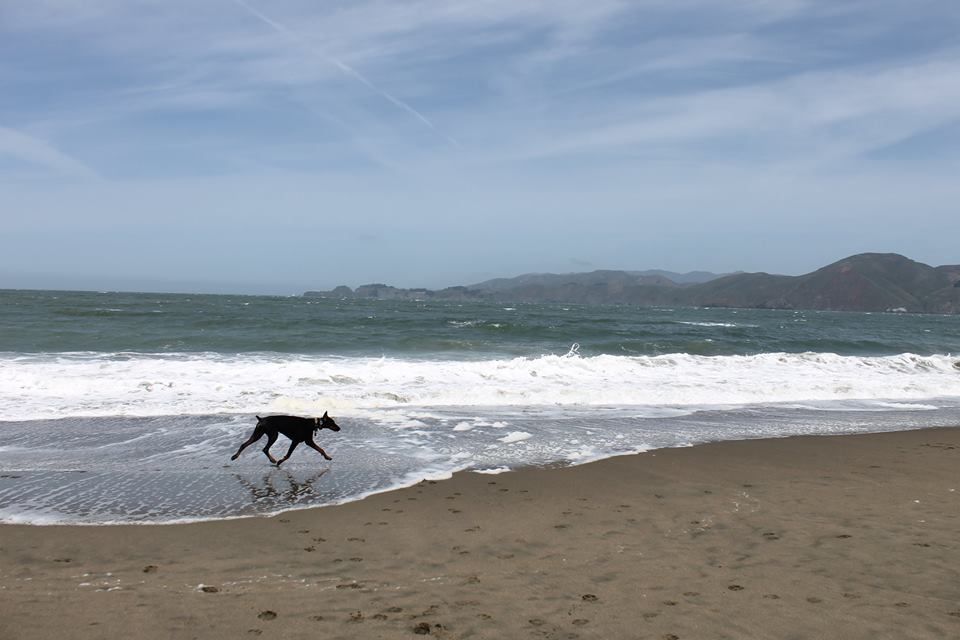
If you love taking advantage of photo opportunities, Dobermans will certainly help you there. Kaline, anyway, is a huge ham. He absolutely loves to pose for photos. Where some dogs (read: Juno) require high-value bribery like string cheese to put their ears up nicely for a picture, all Kaline needs to see is that camera. Once, while he was having an off-duty romp at a beach, Kaline galloped past a guy with a massive camera who was getting pictures of the scene. Kaline screeched to a stop, made a U-turn, and began cavorting in front of the camera, much to the photographer's delight. While I don't usually like to be in photos myself, I love few things more than taking photos of Kaline looking handsome.
This was a completely irresistible photo-op.
The big issue Kaline's breed can cause is some bizarre questions and assumptions from members of the public. If I had a dollar for every time someone tried to begin a conversation by asking, "Does he bite?" Kaline's collar collection would be twice the size it is now. This should go without saying but: 1) all creatures with teeth have the capability to bite, and 2) any dog who is likely to bite without provocation should not, and generally is not, working as a service dog.

Many children will ask if he's a police dog, which I find completely adorable. Less than adorable is when parents, though usually not on a regular basis, use Kaline's breed to frighten their children away from him. While I appreciate parents who educate their kids about why they shouldn't pet working dogs, it's quite unnecessary to tell the children that if they go up to Kaline he will bite them. Kaline's major failing with kids is he really loves to kiss them. And given that he's at face level with small children, sometimes that can surprise and startle them; this is why he only gets to greet kids taller than he is.
"Of course I would love to pose on this rock!"
And then there are what I like to call the storytellers. Every service dog handler can tell you about the innumerable times someone has interrupted an errand to tell them, "My dog at home looks just like yours! Only a different breed, size, color, and gender. ... She died last night." When you have a Doberman, or other perceived "scary" breed, you get a special kind of storyteller. These are the people who, after they've asked permission to pet your Doberman, will launch into a long and intensely uncomfortable story about how they, or their sister's boyfriend's second cousin once removed, was horribly mauled by a Doberman. That's when you smile and nod—and wish you could just disappear.

You might wonder why Dobermans are so uncommon, given how fantastic they can be as working dogs. Being taller than most Labs and Goldens, they can be a better choice for people who need mobility. They tend to be very in-tune with their handlers' emotions, a plus as long as you can keep that from becoming serious separation anxiety or overprotectiveness. They're incredibly snuggly and delightfully low-maintenance when it comes to grooming. They're also fun to train and quite intelligent, if not so very biddable as Labs and Goldens.
A love of snuggling means Kaline is great at deep-pressure therapy.
However, Dobes tend not to be the best choice for first-time owner-trainers or handlers. They're much more likely to give you the "Make me, why don't you" face than a Lab or a Golden. They can also become overprotective if their handler isn't careful to curb those tendencies. They are a guarding breed, after all, and if the handler allows it, a Doberman will take on the handling of a situation, which can end badly for everyone.

They're also well-known for health problems, despite the tireless work of ethical breeders. One of the major health issues that crops up in Dobermans, as well as the most devastating, is dilated cardiomyopathy (DCM), a heart disorder that is inevitably fatal. It generally crops up in older dogs, and there isn't yet a reliable genetic test for it. By the time a breeder learns that one of their dogs has the condition, the dog is likely to have been bred already.

Dobermans aren't the greatest candidates for service dog programs, in the sense that they tend to bond very strongly to their person, and may have major difficulties shifting that bond to a trainer or trainers, and then again to a new handler. While you can't go on autopilot with any dog and expect it to maintain its training without regular refreshers, doing this with a Doberman can be especially bad.

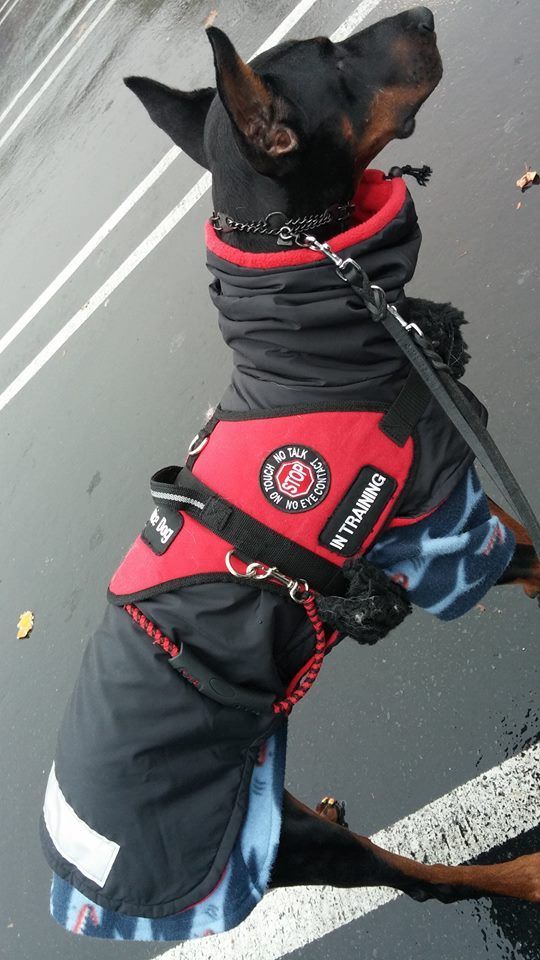
Then you have the diva aspect. Dobermans' shiny, beautiful coats are pretty much only for show. They get cold very easily, and aren't shy in the least about informing you about their distaste for the situation. If I take Kaline to a baseball game in Oakland in the summer, for example, and don't bring his various jackets and his cocoon-blankie, he will shiver dramatically, fix me with utterly miserable puppy dog eyes, and poke me every inning to see if it's finally time to go. Ask him to lie down on a marble floor without his mat, and he'll drop his head into your lap and stare at you mournfully: "But it's so cold on the floor. I couldn't possibly lie down here."
Kaline enjoying summertime at the ballpark.
There's also the fact that almost nothing pre-made will fit them. This works out pretty well for me, since I'm a complete gear-nut and have several friends who make high-quality custom harnesses and other equipment. Nonetheless, it does tend to get expensive, and it was quite sad when the PetJoy vest that I loved to use on Juno just would not fit Kaline, no matter how I adjusted it.
My favorite old vest. Alas.
The best part of working a Doberman, when it comes to the general public, is that you attract other Doberman people. I was somewhat prepared for this, having graduated from the University of Michigan. If you wear Michigan gear anywhere in the world, you will inevitably be greeted with cries of "Go Blue!" from perfect strangers who also went to Michigan (we're everywhere). It's very similar with a Doberman. Since Dobes are not terribly common, either as working dogs or pets, lovers of the breed tend to get delightfully enthusiastic when they see one out working as a service dog.
Sometimes we attract both fellow Wolverines and Doberman aficionados.
It's lovely being able to educate receptive people about the versatility and all-around greatness of the breed. Like any breed, they're not for every person. But many times, when someone who has been scared of Dobermans all their life sees one working calmly and quietly in public, that can be just the impetus they need to ask some questions and find out that Dobes aren't scary after all. Kaline, even though his breed as a whole is usually fairly aloof with strangers, loves getting to say hi to new friends, and is so sweet and goofy that he can usually change people's minds about his breed. There are few things more gratifying than opening someone's mind about Dobermans.
Kaline makes a new buddy.

Colt
09 February 2016

Why I call my service dog medical equipment


Medical equipment comes in many forms to help mitigate many types of disabilities. There are wheelchairs, insulin pumps, canes, oxygen tanks, and more. There are also dogs. Yes, those cute, cuddly, lovable creatures that many of us just ooh and ahh over. As a dog lover myself, I definitely get that big smile and sometimes the giggles as I see a cute pup or a breed I love walking down the street or playing with their owner in the park. However, there's a big difference between a pet dog and a service dog. The latter is, indeed, medical equipment.

When my service dog, Sulley, gears up and we head out that door, he is working. He's no longer just a dog. Really, he isn't a dog anymore. He's my highly trained and very much needed medical equipment. He is my monitor for my anxiety levels to let me know before it gets out of control. He is my guide when fibromyalgia leaves me in a heavy fog and I can't think or function well. He's my movement when my legs feel like they are on fire, or when I'm extremely fatigued from living with chronic pain. He's my hands when I drop something and I worry that bending down will mean vertigo and a possible fall. He becomes as much an extension of me as any other medical equipment does for another disabled individual. He serves a very important purpose: to keep me safe and able to live my life.  
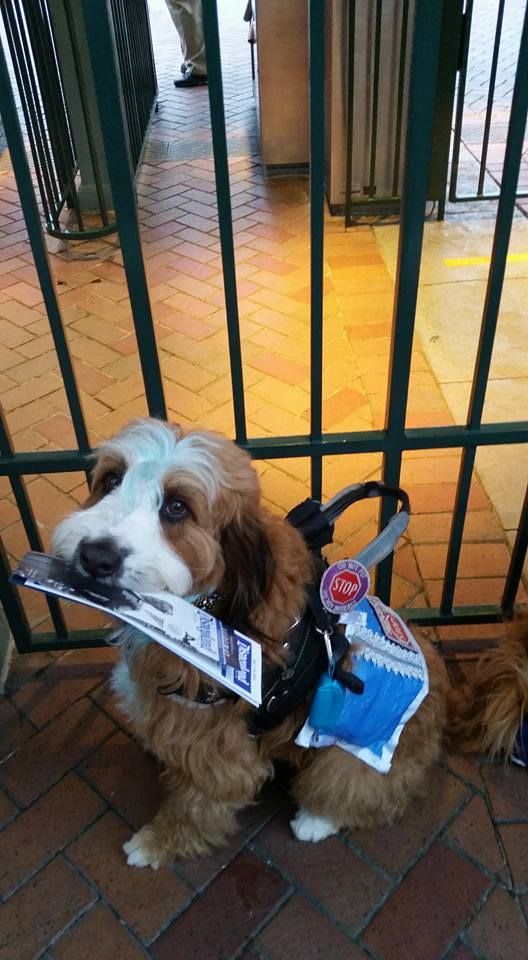
Recently we took a trip to one of our favorite places, Disneyland! Sulley loves it because it means lots of work. The crowds, the noises, and other distractions can be very triggering and very difficult for me to deal with. Without Sulley, there's no chance I would be capable of going and enjoying as much of it as I do. There's another aspect of it, though, beyond the basic over-stimulation of the parks, that makes it tough for me as a disabled individual who uses medical equipment—particularly the kind that is furry with a beating heart.
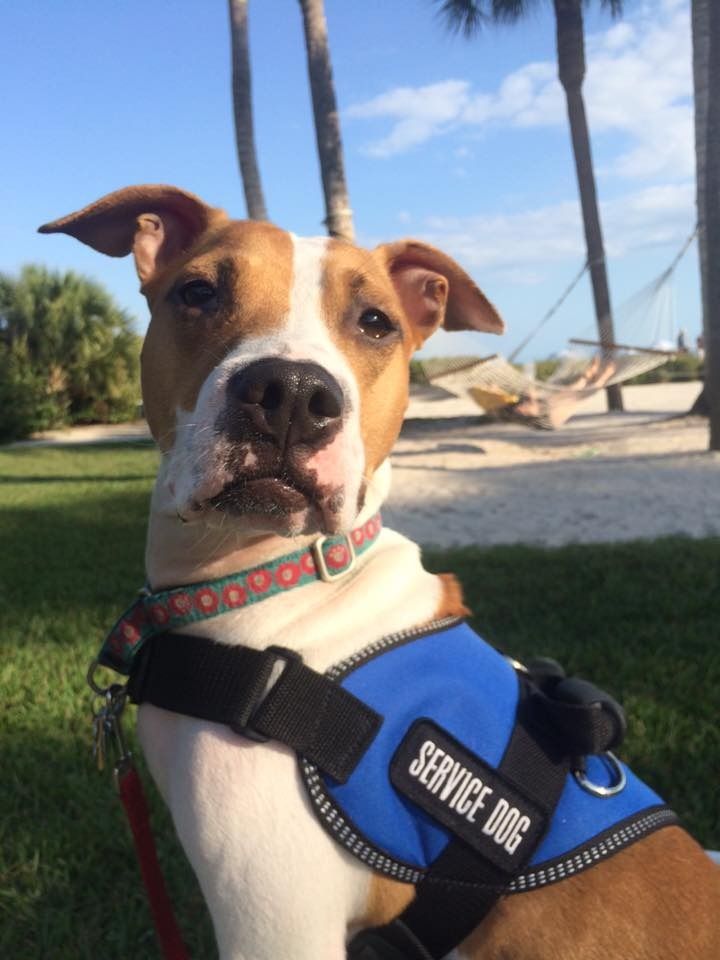
"Oh my gosh! Quick, kids! Look at the doggie! Look, look, look! Say, 'Hi, doggie!' He's so cute!"

Now, some of you might not understand what the big deal is. A parent is simply helping her children to enjoy a moment of a very adorable dog passing by. They might not even be encouraging their kids to pet, though that does happen despite Sulley's multiple stop signs and "do not pet" patches affixed to his vest and harness. Fortunately, this is such a frequent occurrence that I can share a few things that have happened in the past.

1) Due to my panic disorder, I startle extremely easily. Loud screams, even of joy, can cause me to fall and hurt myself, cause a panic attack, cause me to have such a sudden burst—then decrease—of adrenaline that it leaves me very dizzy and fatigued.
2) These noises can distract my service dog from his job due to him needing to investigate the sound, even for a second, to determine what caused it. If he's in the middle of mobility work and needs to turn quickly to investigate a sound, that can put me in harm's way.

3) He could attempt to seek attention, as he is still a dog and has off days, which would require me to correct him.

In these situations, I do my best to make a short but educational statement to people while still moving on. Confrontation is very taxing on me and can trigger my anxiety, so by keeping it short and to the point, I hope to avoid any medical issues on my end. This, in turn, makes it so the cute dog they want to enjoy doesn't have to work harder after an anxiety attack from a confrontation.

"Do not distract my service dog. He's working."

My point here is clear, at least to me.

1) Do not distract my service dog. (This is a service dog who needs to focus.)

2) He's working. (This dog has a job.)
Sulley after retrieving a credit card on the floor and placing it back on the counter.
Sadly, this is all too often met with hostility. I'm called everything from "rude" to many various expletives. I'm yelled at because "we were just saying hi!" I'm told I shouldn't have a dog in public that can't be played with.

This particular trip, it dawned on me that there was something happening with these exchanges. They didn't see or hear "service dog." They saw and heard "service dog." No emphasis in the world would help them see past the word that meant "adorable fluffy plaything here for my entertainment." They couldn't see the harm in greeting, petting, calling a dog. Obviously, he's friendly and not a biter. What's the harm? They saw a dog. They didn't see medical equipment.

The remainder of the trip, I practiced. I do my best to practice responses to people so that my anxiety won't get in the way of what I want to say. The rest of the day and back at the hotel room, I practiced. I asked friends to randomly pop questions about my dog at me. I failed at responses over and over, and grinned when I would finally get one right. The next day, I felt a bit better. I felt nervous, but ready to deliver my new responses to the public when they intruded on my day.
Sulley doing deep pressure therapy to lessen a fibromyalgia flare or panic attack.
Sulley is no longer a service dog. He is, and always has been, my medical equipment.
I placed Sulley in the crate provided at the roller coaster and began to board. An employee ran over while I struggled into my seat, squealing about my cute dog and demanding to know his breed.

Deep breaths. You've got this. You practiced countless times.

"I don't feel comfortable discussing my medical equipment."

She looks confused. Please go away ...

"No, no. I mean your dog!"

More deep breaths. Stay calm, you've got this!

"No, you mean my medical equipment."

NAILED IT! Did you see that lightbulb come on?!

Just as the employee scowled a bit and rolled her eyes, there was a pause. I could see it click in her head. She never even thought that the dog, my dog, was medical equipment. It lit a fire in me. The rest of the day, I struggled through getting the proper words out. It began to get a bit easier. I began plotting new ways to say things. What to say if someone said something terrible back to me. It was brilliant!
I felt confident and self assured that I could handle these confrontations. More and more people throughout the day had their lights turned on. Even if it was just a teeny spark, it happened every single time. Something that never happened when I explained him as a service dog.

"Ma'am, keep your child away from my medical equipment."

"Sir, do not distract my medical equipment."

"Interfering with my medical equipment is a crime."

"I am not comfortable discussing my medical equipment." (Insert rude reply.) " ... And that is why I am not comfortable. Good day!"

On an ending note, I would like to point out that never once do I say "sorry" or "please." When it comes to my safety and that of my dedicated medical equipment, it is never, ever a request. I also will not apologize for not wanting to be grilled about my medical equipment, or having it played with or distracted. This does not make me rude. It makes the person forcing their way into my personal space, and interfering with Sulley, rude.

No one, disabled or otherwise, deserves to feel intruded upon or made into a spectacle. Remember that service dogs are medical equipment, and respect their and their handlers' space.


Kymi

12 January 2016

Choosing a service dog breed

Editor's Note: Not all of the breeds pictured are suitable for inexperienced handlers/trainers. However, in the right hands, they can be excellent working partners.
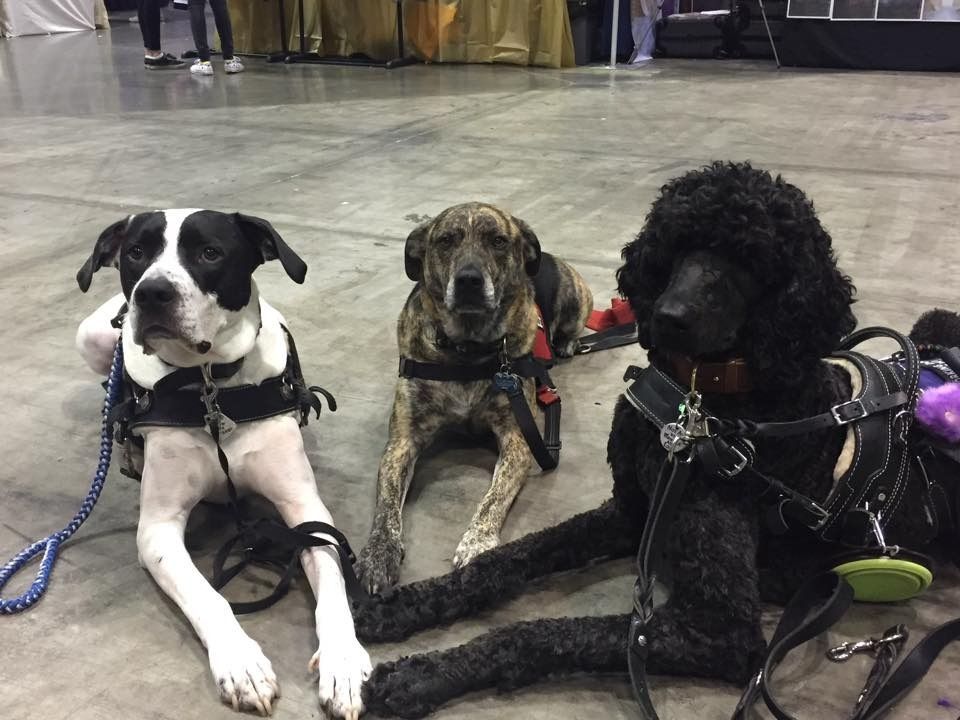
Service Dog Cow, Pointer/American Bulldog Mix
Service Dog Luke, Plott Hound/Lab Mix
Service Dog Watson, Standard Poodle
You've done your research, spoken to family and friends, and you've decided a service dog will be a valuable part of managing your disability. Now you need to pick a breed.

First and foremost, the most important tip you'll ever hear: Do not assume you'll be the exception to the rule. 

The goal of having a service dog is to be able to gain back some independence. Getting the same high-energy breed you had and loved as a kid now that you're an adult couch potato is not such a good idea. Just like when training our dogs, you want to set yourself up for success.

I'll mention this a lot throughout the article: It's about the specific dog, not the breed. It's important to remember that dogs are living creatures. They will all have their own personalities. Knowing the common issues for breeds is going to help you narrow it down from all to a few, and from there you can start to look at the individual dogs instead of individual breeds.

You'll also need to research your breeder and the lines they have. Just because a breeder is registered or has papers for their dog does not mean they're a responsible breeder. Take the time to ask questions, see where the dogs are raised, ask around.

Good First-Time Service Dog Breeds

These are just examples, and good first-time breeds are not limited to those mentioned here.

Labradors: There's a reason these are some of the most commonly used dogs. While not all Labs will be happy-go-lucky lovers, there are a lot of responsible breeders out there with some fantastic working lines.
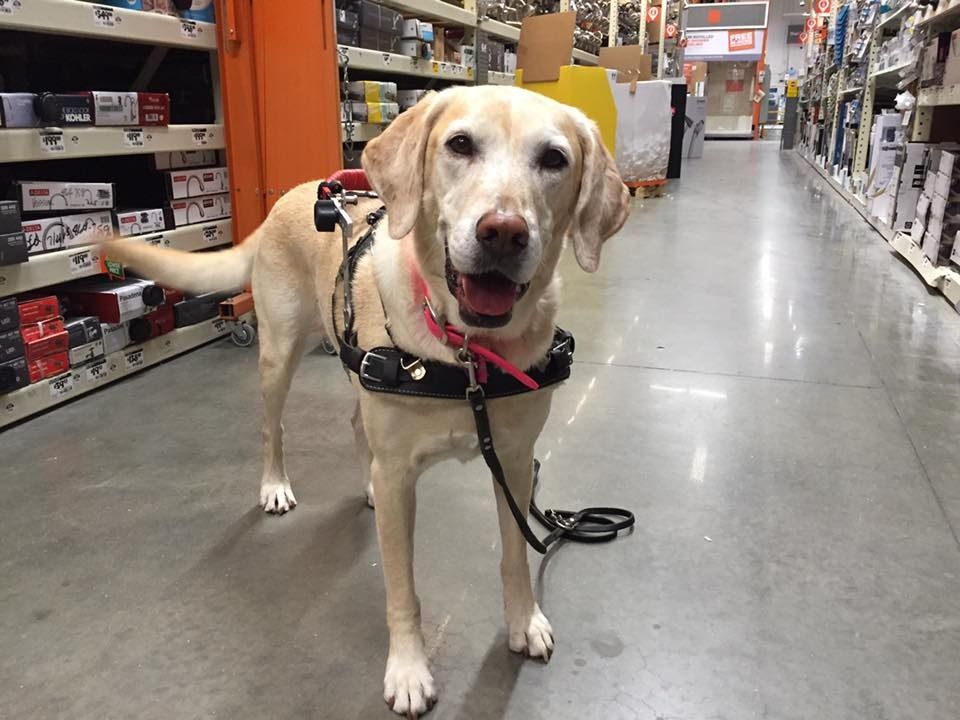
Service Dog Daphne, Yellow Labrador
One of the best things about these dogs is the general public recognize them as "working dogs." Yes, they generally recognize them as guide dogs, so you may get a few comments about that. However they're also likely to instantly connect a guide dog handlers' well-known right for public access to you and your dog, causing you fewer issues.

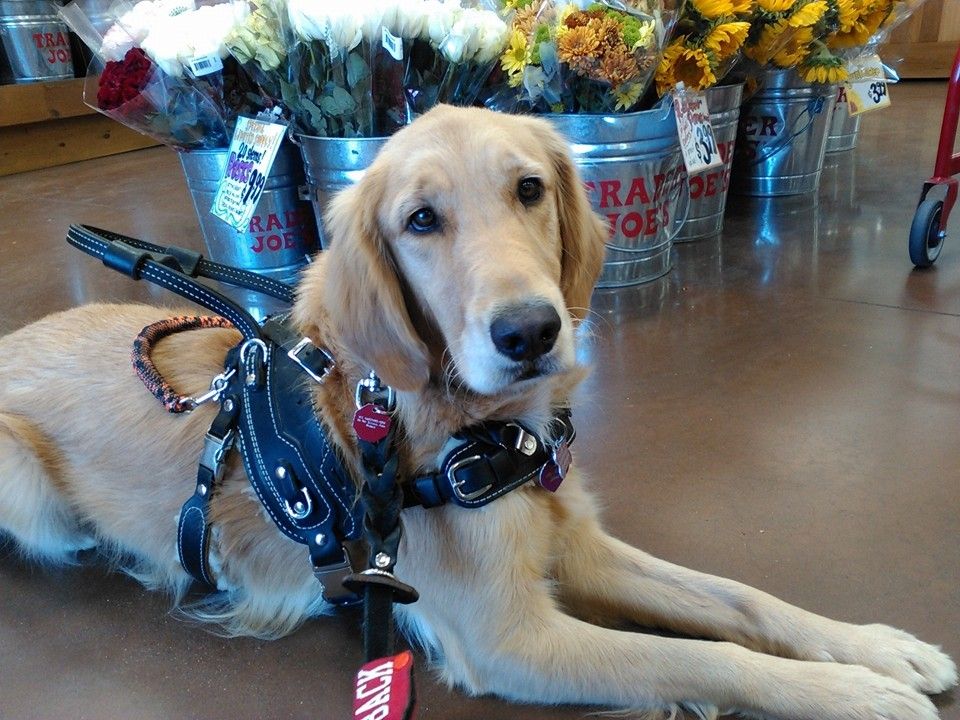
Golden Retrievers: Again, there's a reason they're common. While grooming maintenance will be a little more for Goldies than Labs, they tend to be a willing and loyal breed.
Service Dog Sky, Golden Retriever
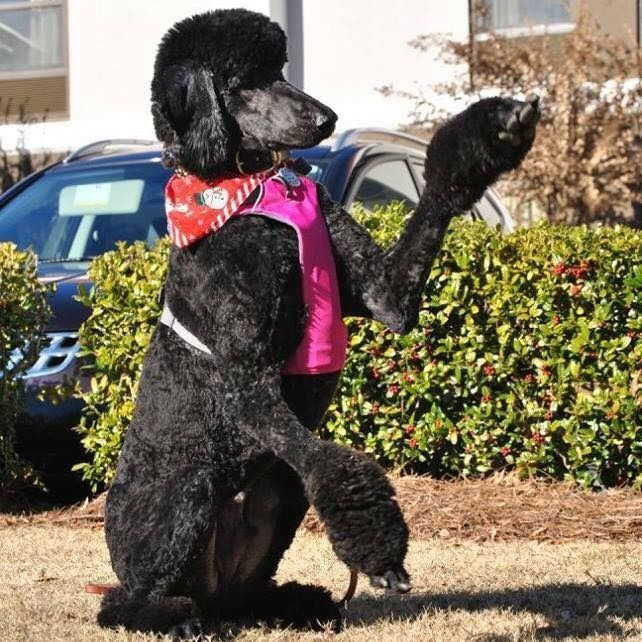
Standard Poodles: A wonderful breed, but do take a lot of grooming. Keep in mind as well that a service dog's level of hygiene and grooming compared to a pet dog are generally worlds apart.
Service Dog Watson, Standard Poodle
Some lines of Poodles have shown aggression issues stemming from fear. So, as with all dogs, well-balanced socializing is key.

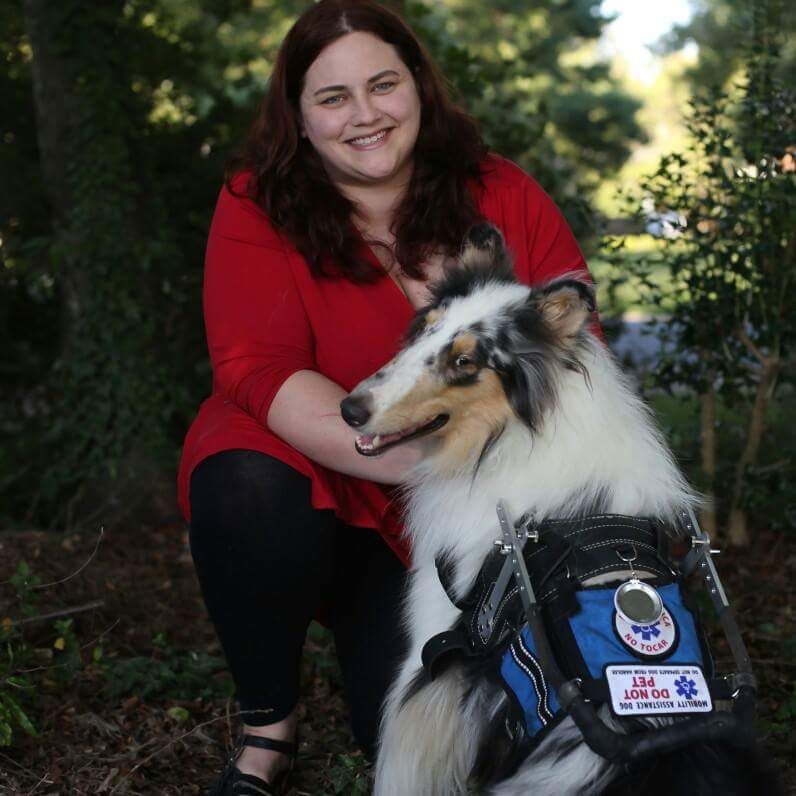
Collies (Smooth & Rough): An incredibly smart breed with a good will to work. However, if you can't keep up with them, they'll leave you in the dirt. Remember to match your potential breed with your own lifestyle. Don't get a Collie if you're hoping to go from a couch potato to a world class mountain climber. Because if you don't make it to be a world class mountain climber and this dog is left to sit around all day, you will suffer. They will find their own thing to do and you will most likely not enjoy it. There are very few dogs out there who wouldn't love to go exploring with you, no matter their breed. So be sure to match a potential dog with your potential worst day to give you the best chance of success.
Service Dog Lucas, Rough Collie
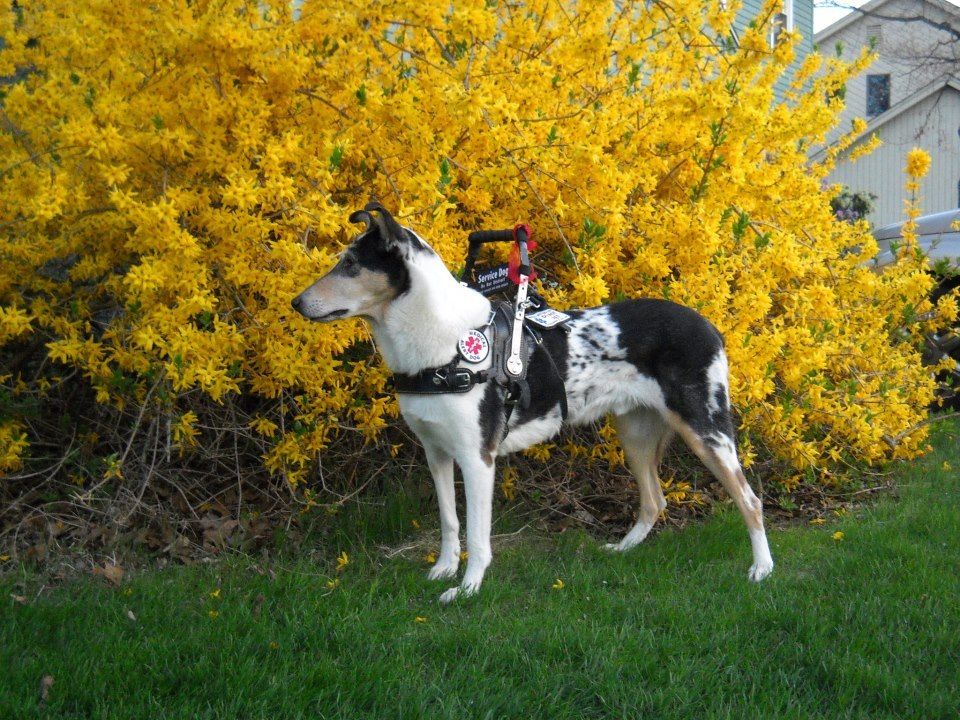
Service Dog Billy, Smooth Collie
Greyhounds: A newer breed in the world of service dog work, they're quickly picking up popularity. More and more people realize these dogs are bred for sprints, not endurance. They give you the large size which most people appreciate, without the buckets of energy.

However, they are restricted in some countries. So please be sure, no matter what breed you get, to think long term. Do you plan on travelling? Ask around and see if there are any odd breeds that are restricted in places you're likely to go. In Australia, unless a Greyhound has passed a special test they must be muzzled at all times. Will a muzzle get in the way of your dog's tasks?

This leads me to an important tangent. It's important to be honest with yourself about the impact a dog's breed/looks will have on your life.
Service Dog Cow, Pointer/American Bulldog Mix
You're about to start going out into public areas with a dog, like it or not people will stop, they will point, they will try to take photos, they will notice you more.

The breed you choose will affect things like public access. Cold hard truth here, and I'm sorry, but if you go for a bully breed type dog over a Lab, you may find more people acting like morons around your service dog. Of course that's not always the case. I had a Shar Pei service dog in training that I worked with briefly. A lot of people would take the time come over and express how wonderful it was to see a "bully breed" out in public working so nicely.
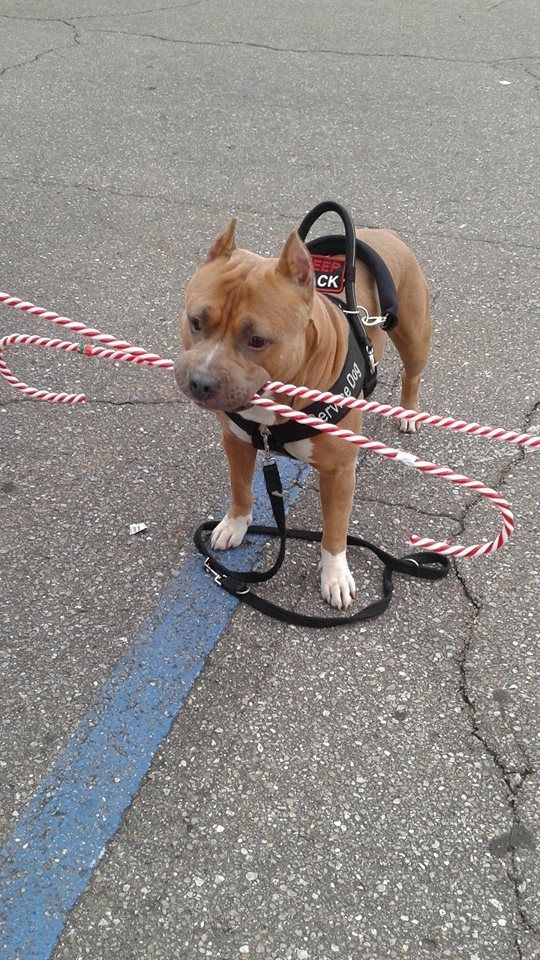
Service Dog Doogan, American Pit Bull Terrier
So the public may not always have the reaction you think they will. Nonetheless, it's something you have to be willing to consider in great detail. Once again, please don't assume you'll be the exception to the rule. Going off of that belief will only heighten your chances of failure, especially if this is your first service dog. Please think about your options and set yourself up for a win.

Poor Breed Choices for First-Time Service Dog Handlers


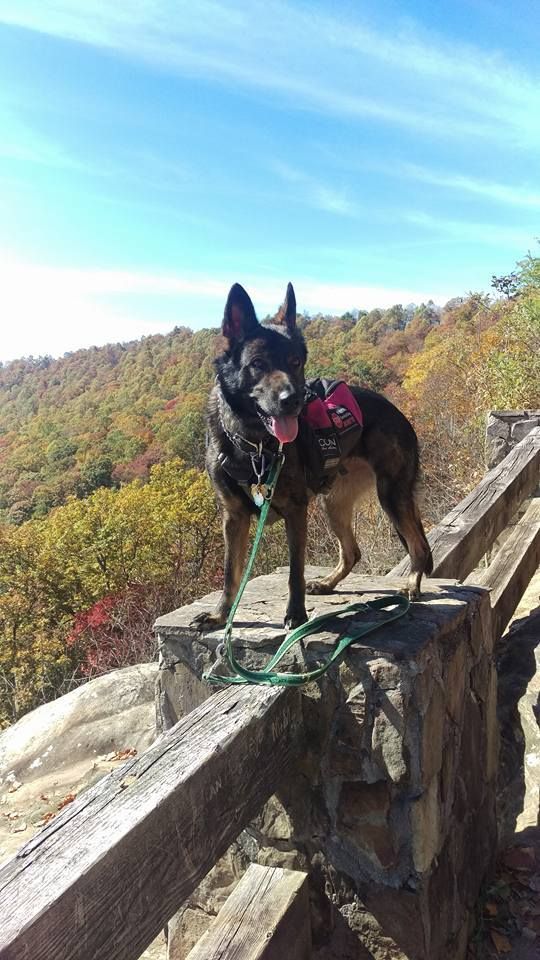
Service Dog Shanti, German Shepherd Dog
German Shepherds
Dobermans
Rottweilers
Huskies
Belgians
Malamutes
Any brachycephalic breed
Any breed that will have a short working career such as a Dane or Mastiff

I won't go into all of the reasons for these because basically they're all the same. These are breeds that are incredibly intelligent and often this intelligence comes with a lot of free thinking.

These breeds can without a doubt make wonderful working dogs, but you need to know how to work with them. Experience is important here. You can, of course, be one of those people who just gets on with it and does fine, but you're trying to set yourself up for a win, remember. So take steps towards these breeds by all means! But don't just jump in because you saw one on a show once and they were amazing.
Service Dog Link, Icelandic Sheepdog
Brachycephalic breeds are not on here (squashed-faced dogs, like Boxers, Bulldogs, Pugs, etc) because they can't make wonderful working dogs. They can. However, if you don't know how to work a dog and condition them and read their body language, you'll likely miss the important warning signs of their health issues and they'll be washed out earlier than need be. These types of breeds take a lot of care and usually for a first time service dog handler, it's a bit overwhelming.

Finally, the slow-to-mature breeds. Again, there's always the exception, but on a whole these types of breeds tend to be more difficult for first-time service dog handlers because they can take longer to mature, which can be tricky when you're hoping to have a dog to support you.

If you're going to go with a giant breed, it is even more important to make sure you find a very reputable breeder and know your breed inside and out. The bigger the dog, the bigger the health issues they tend to have.

Factors To Consider When Considering a New Prospect

Size at maturity: What is the size of the breed that interests you? Keep in mind that males and females can often differ in sizes. It may not be much, but those extra three inches can be the difference between a safe working dog for mobility support and a huge vet bill. Please don't go to a breeder who breeds above-standard sizes—this is a dodgy way of breeding and I can guarantee they're not a reputable breeder if they do such things.
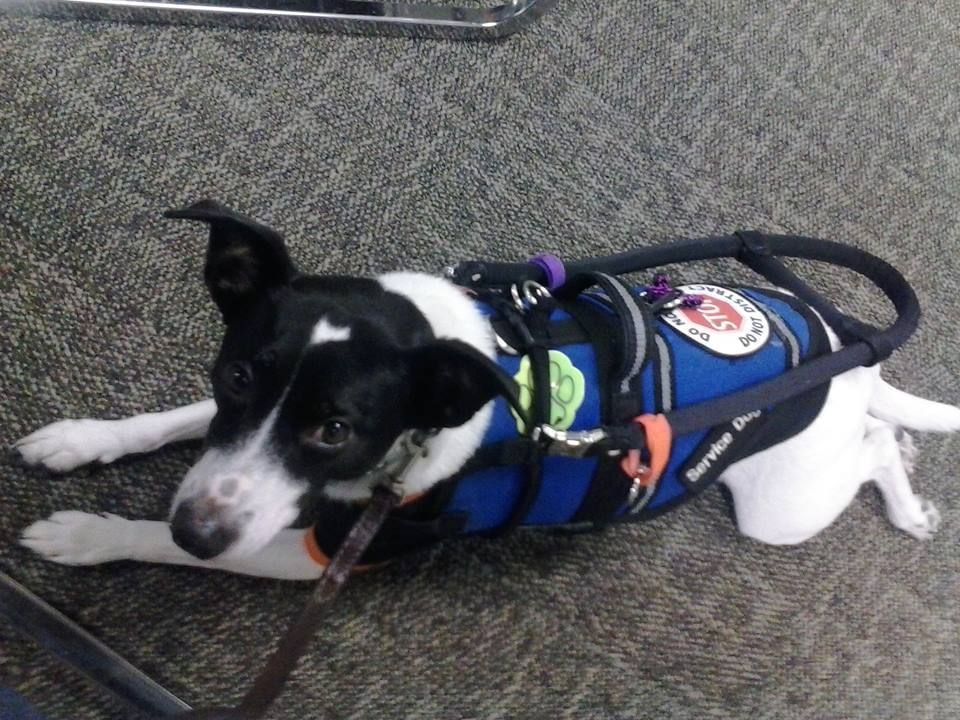
Service Dog Rico, Papillon, and Service Dog Travi, Chocolate Labrador
Longevity: This is a big one to consider when thinking of larger breeds for mobility assistance work. Another factor to investigate is the average lifespan of a breed. Please be sure, once again, to be honest with yourself about this issue. You may have heard of that one exception to the rule, a Great Dane who lived to be 10, but know that as a whole the breed on average lives for 5-7 years.

A larger or giant breed dog may not mature until well after their second birthday. Make sure to consider its working longevity as well as its general life expectancy. Most Great Danes, while living for 5-7 years, only get 2-5 years of solid mobility work in, as they take longer to mature and if pushed into work too young will need to retire sooner as well.

Hereditary breed traits: Each breed was developed for a purpose. While there are always an exceptions to the rules, you need to think about the general standards of breeds. This dog will be there to make your life easier. Picking your breed based on false or unrealistic possibilities will likely lead to issues for both you and your future partner.
Service Dog Apollo, Australian Shepherd
If considering a breed developed for hunting, herding or guard dog work, realize that the traits that made a dog of that particular breed an excellent hunting dog, an effective sheepdog or a successful guard dog do not disappear just because the traits are no longer highly desired by most dog owners. The ancestral urges to hunt, swim, chase livestock, sound an alarm, kill predators or drive away strangers that dare approach are likely still there lurking under the surface.
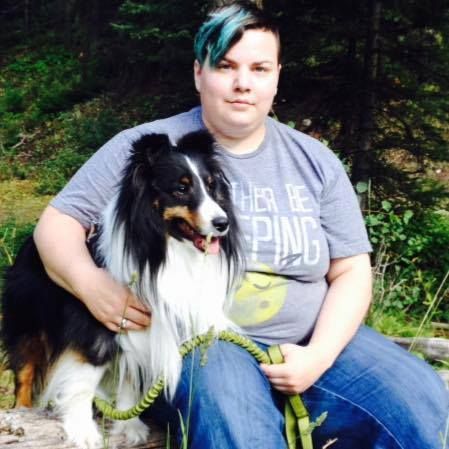
Service Dog Gir, Shetland Sheepdog
Guardian breeds or breeds originally bred for fighting/aggression can be a little more difficult for the newer handlers to train. If you choose to ignore this warning and work with a stronger breed, please respect their heritage. Learn how to train with their breed traits, using their weak points to turn into strong points and strengthening the traits you were attracted to originally.
Service Dog Evan, Doberman

Be sure to consider the traits of your own disabilities as well. Breeds with these types of instincts are not generally suggested for people with psychiatric issues as they can become overly protective in times of trouble.
Coat Care: A simple point that a lot of people don't take into full consideration when making the final choice on breed is that a service dog must be kept at a very high level of grooming and hygiene as they're in areas not usually open to dogs. Once again, please be brutally honest with yourself about this.
Service Dog Sulley, Mixed Breed (aka Slovakian Mop Dog)
Picking a service dog takes a lot of planning and thought. If you don't think you'll have the financial or physical ability to manage the grooming needs of your final chosen breed possibilities, then take some time to reconsider.

Age: One of the most important decisions to make is whether to start out with a young puppy or to seek an adult dog, 18 months to three years old, which can commence training immediately. This is a huge thing to consider and has its pros and it's cons.
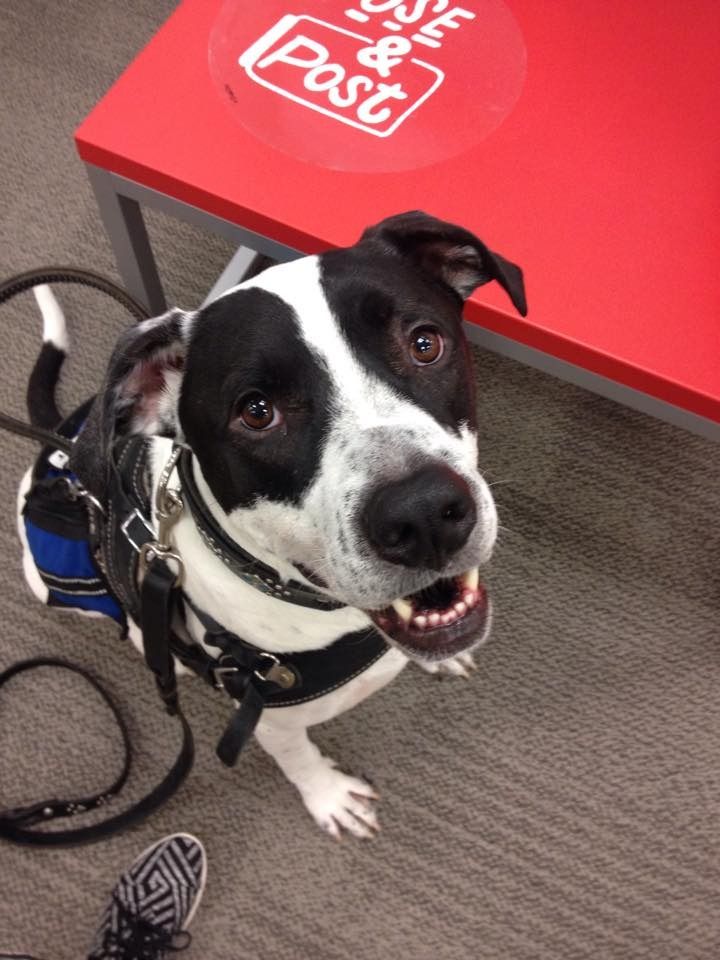
Service Dog Willow, Bully Mix
If this is your first service dog, I would suggest starting with a young adult so you have more of an idea what you're working with by way of temperament etc. While training can take up to three years to transition from service dog in training to Service Dog, it's generally easier for an adult dog to get into work sooner as they're physically and mentally more mature.

Gender: A female usually is smaller and has a shorter coat/less feathering when compared to their male counterparts if spayed. A female is equal to a male in terms of competency in this career. Both genders tend to be pretty even in temperament, but do take into consideration desexing (neutering/spaying).
Service Dog Bindi, Kelpie
Females who are intact may have issues with hormones and spot bleeding, whereas males who are intact may have issues ignoring other female dogs who're in heat.

Keep in mind, there's a lot of interesting research being done about when and how to alter dogs. So please consult a vet and/or do some research online for further information about the pros and cons of these choices to make sure you have the latest information.

Bottom line, everyone is different. Just as every dog is different.

Please take all of these things into consideration when choosing a breed. It's not a decision to take lightly.


Robbi Flynn
Robbi is a service dog handler in Australia who owner-trained her dog, Musa. She can be reached through her website.


15 September 2015

The variety of service dogs

If you're a fan of Growing Up Guide Pup, you probably know a fair amount about guide dogs and their job. You know that Golden Retrievers and Labradors are the most commonly used breeds, with a smattering of German Shepherds.

However, a service dog can be any size or breed, as long as the dog possesses what it takes to do his or her job. And these dogs can help disabled people with a variety of challenges, not just visual impairment. I'd like to introduce you to some of the amazing dogs whose handlers I've gotten to know in my time in the service dog community.


Lucas
Age: 2.5 years
Breed: Rough Collie
Status: Fully trained service dog (owner trained)
Job Description: Mobility and life assistance
Favorite Task: Retrieving objects and getting items off of shelves
Favorite Off-duty Activity: Roughhousing with his brother, Soren

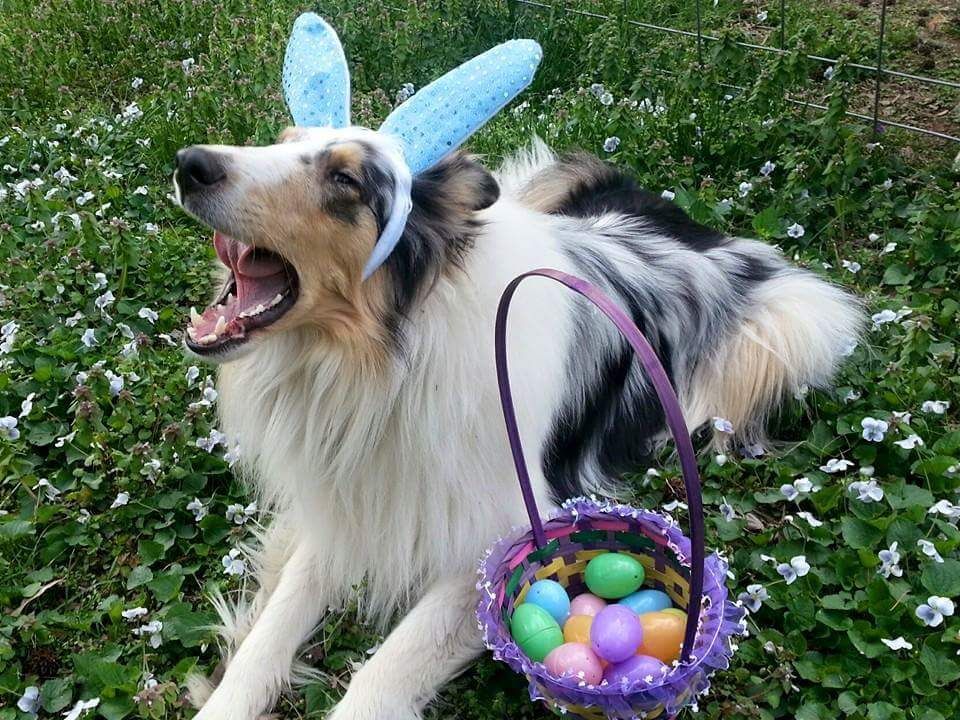
And, sometimes, dressing up like a bunny.
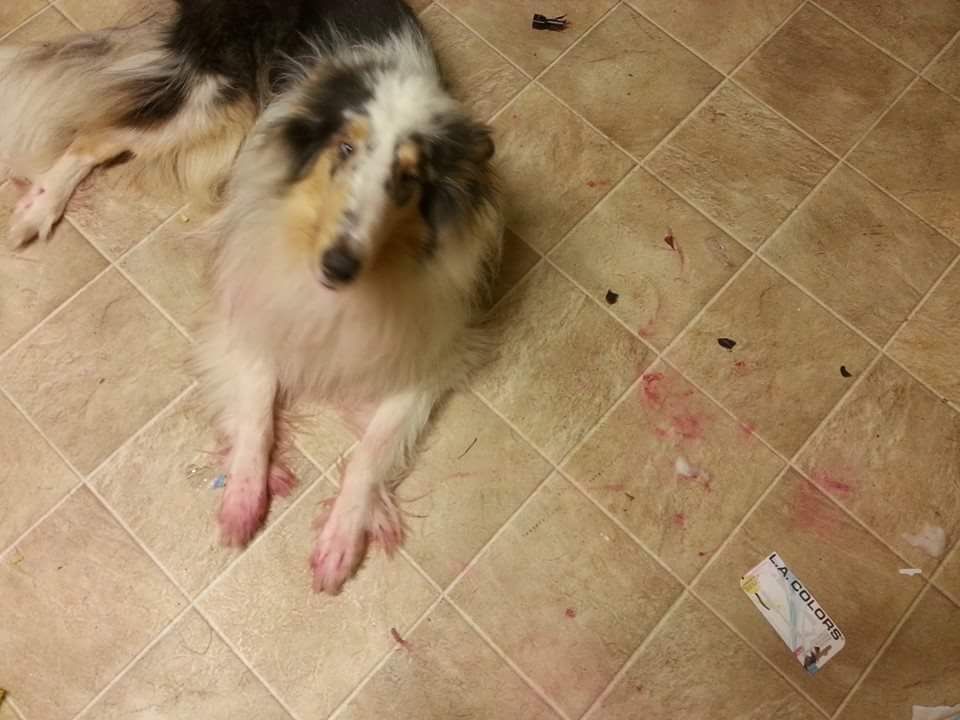
Naughty Moment: Lucas once got into his handler's makeup when he was off duty and chewed up all her lipstick. She came home to him covered in red. When he was younger, he also once ate all of her left shoes. 


Rico Suave
Age: 9 years
Breed: Papillon
Status: Fully trained service dog (owner trained)
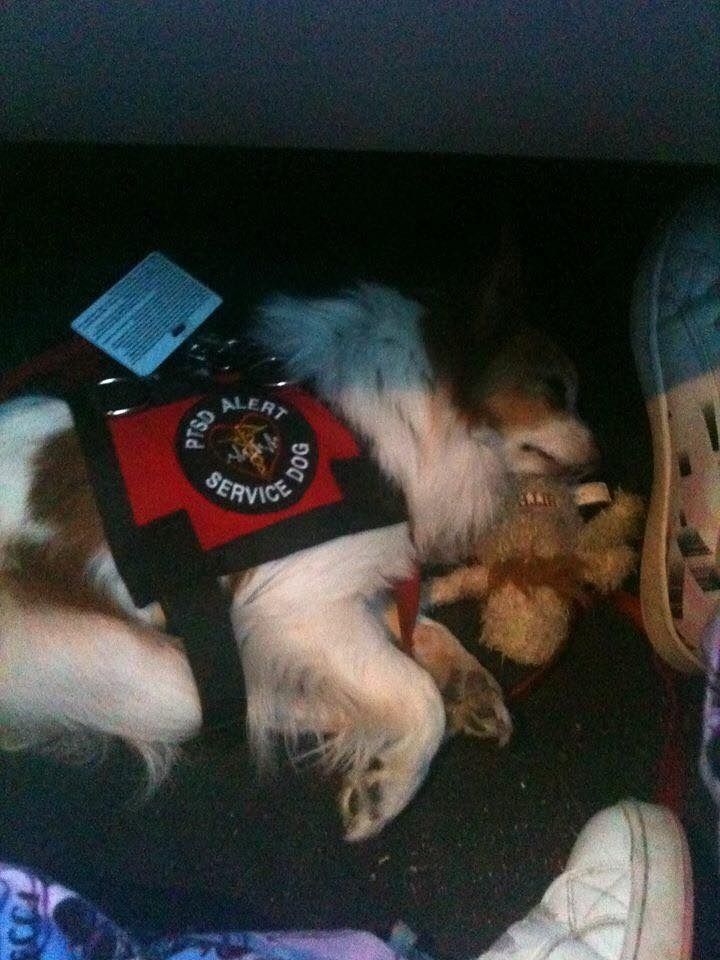
Job Description: Medical alert & psychiatric service dog
Favorite Task: Leading his handler to exits
Favorite Off-duty Activity: Sleeping
Naughty Moment: When Rico was still in training, he once crawled under a bathroom stall divider and scared the woman in the next stall by looking at her. 


Gir
Age: 2 years
Breed: Shetland Sheepdog
Status: Fully trained service dog (owner trained)
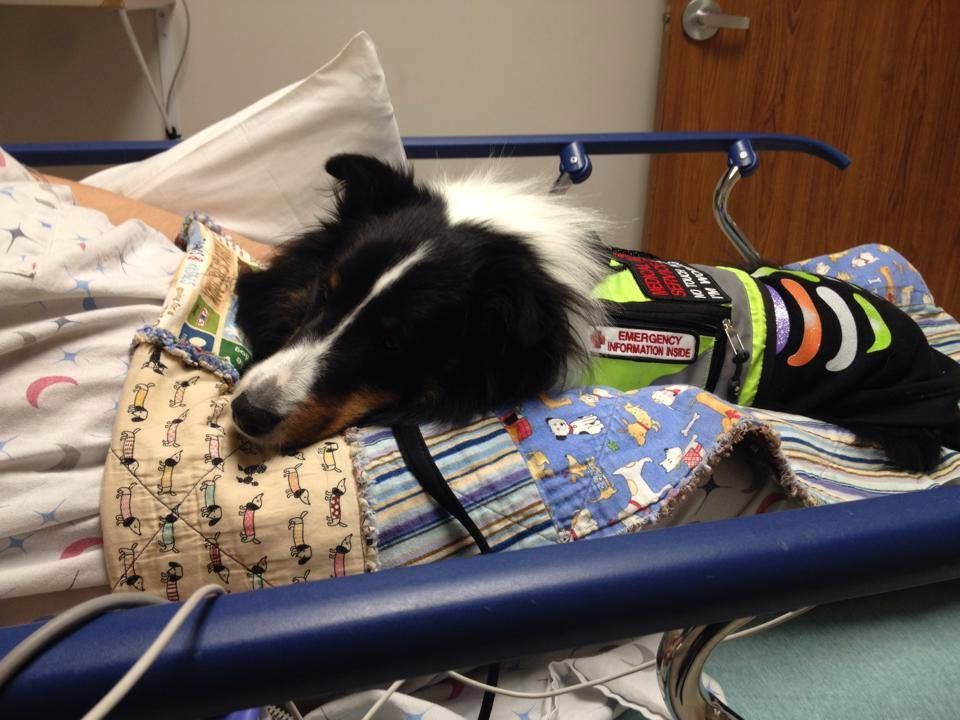
Job Description: Medical alerts (including blood sugar, migraine, low blood pressure, and heart rate spikes). Psychiatric work such as deep pressure therapy, interrupting self-harm behavior, and response to panic attacks.
Favorite Task: Engaging with his handler to interrupt flashbacks
Favorite Off-duty Activity: Playing with a flirt pole
Naughty Moment: Gir enjoys counter-surfing for goodies.


Rory
Age: 2
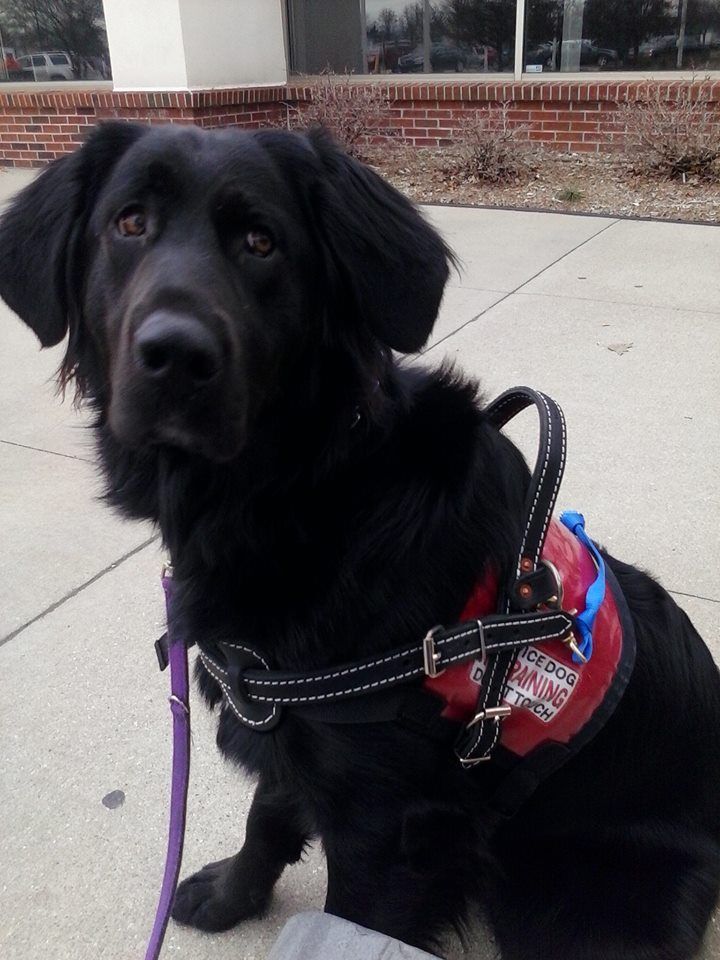
Breed: German Shepherd/Newfoundland mix
Status: Service dog in training (owner trained)
Job Description: Mobility support and psychiatric tasks
Favorite Task: Retrieving objects
Favorite Off-duty Activity: Swimming


Parker
Age: 8 years
Breed: Rat Terrier mix
Status: Fully trained service dog (owner trained)
Job Description: Psychiatric support, minor mobility tasks, retrieving
Favorite Task: Searching rooms before his handler enters
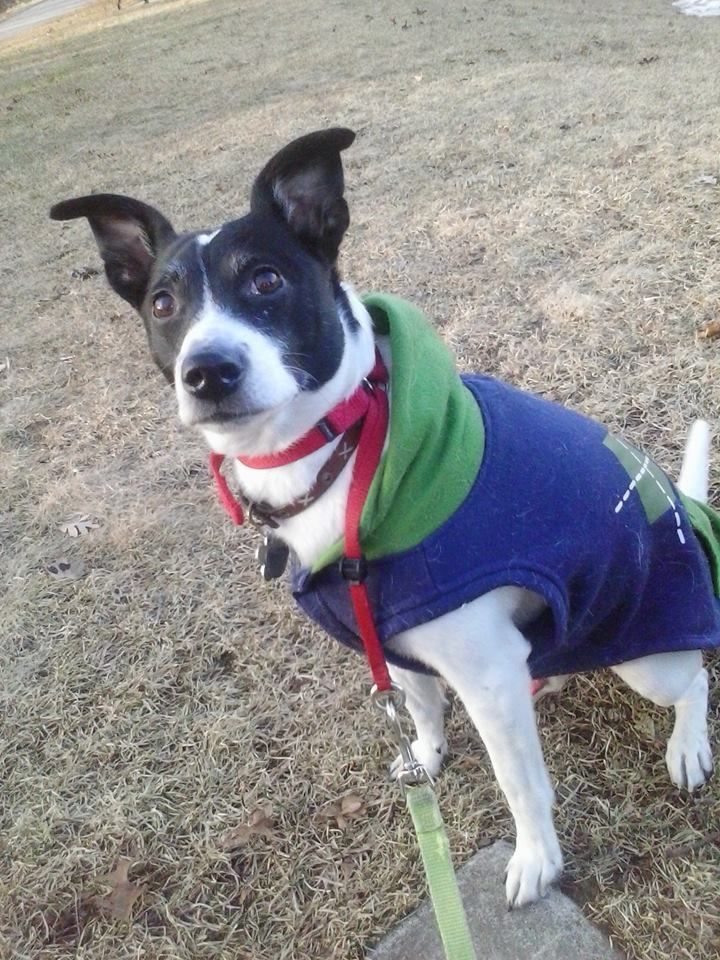
Favorite Off-duty Activity: Killing and unstuffing squeaky toys


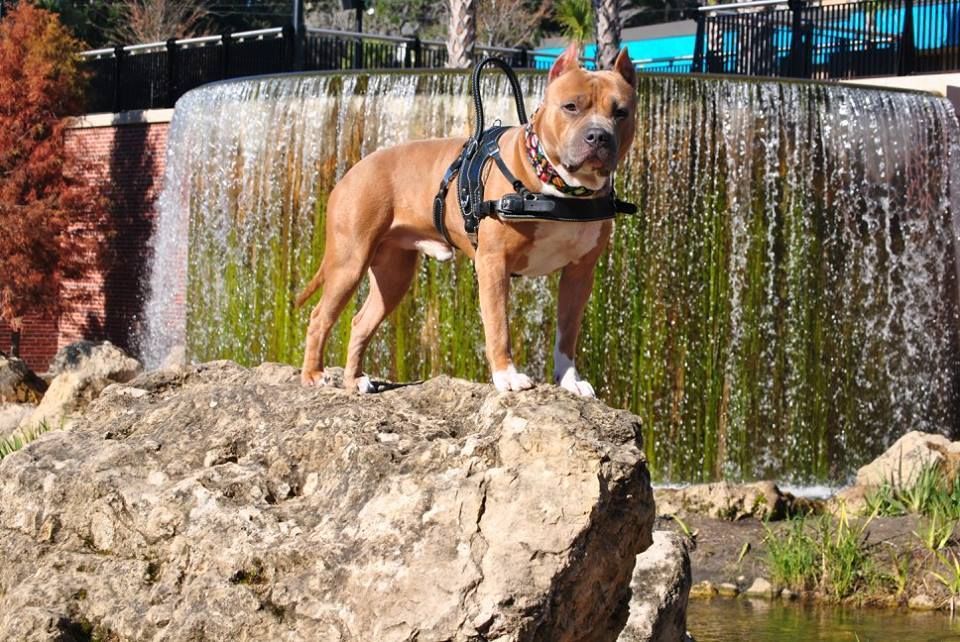
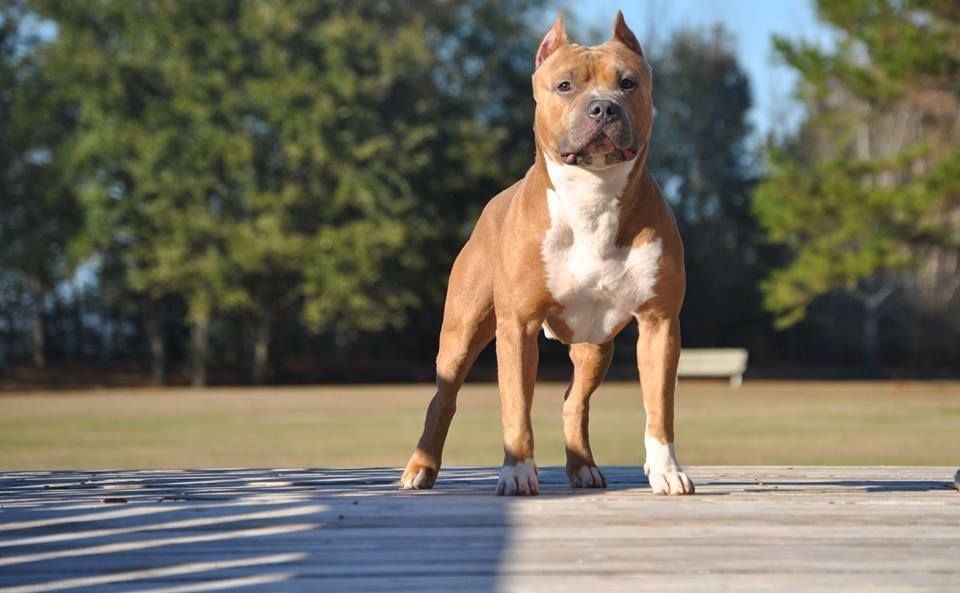
Doogan (Full Name: URO1 CH'PR'PPK's Sir Doogan Gooseberry CGC TT)
Age: 3.5 years
Breed: American Pit Bull Terrier
Status: Fully trained service dog (owner trained)
Job Description: Medical alert and mobility assistance
Favorite Task: Carrying all the things, no matter what the objects happen to be
Favorite Off-duty Activity: Posing for the camera and strutting his stuff in the show ring


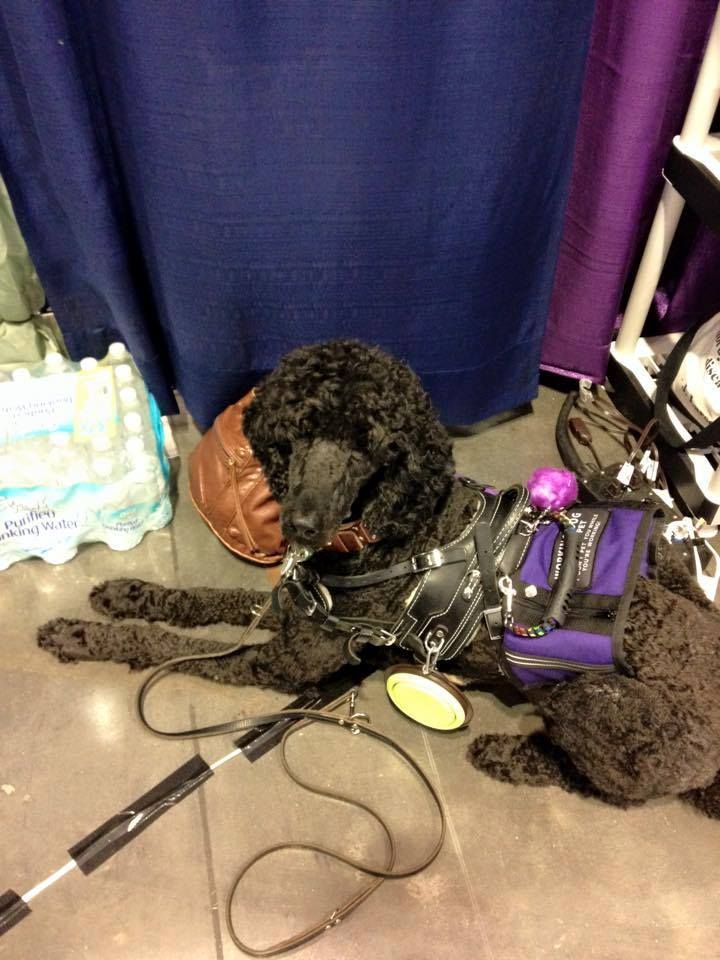
Watson
Age: 2.5 years
Breed: Standard Poodle
Status: Fully trained service dog (owner- and program-trained by Dreamrun Dog Training LLC)
Job Description: Mobility/balance, medical alert & response, anxiety alert & response
Favorite Task: Finding "grandma" and picking things up
Favorite Off-duty Activity: Playing with his frisbee, flirt pole, or tennis ball launcher
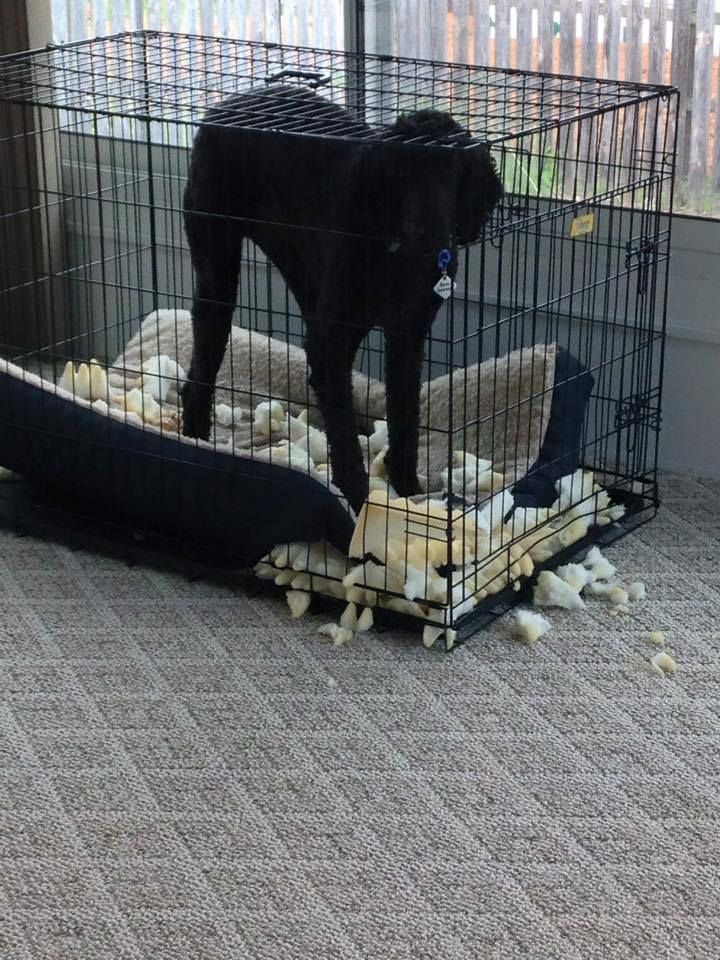
Naughty Moment: Watson once destroyed his bed inside his crate.


Voltaire
Age: 2 years
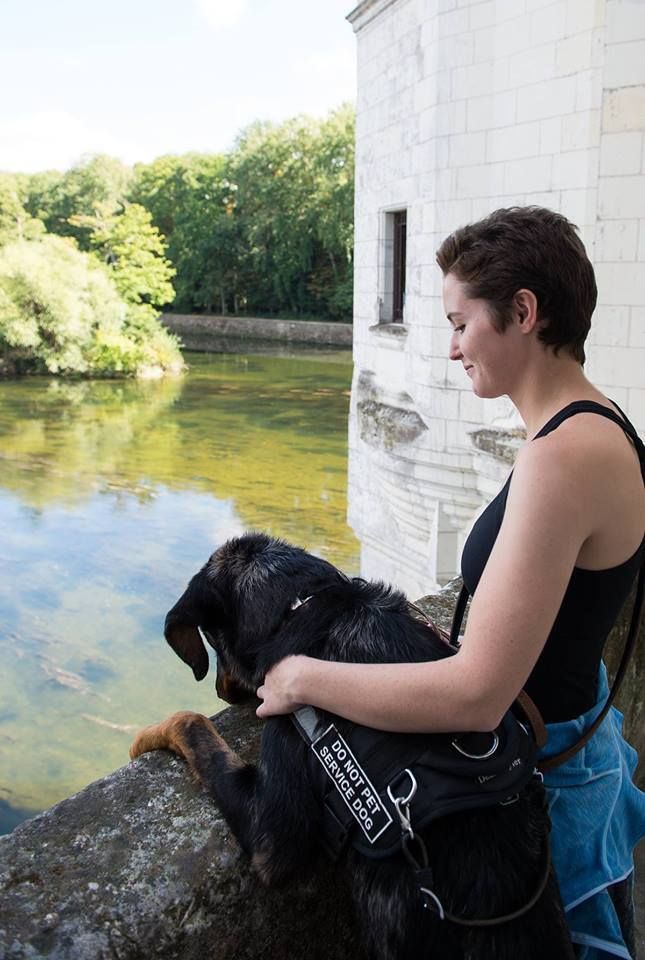
Breed: Beauceron
Status: Fully trained service dog (owner trained)
Job Description: Mobility assistance and medical alerts
Favorite Task: Retrieving objects
Favorite Off-duty Activity: Playing ball, raising puppies, swimming, swimming while retrieving balls
Fun Facts: Voltaire is originally from Burgundy, France, and was able to fit under the airplane seat as an eight-week-old puppy. He is now over 100 pounds!
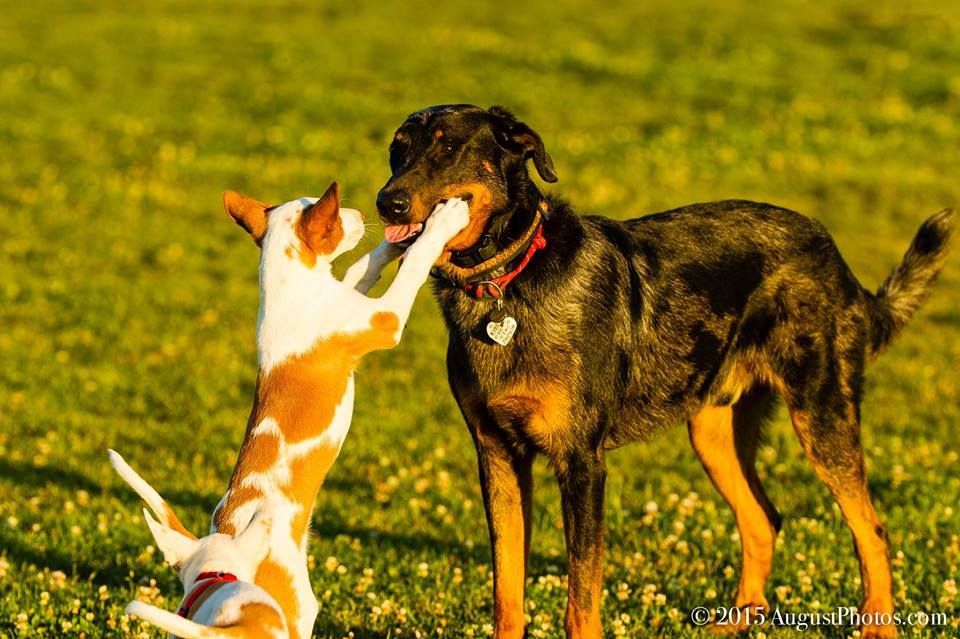
Voltaire with one of "his" puppies


Bruce
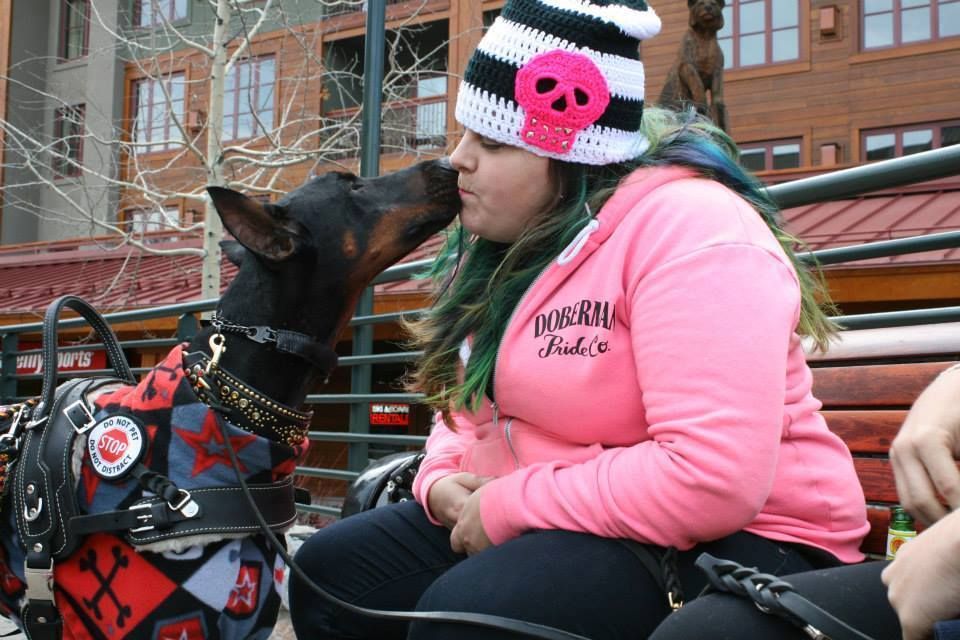
Age: 6.5 years
Breed: Doberman
Status: Fully trained service dog (owner trained)
Job Description: Psychiatric and light mobility assistance
Favorite Task: Deep pressure therapy and interrupting behaviors
Favorite Off-duty Activity: Running on the beach
Fun Fact: Bruce, being a Doberman, is pretty high maintenance when it comes to chilly weather. No matter how many layers he's wearing, though, he's always professional.


Colt