Patrick, GUGP's 2015 Guide Dog Puppy

Patrick, GUGP's 2015 Guide Dog Puppy
GUGP Website
Showing posts with label Doberman. Show all posts

16 February 2016

Dobermans are service dogs, too!

As you might have guessed, my service dog, Kaline, is a Doberman. It's not a breed that is commonly used in the service dog world, although they are gaining some popularity. Working a Doberman can sometimes be a bit different than working a Lab or Golden.

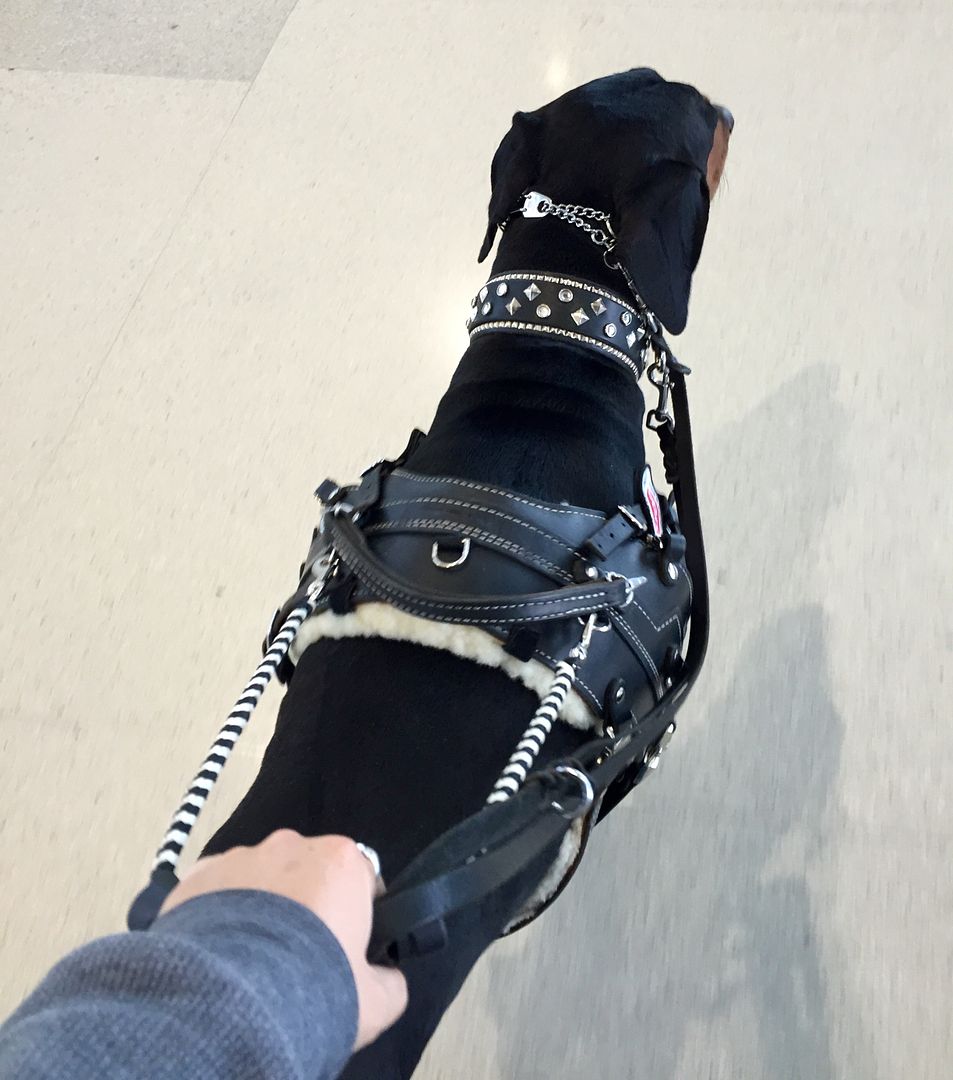
Happily for me, Kaline generally does not get questioned as to his legitimacy due to his breed. We do get a ton of comments along the lines of: "I didn't know THEY used Dobermans as service dogs!" (No word yet on the identity of the mysterious "they.") The one major access challenge we've had as a team, oddly, was because of his custom-made, very professional-looking mobility harness. Apparently it looked like some sort of extreme control device. (Pro-tip: If you try to control a dog's movements with a mobility harness, you will fail. Spectacularly.)
Kaline in his big mobility harness.
Most of the public seems conditioned to think that dogs of a certain (read: medium to large) size wearing service dog gear are "real." This has worked out nicely for me with Juno, a big black mutt who does look a little Labby, and with Kaline. You will get a little more scrutiny with an uncommon breed, as far as behavior goes, but it's generally not extreme. Obviously this is not so handy for handlers of small service dogs, who regardless of breed or impeccable behavior, seem to be viewed largely with suspicion.

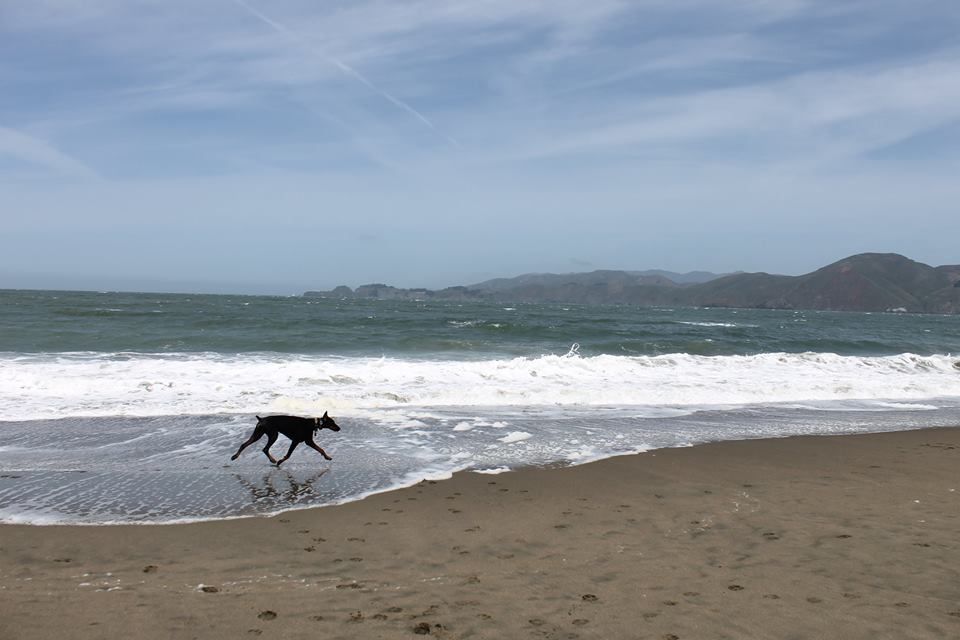
If you love taking advantage of photo opportunities, Dobermans will certainly help you there. Kaline, anyway, is a huge ham. He absolutely loves to pose for photos. Where some dogs (read: Juno) require high-value bribery like string cheese to put their ears up nicely for a picture, all Kaline needs to see is that camera. Once, while he was having an off-duty romp at a beach, Kaline galloped past a guy with a massive camera who was getting pictures of the scene. Kaline screeched to a stop, made a U-turn, and began cavorting in front of the camera, much to the photographer's delight. While I don't usually like to be in photos myself, I love few things more than taking photos of Kaline looking handsome.
This was a completely irresistible photo-op.
The big issue Kaline's breed can cause is some bizarre questions and assumptions from members of the public. If I had a dollar for every time someone tried to begin a conversation by asking, "Does he bite?" Kaline's collar collection would be twice the size it is now. This should go without saying but: 1) all creatures with teeth have the capability to bite, and 2) any dog who is likely to bite without provocation should not, and generally is not, working as a service dog.

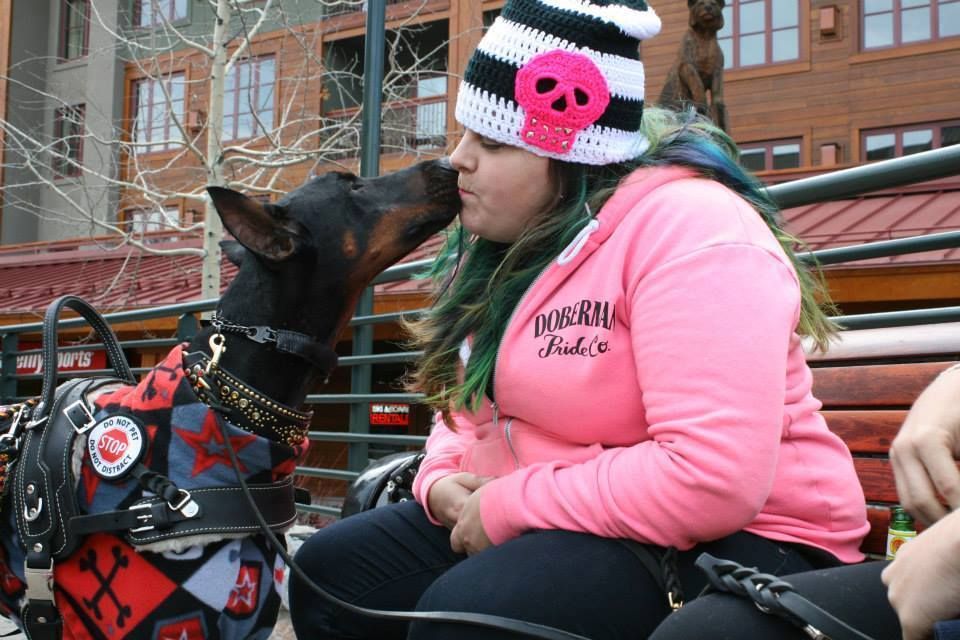
Many children will ask if he's a police dog, which I find completely adorable. Less than adorable is when parents, though usually not on a regular basis, use Kaline's breed to frighten their children away from him. While I appreciate parents who educate their kids about why they shouldn't pet working dogs, it's quite unnecessary to tell the children that if they go up to Kaline he will bite them. Kaline's major failing with kids is he really loves to kiss them. And given that he's at face level with small children, sometimes that can surprise and startle them; this is why he only gets to greet kids taller than he is.
"Of course I would love to pose on this rock!"
And then there are what I like to call the storytellers. Every service dog handler can tell you about the innumerable times someone has interrupted an errand to tell them, "My dog at home looks just like yours! Only a different breed, size, color, and gender. ... She died last night." When you have a Doberman, or other perceived "scary" breed, you get a special kind of storyteller. These are the people who, after they've asked permission to pet your Doberman, will launch into a long and intensely uncomfortable story about how they, or their sister's boyfriend's second cousin once removed, was horribly mauled by a Doberman. That's when you smile and nod—and wish you could just disappear.

You might wonder why Dobermans are so uncommon, given how fantastic they can be as working dogs. Being taller than most Labs and Goldens, they can be a better choice for people who need mobility. They tend to be very in-tune with their handlers' emotions, a plus as long as you can keep that from becoming serious separation anxiety or overprotectiveness. They're incredibly snuggly and delightfully low-maintenance when it comes to grooming. They're also fun to train and quite intelligent, if not so very biddable as Labs and Goldens.
A love of snuggling means Kaline is great at deep-pressure therapy.
However, Dobes tend not to be the best choice for first-time owner-trainers or handlers. They're much more likely to give you the "Make me, why don't you" face than a Lab or a Golden. They can also become overprotective if their handler isn't careful to curb those tendencies. They are a guarding breed, after all, and if the handler allows it, a Doberman will take on the handling of a situation, which can end badly for everyone.

They're also well-known for health problems, despite the tireless work of ethical breeders. One of the major health issues that crops up in Dobermans, as well as the most devastating, is dilated cardiomyopathy (DCM), a heart disorder that is inevitably fatal. It generally crops up in older dogs, and there isn't yet a reliable genetic test for it. By the time a breeder learns that one of their dogs has the condition, the dog is likely to have been bred already.

Dobermans aren't the greatest candidates for service dog programs, in the sense that they tend to bond very strongly to their person, and may have major difficulties shifting that bond to a trainer or trainers, and then again to a new handler. While you can't go on autopilot with any dog and expect it to maintain its training without regular refreshers, doing this with a Doberman can be especially bad.

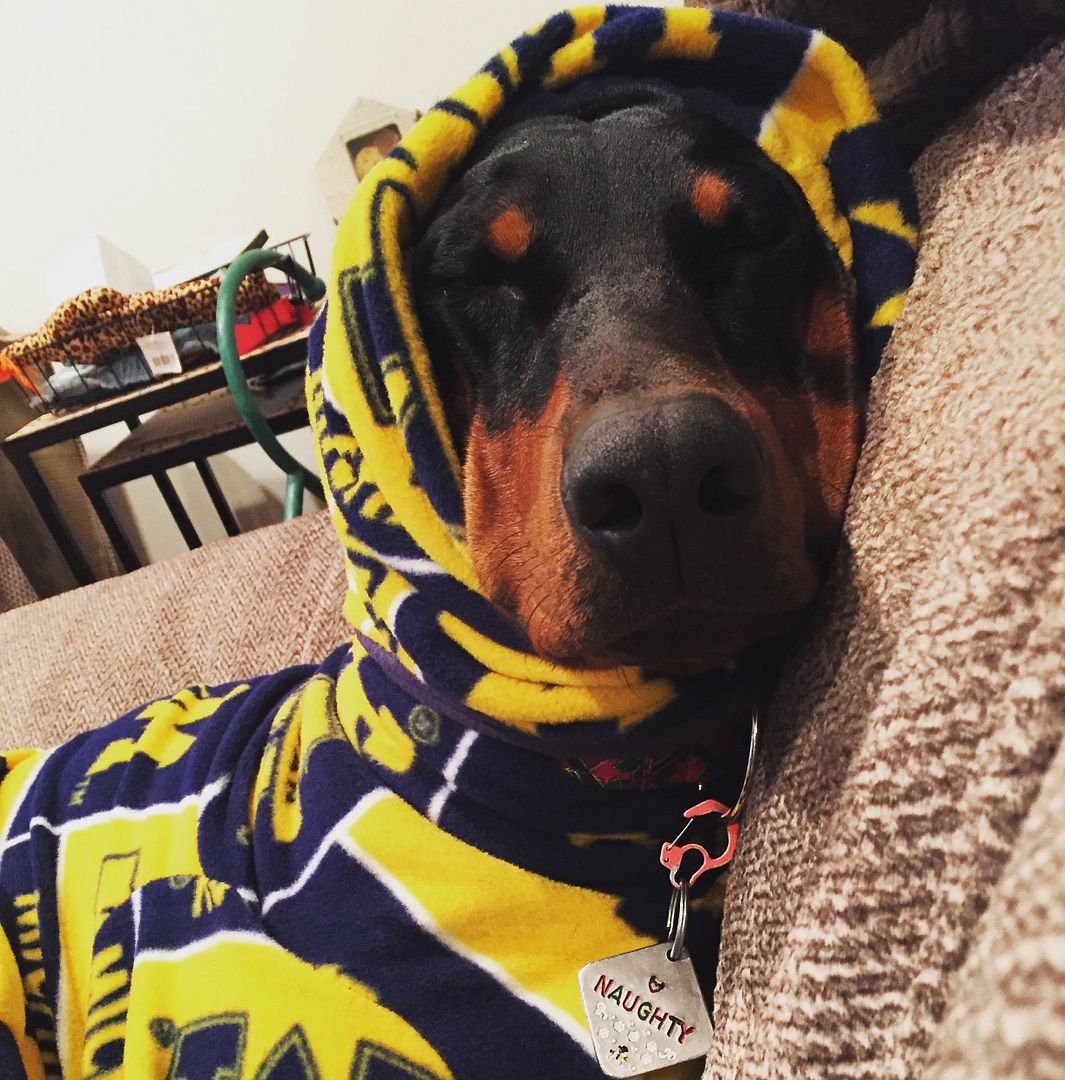
Then you have the diva aspect. Dobermans' shiny, beautiful coats are pretty much only for show. They get cold very easily, and aren't shy in the least about informing you about their distaste for the situation. If I take Kaline to a baseball game in Oakland in the summer, for example, and don't bring his various jackets and his cocoon-blankie, he will shiver dramatically, fix me with utterly miserable puppy dog eyes, and poke me every inning to see if it's finally time to go. Ask him to lie down on a marble floor without his mat, and he'll drop his head into your lap and stare at you mournfully: "But it's so cold on the floor. I couldn't possibly lie down here."
Kaline enjoying summertime at the ballpark.
There's also the fact that almost nothing pre-made will fit them. This works out pretty well for me, since I'm a complete gear-nut and have several friends who make high-quality custom harnesses and other equipment. Nonetheless, it does tend to get expensive, and it was quite sad when the PetJoy vest that I loved to use on Juno just would not fit Kaline, no matter how I adjusted it.
My favorite old vest. Alas.
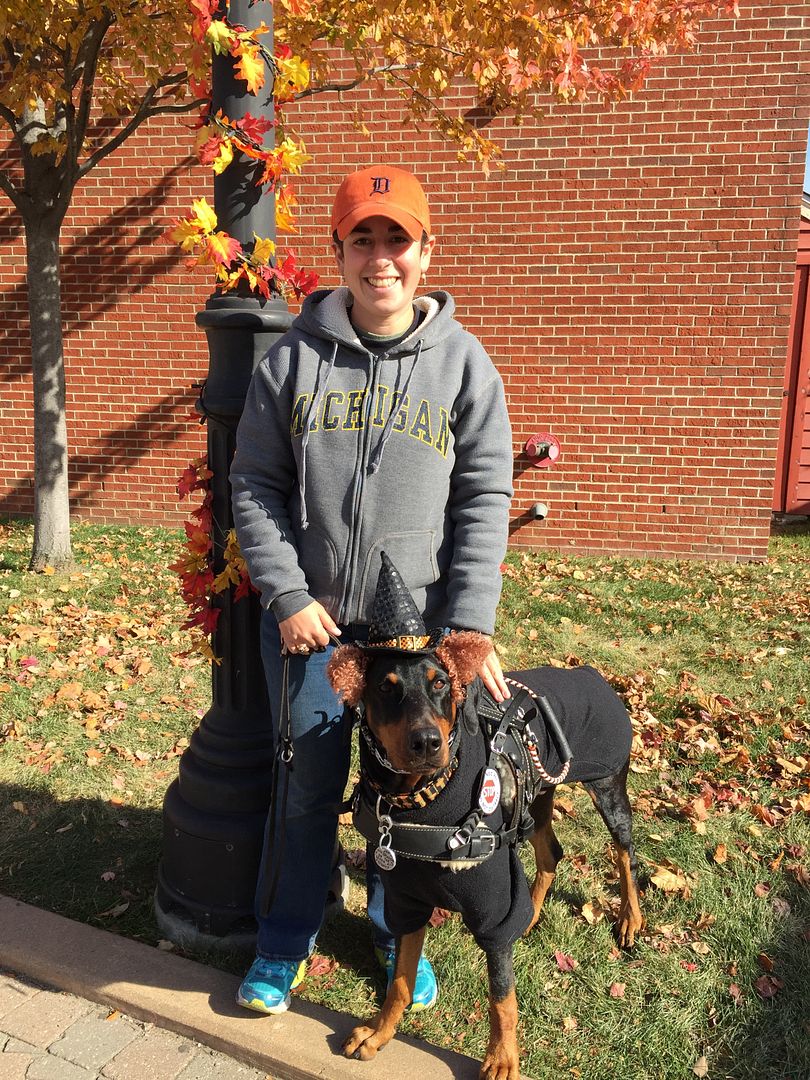
The best part of working a Doberman, when it comes to the general public, is that you attract other Doberman people. I was somewhat prepared for this, having graduated from the University of Michigan. If you wear Michigan gear anywhere in the world, you will inevitably be greeted with cries of "Go Blue!" from perfect strangers who also went to Michigan (we're everywhere). It's very similar with a Doberman. Since Dobes are not terribly common, either as working dogs or pets, lovers of the breed tend to get delightfully enthusiastic when they see one out working as a service dog.
Sometimes we attract both fellow Wolverines and Doberman aficionados.
It's lovely being able to educate receptive people about the versatility and all-around greatness of the breed. Like any breed, they're not for every person. But many times, when someone who has been scared of Dobermans all their life sees one working calmly and quietly in public, that can be just the impetus they need to ask some questions and find out that Dobes aren't scary after all. Kaline, even though his breed as a whole is usually fairly aloof with strangers, loves getting to say hi to new friends, and is so sweet and goofy that he can usually change people's minds about his breed. There are few things more gratifying than opening someone's mind about Dobermans.
Kaline makes a new buddy.

Colt
30 December 2015

Holidays with a service dog

Kaline worked his first Christmas this year. It may seem a little odd, given that he's over three years old. But the holiday season can be a special kind of challenge for service dogs and their handlers.

Juno, my now-retired service dog, has been working Christmas since she became my partner in 2011. It's very different than working in public. You don't always take your dog "dressed," because you're with family and may want to allow more socializing than is normal for your dog when on duty. It's easier to tell strangers to leave your dog alone than well-meaning family members. You can also end up in close quarters for much longer than normal, with more tempting food in easily accessible places. For some dogs, the whole thing can be a little confusing.

Juno doing Serious Work Face even without her vest on.
All of the above assumes that your family and friends accept you and your partner at the holidays. Juno, Kaline, and I are very fortunate in that our family and extended family understand my need for a service dog and don't bar my dog from the festivities. For family events, you have no ADA protection. Family members who don't comprehend the importance and necessity of a service dog can put handlers in an uncomfortable position: Do you leave your crucial medical equipment at home and get to be with family/friends for the holidays? Or do you stand your ground and refuse to attend without your partner, missing out on the traditional family gathering? It's an awful decision to force someone to make at any time, but especially around the holidays.

Kaline's first Christmas was a lot of fun and probably the most hectic one I've experienced with a service dog. Four more people than usual came, and four young children were running around. Gift-opening was kind of chaotic and ended up being overwhelming for me. So in the midst of all the noise and excitement, Kaline calmly did deep pressure therapy on me, ignoring everything going on around him. He also did a great job resisting the tempting morsels all around during dinner.

I kept Kaline in his harness for most of the time we were there, since he has a harder time than Juno transitioning to working behavior while he's out of his gear. Especially at an event like a holiday celebration, it's important to know your dog's individual quirks and set him or her up to succeed as much as possible.

Juno is the kind of dog who doesn't much care about socializing and will dependably pad just behind you no matter what is going on or what she's wearing (or not wearing). The only thing you have to worry about is her wagging her long tail near low tables or children.
Kaline loves to socialize when he's not vested or harnessed. He also adores children, but doesn't quite realize how intimidating his size can be. Two of the kids at Christmas this year haven't had much exposure to dogs, especially big ones, so it was important for Kaline to make a good impression. Happily, his cute little Doberman nub isn't capable of knocking anyone over.
Another reason to keep Kaline geared up was that I just needed more help this year than last year. I have fibromyalgia—it's a problem all the time, but this year about a week before Christmas I began what most people with fibro call a "flareup." You get used to your usual level of pain, and can pretty much fake feeling fine most of the time (provided you still do good self-care). But when you get a flareup, the usual level of pain ratchets up dramatically.

Last year, even though Juno was retired from public work, I let her work Christmas because I knew I wouldn't need assistance that she was incapable of providing (like counterbalance). This year, there was just no way I could have had anything resembling a good time without Kaline's help. He did a lot of counterbalance, which would have hurt Juno.
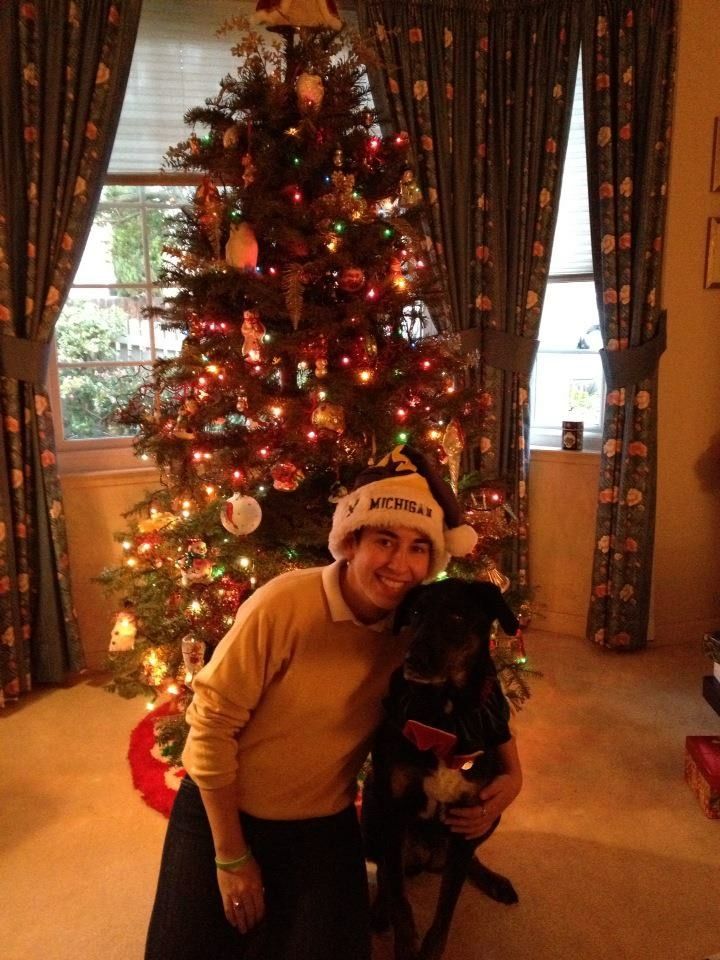
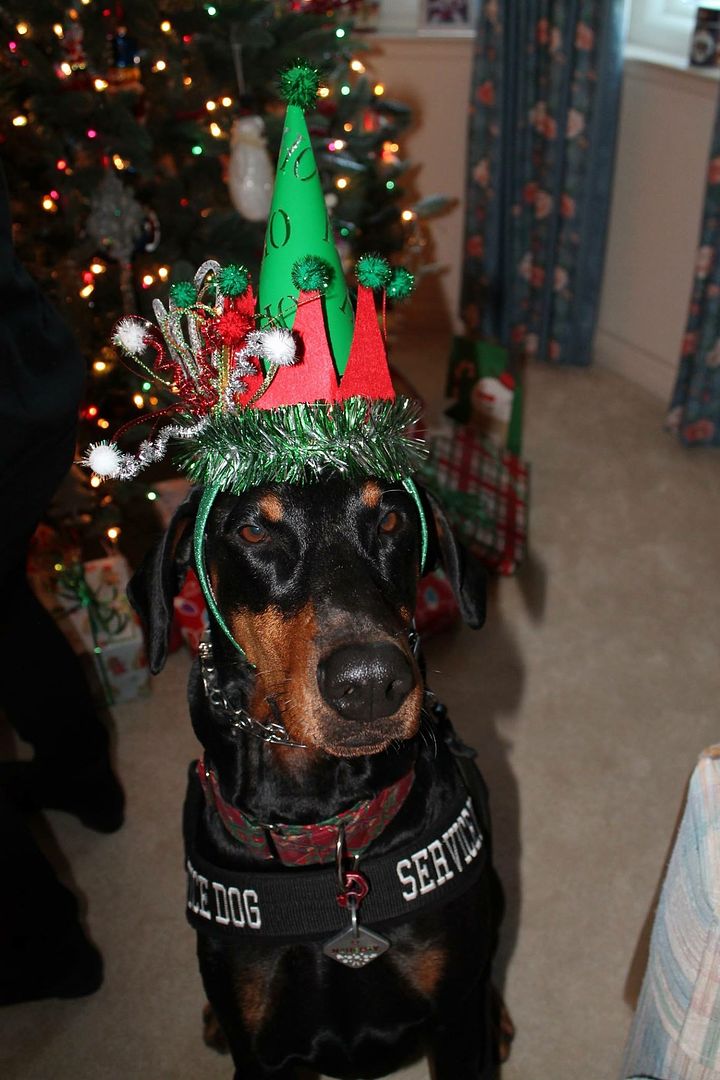
In addition to his work, Kaline posed for silly photos with good grace.

Anytime I had to get up from a couch, he helped me. Walking around mingling, he provided stability. And with the added crowding, his deep pressure work was crucial. Don't get me wrong—these are people I love. I was so happy to see and catch up with everyone who was there. That many people in such a small space, however, especially when it gets loud, can just be too much for me to handle without either my dog's help, or flat out leaving the situation until I can get it back together again.

Kaline did an excellent job. I was really proud of him. Because of him—and my wonderful family—we had a fantastic Christmas. It wouldn't have been possible without his help.
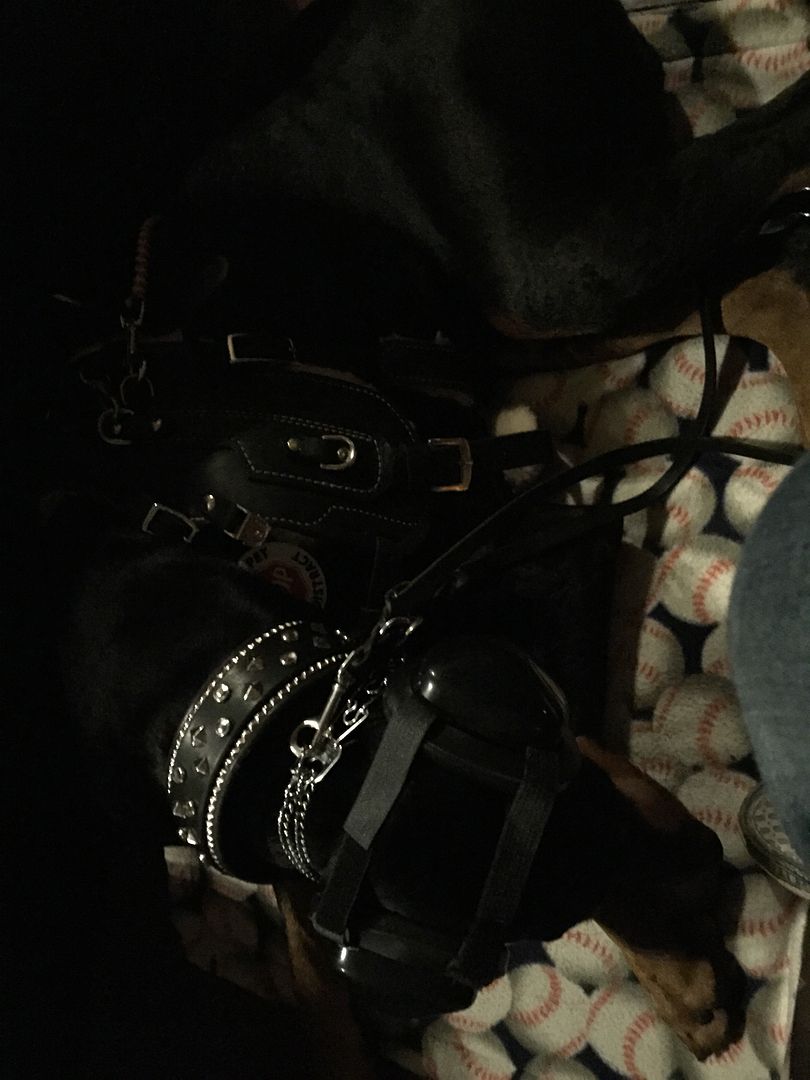
Kaline got some cozy and well-deserved rest after the festivities.


Colt

10 November 2015

Travel with a service dog

The last time I wrote, I talked about flying with a service dog. Now it's time to talk about the actual trip!

A few weeks ago, my service dog Kaline and I headed to Michigan with my mom (retired girl Juno went for a "spa week" of frolicking on beaches with her Auntie Sonja). It's a tradition for us to go to Ann Arbor every fall, where we visit the Henry Ford and Greenfield Village to celebrate Hallowe'en, and attend the University of Michigan's fall musical.

When we landed in Michigan that Tuesday, our first objective was the terminal's service dog relief area. Kaline loves to do momentum pull, which involves some elements of guiding when there are crowds. The Detroit airport is one of his favorite venues. It's always a straight shot from our gate to the relief area, but with many delightful challenges in our way. It's always great fun to see him assess crowd shapes, the placement of clusters of people, and decide which path offers the least resistance to us. According to my mom, the people in our wake were pretty impressed.
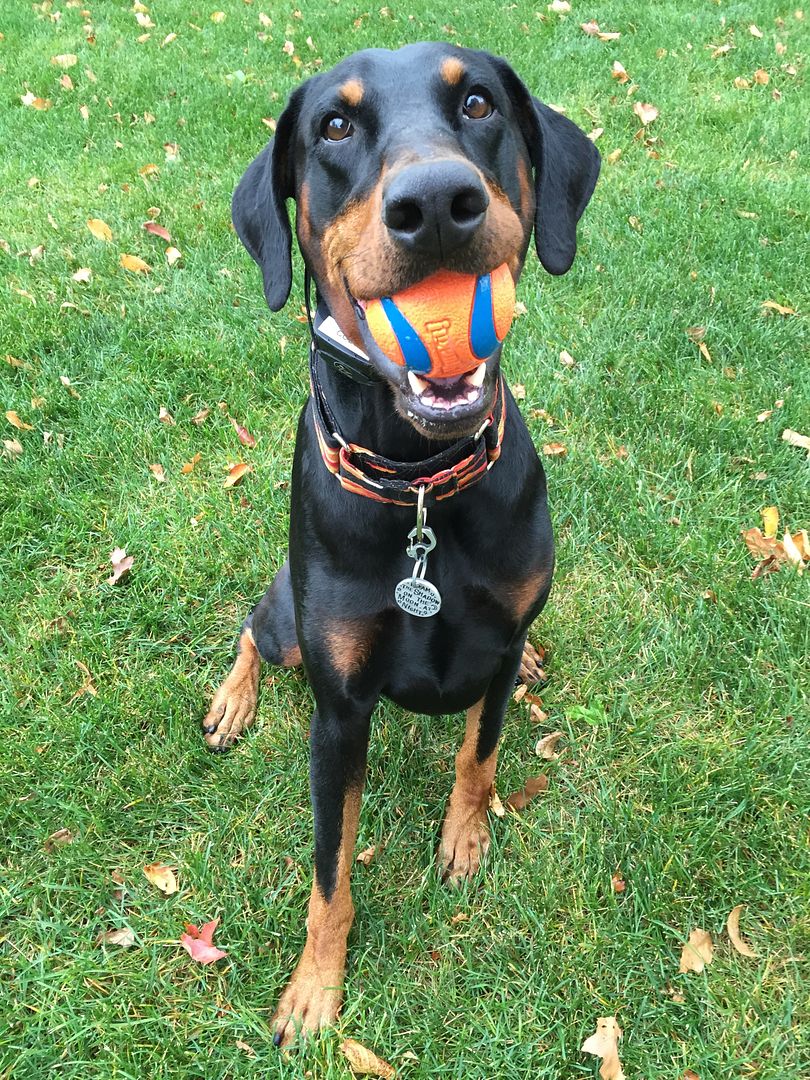
Our hotel in the fall is actually pet friendly, and has a long strip of lawn behind it for running a dog or playing fetch (plus unlimited free poop bags!). After unpacking, the first thing I did was have a game of Chuckit with Kaline out back. Trips are tiring for both of us—at home, he never spends as much time officially on duty as he does when we're traveling. The best way to keep him spunky and fresh, oddly, is by having at least one vigorous game of Chuckit every day. Service dogs really need their time to be ordinary, rambunctious, ridiculous dogs. Kaline runs like a maniac for his Chuckit balls!
One of the best but most challenging parts of our fall trip is the time spent at Greenfield Village in Dearborn. The village is one of the foremost history attractions in the U.S., containing numerous historical buildings as well as replicas that Henry Ford collected from all over the country.
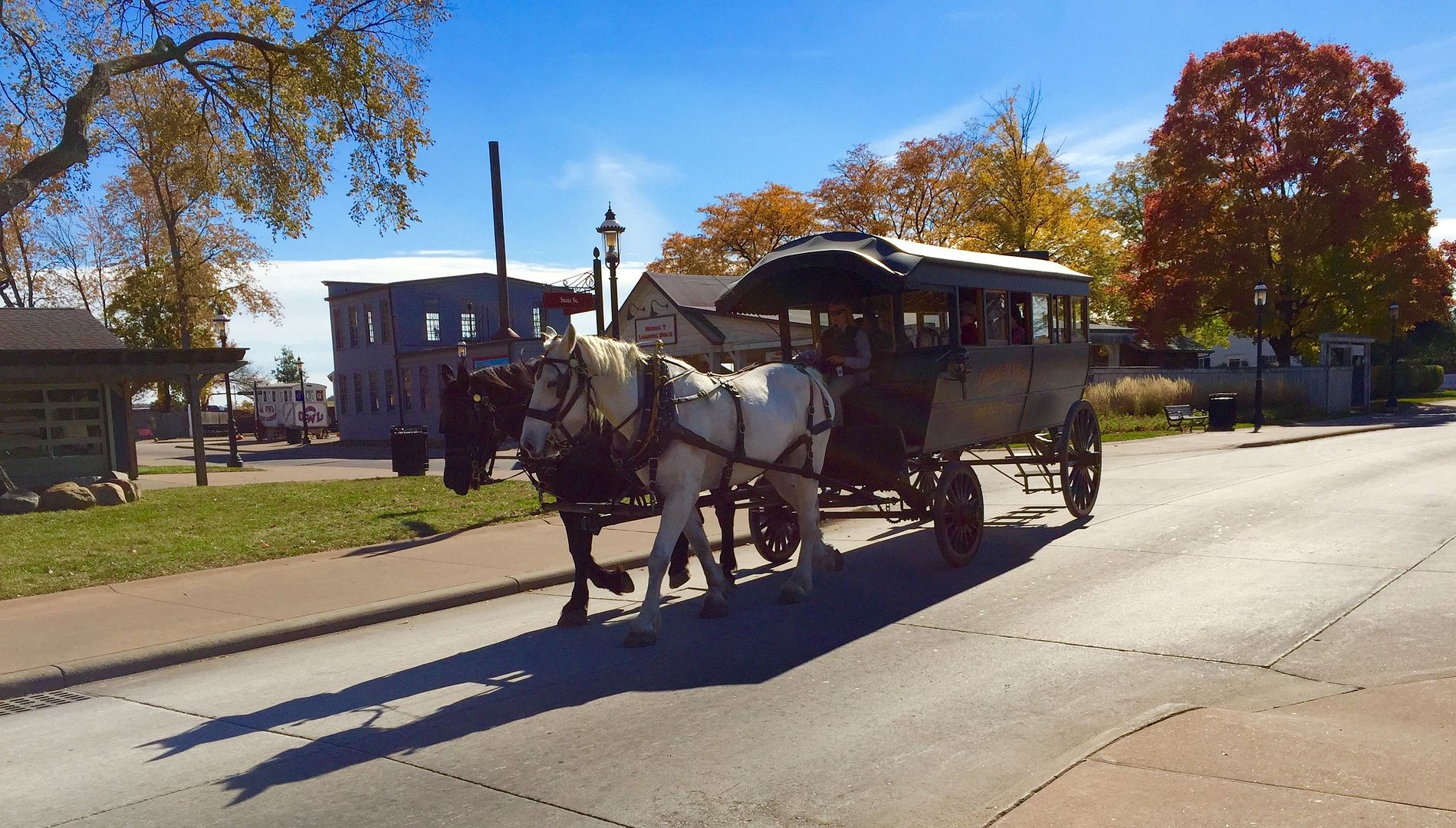
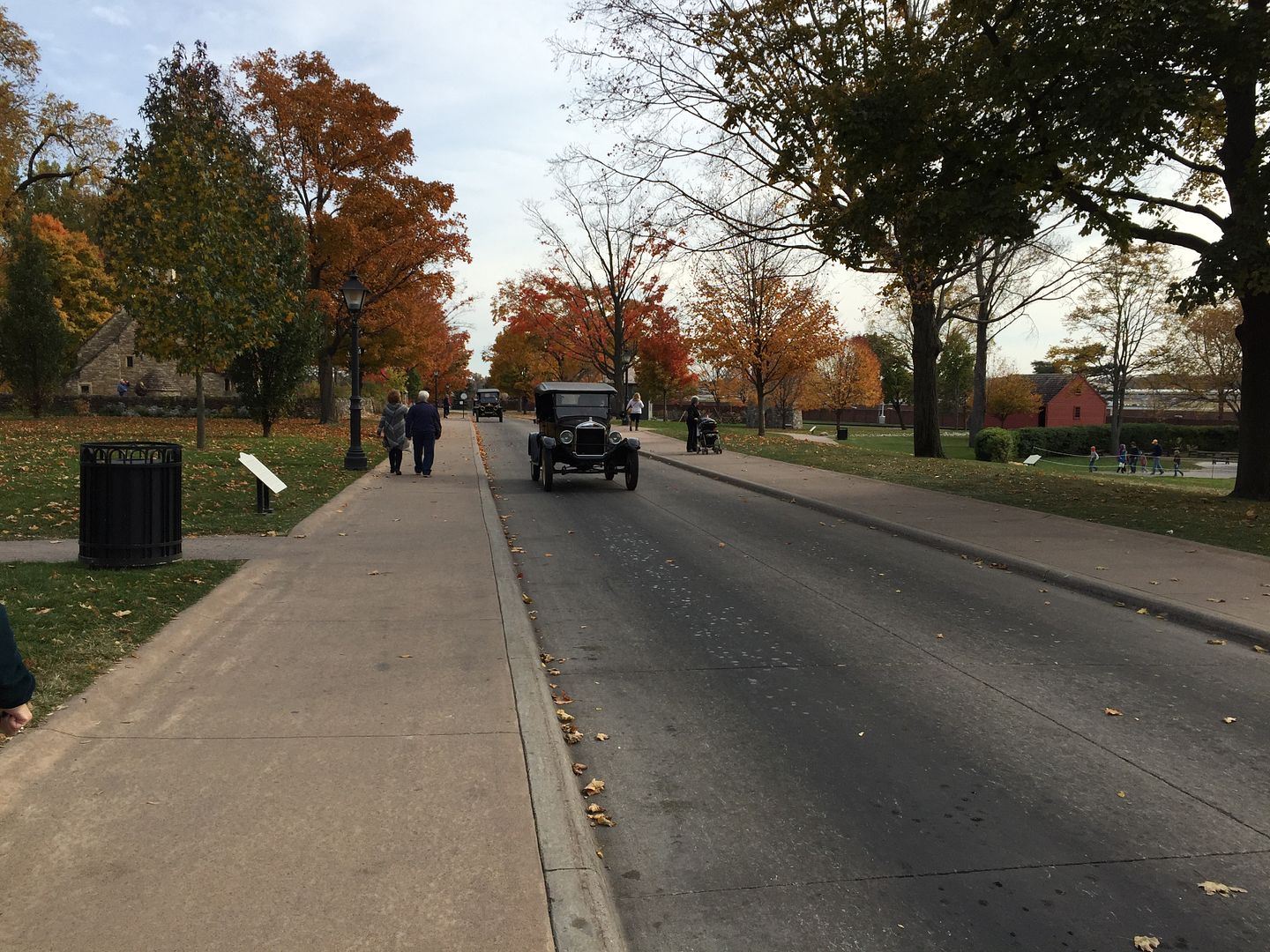
In the village are multiple horse-drawn omnibuses, Model T Fords, antique Ford buses, and steam locomotives. The locomotives are extremely loud, as they have to obey the state laws governing trains, even though they just go in a small loop. Therefore, their whistles have to be audible three miles away. Kaline has had to get acclimated to all of them, and since we are only there twice a year, it usually takes him a little while at the beginning to relax fully in the presence of all these things.
Showing our Hallowe'en spirit! Well, Kaline, anyway.
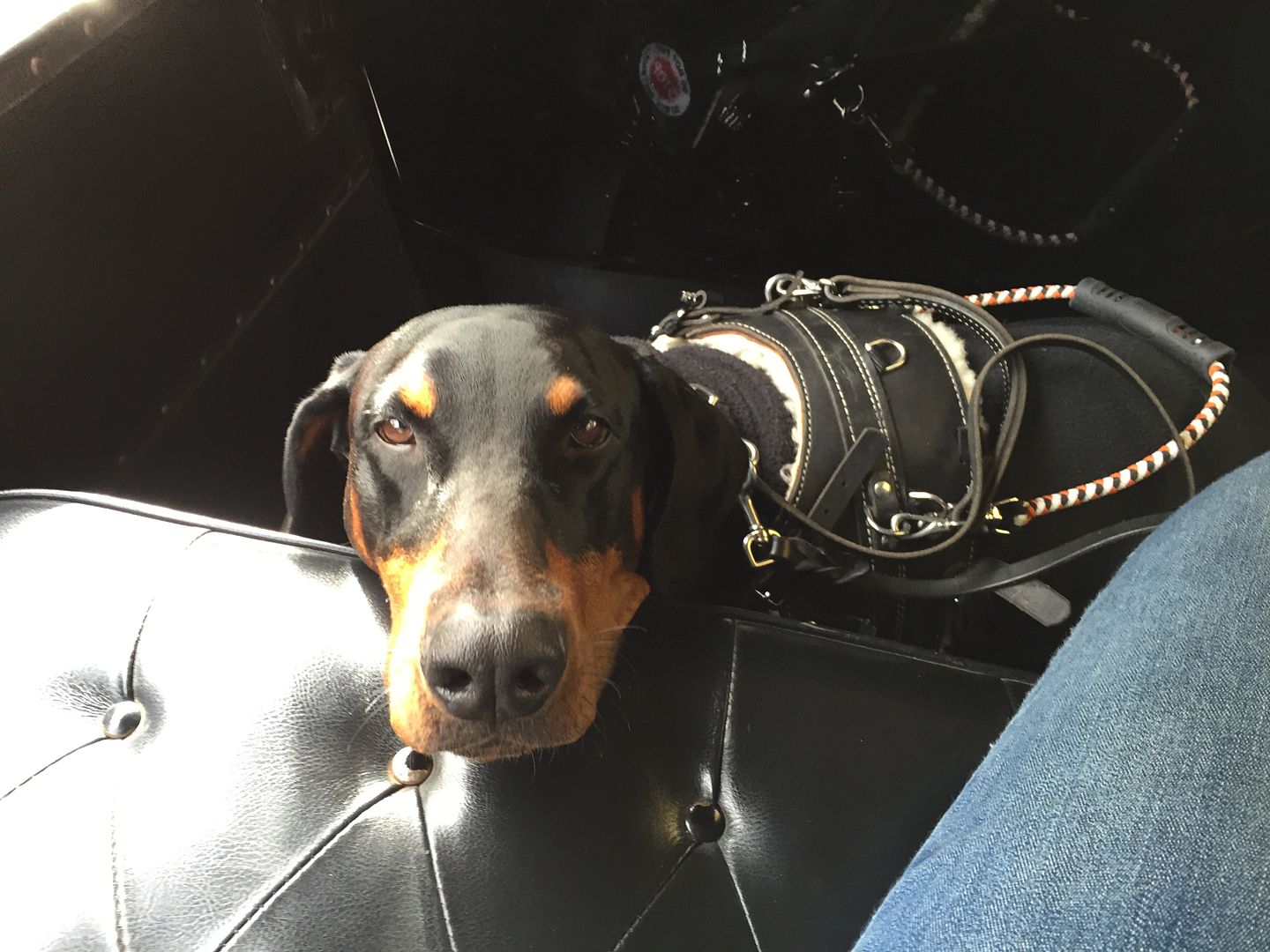
This was the first time he had no acclimation period! He's been going to the village since he was 16 months old, so maybe it's become old hat to him. It's lovely when we see some of the village presenters who remember him from his first trip—they can see how far he's come since then! Half the Model T drivers know him now; when we wait in line to ride them, the driver we're paired with inevitably lets out a joyful cry of "Kaline!" as we're about to get in.
Kaline on the Model T.
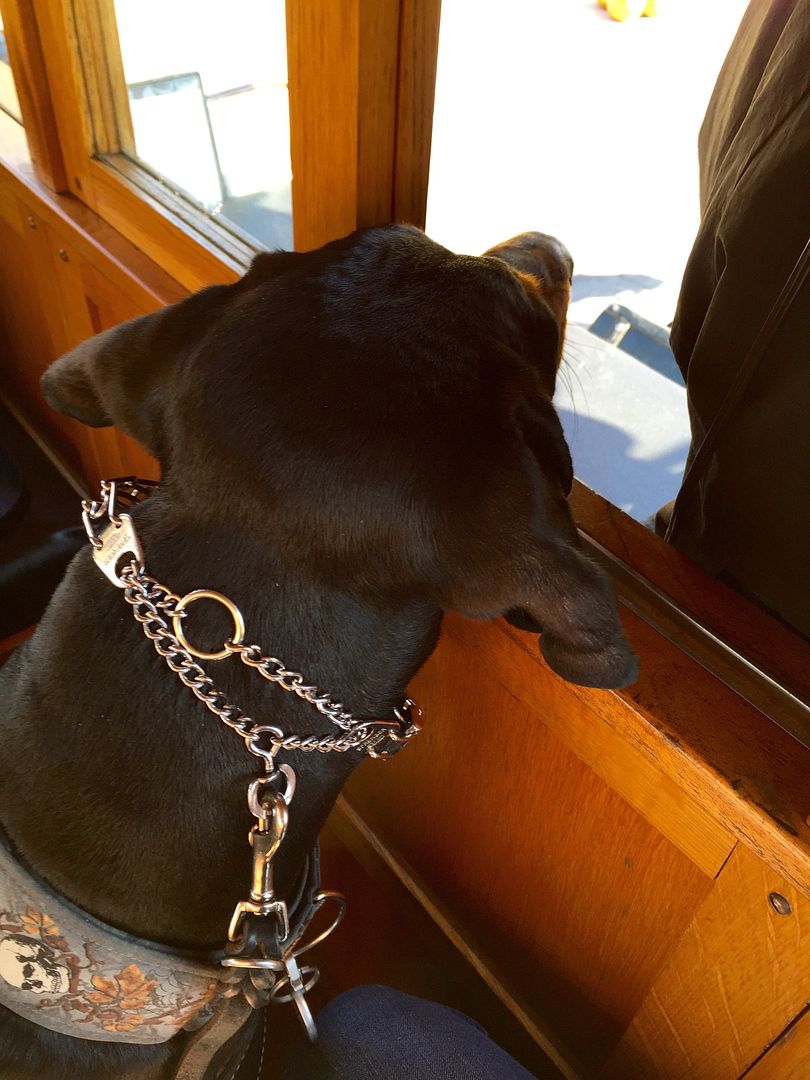
When we were the only ones on a particular horse-drawn omnibus, the driver let Kaline rest his chin on the window between the carriage and her driver's seat as she told us about her team, Wilbur and Orville. On the locomotive, he just objected to holding a down on the icy cold metal floor (can't really blame him). Kaline also enjoys riding the carousel.
Kaline on the horse-drawn omnibus.
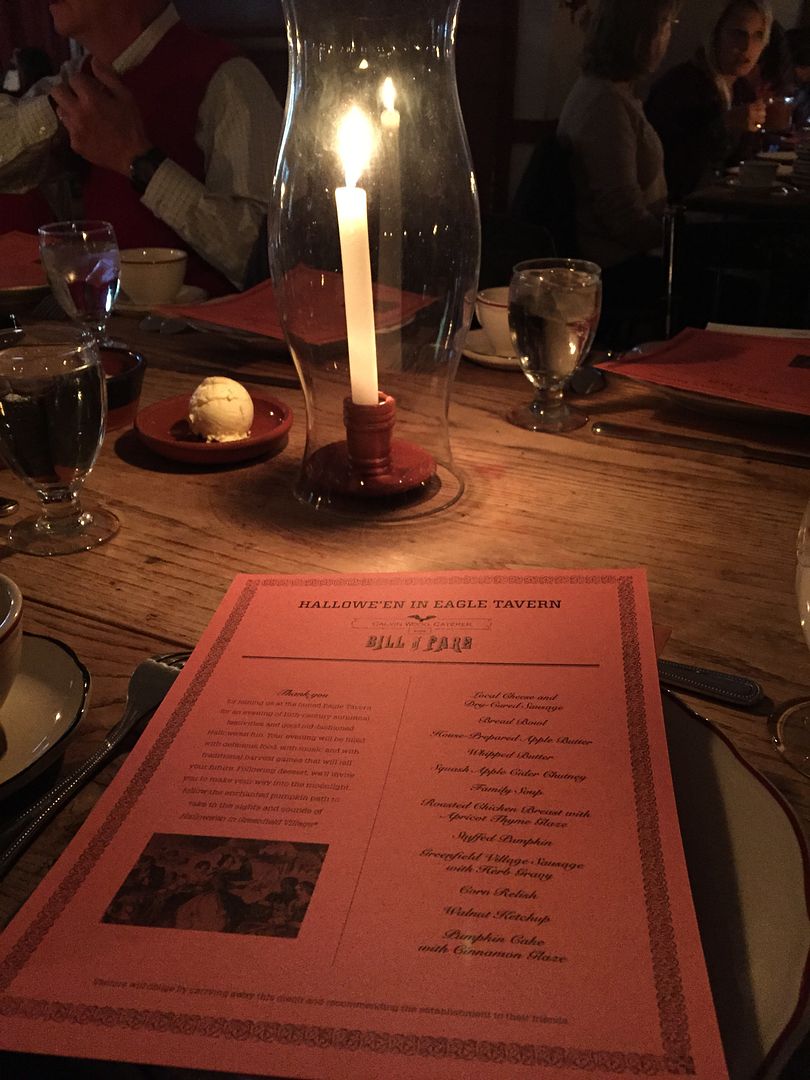
Another challenge of the village in the fall is our favorite special event, Hallowe'en Nights. We go to dinner in the packed Eagle Tavern with about 150 other guests—this year two of our tablemates were dressed as Sweeney Todd and Mrs. Lovett! It's dark, warm, and noisy—no electric lights—and a fiddler goes from table to table taking requests. Kaline was practically invisible, sleeping under the table until it was time to go out into the village.
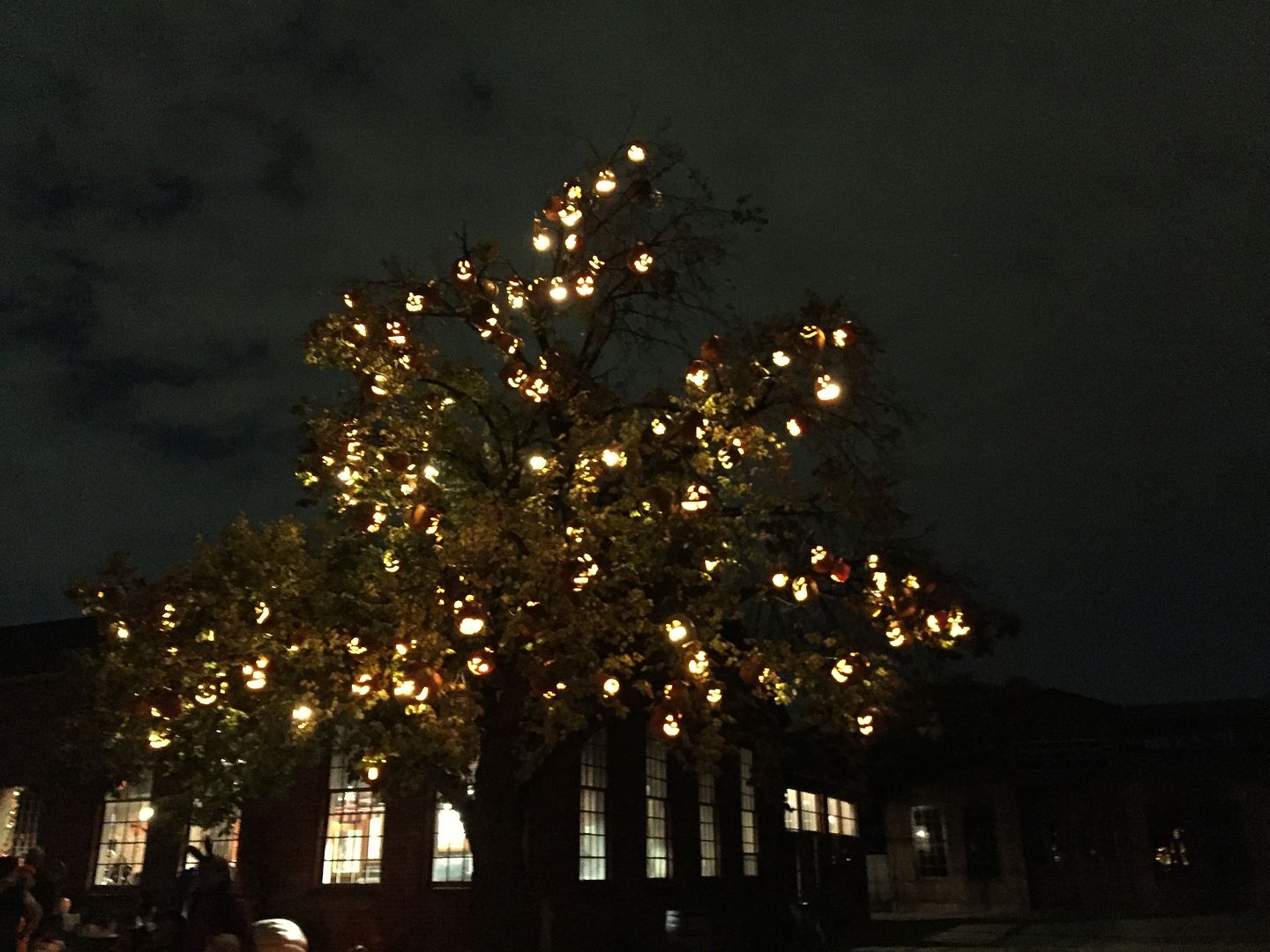
After dinner, we followed a jack-o-lantern-lit path all through the village. There are performances of Hallowe'en stories and songs. Most of the visitors come in costume, and at various points on the path, village presenters greet everyone dressed in elaborate vintage costumes.
It's a lot of moving through crowds in the dark—at one point we walked over a fog-filled, laser-lit covered bridge. There are buildings lit up to look like someone is raising a Frankenstein monster inside; the carousel runs backward to creepy music; and a pair of horses run up and down in a field to reenact the Legend of Sleepy Hollow. It's a lot to ask of a dog, asking them to focus with all that going on. Kaline just did his first one last year.
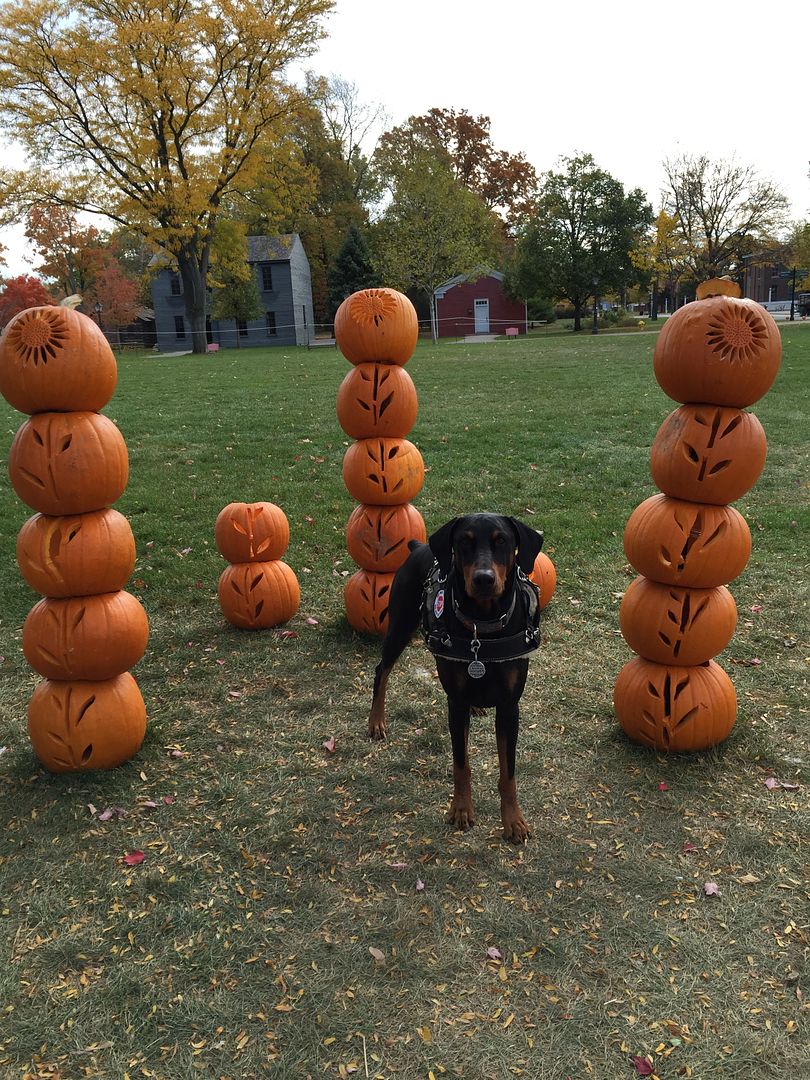
Kaline with some of the hundreds of hand-carved pumpkins.
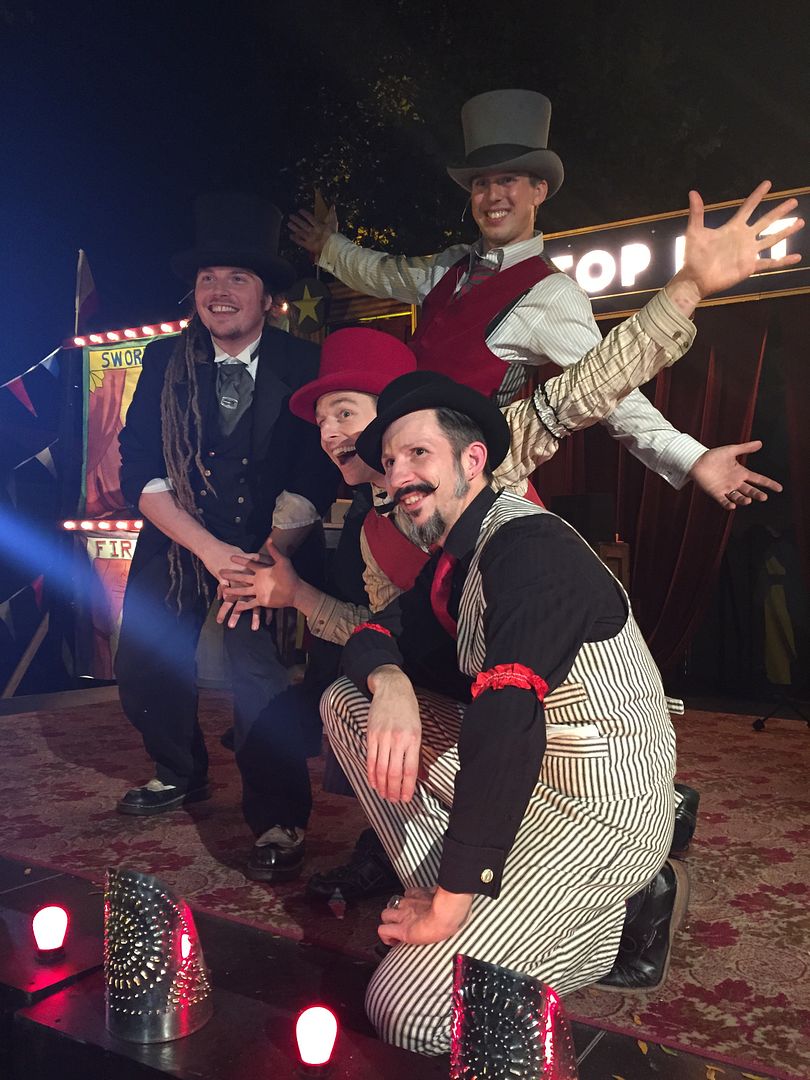
This year, he was totally unfazed by anything, except for one part in the excellent new Top Hat Sideshow where a performer was cracking a flaming whip. Suitable application of treats fixed that promptly. Kaline is quite willing to tolerate bizarre sights and strange loud noises if they mean he's going to get food. And while he doesn't need treats to perform his duties in normal locations, for events like Hallowe'en Nights I always make sure to take some high-value morsels with me. I like to think of it as hazard pay!
Kaline ably led me through all the crowds, ignoring all the costumed distractions. He was fantastic. We ended at the big restaurant, with Kaline passing out under a table while Mom and I shared some delicious mini-donuts and hot chocolate.
The next night was the fall musical, American Idiot, presented by the University of Michigan's amazing musical theatre department. If you've never seen it, it features songs from Green Day's album of the same name, at rock-concert volume. Earplugs for the human theatregoers were handed out at the door; for Kaline, I had purchased Mutt Muffs.
The ear protection for him was a rousing success—while the musical was blaring, I could feel Kaline twitching against my feet, so deeply asleep that he was having a fantastic dream.
It may be called a vacation, but it can actually be more exhausting than regular life, both for me and for Kaline. We are both under more stress than normal, and he is on duty far more than usual. He can go for twenty miles of pack walks and still want to do zoomies when he gets home. But after a full day of work—not just helping me, but maintaining his professionalism at all times—Kaline completely crashes.
Staying super focused in public is one of the hardest parts of being a service dog, sometimes even harder than learning the actual tasks. A good night of sleep restores him, though; it took me about a week after we got home to recover from our awesome and fun-filled vacation! Still, I can't wait to do it again.


Colt
15 September 2015

The variety of service dogs

If you're a fan of Growing Up Guide Pup, you probably know a fair amount about guide dogs and their job. You know that Golden Retrievers and Labradors are the most commonly used breeds, with a smattering of German Shepherds.

However, a service dog can be any size or breed, as long as the dog possesses what it takes to do his or her job. And these dogs can help disabled people with a variety of challenges, not just visual impairment. I'd like to introduce you to some of the amazing dogs whose handlers I've gotten to know in my time in the service dog community.


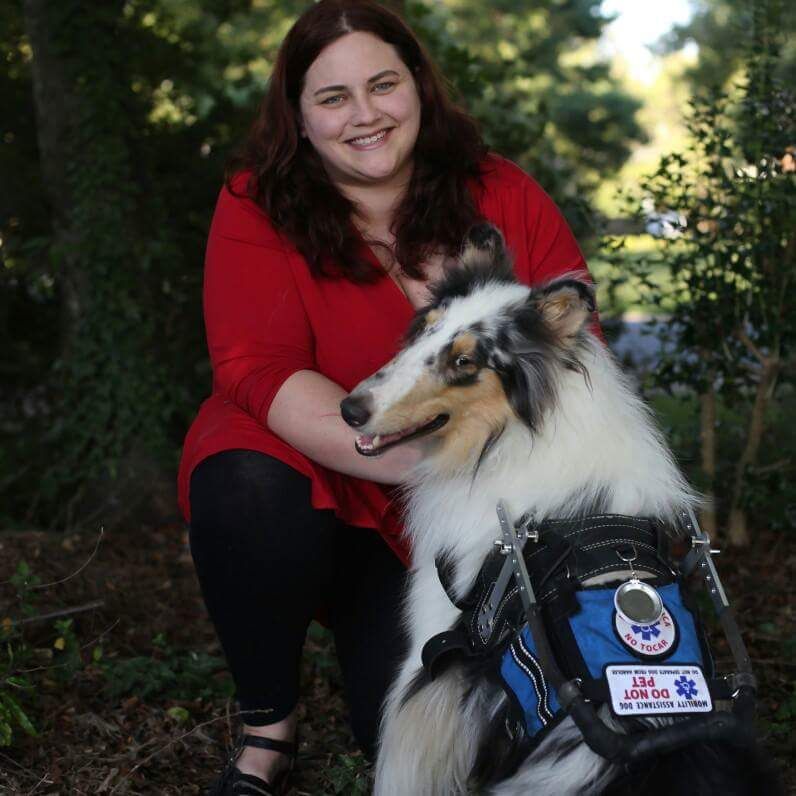
Lucas
Age: 2.5 years
Breed: Rough Collie
Status: Fully trained service dog (owner trained)
Job Description: Mobility and life assistance
Favorite Task: Retrieving objects and getting items off of shelves
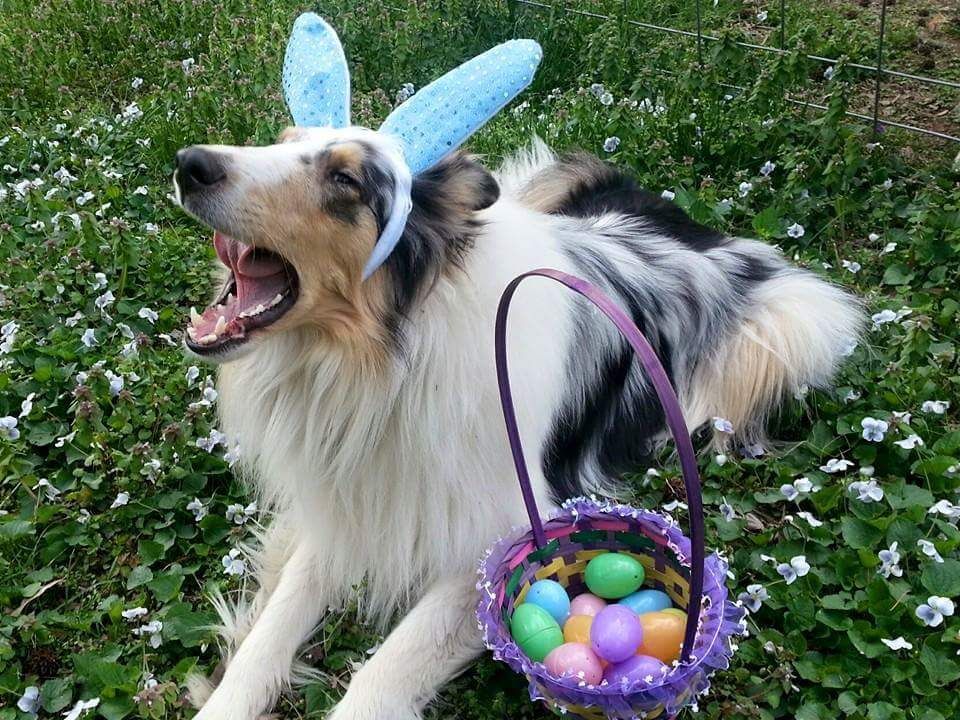
Favorite Off-duty Activity: Roughhousing with his brother, Soren

And, sometimes, dressing up like a bunny.
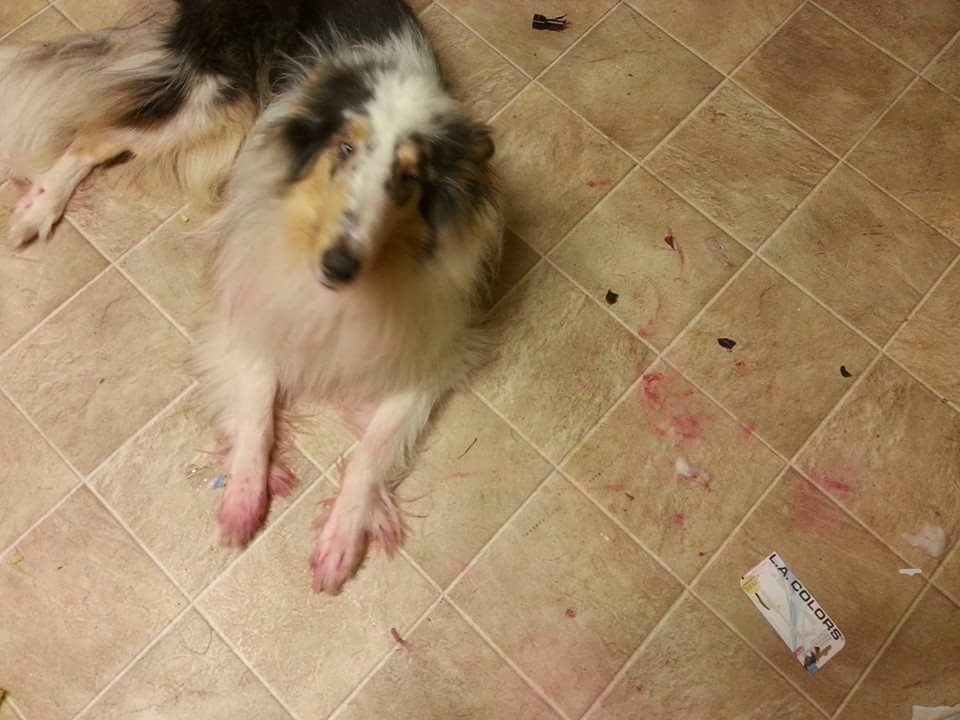
Naughty Moment: Lucas once got into his handler's makeup when he was off duty and chewed up all her lipstick. She came home to him covered in red. When he was younger, he also once ate all of her left shoes. 


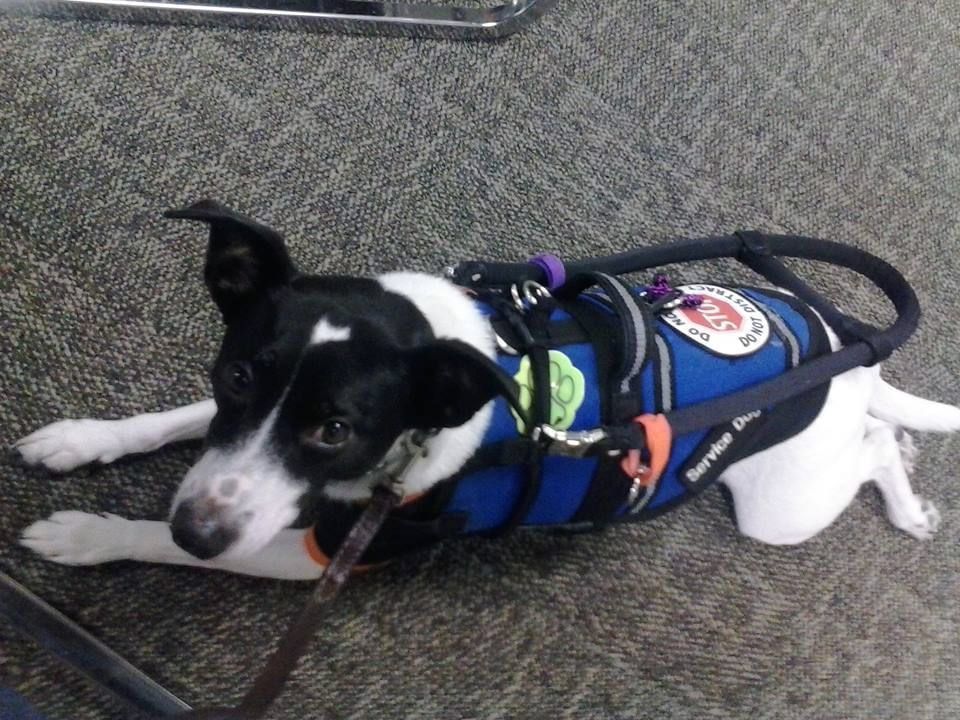
Rico Suave
Age: 9 years
Breed: Papillon
Status: Fully trained service dog (owner trained)
Job Description: Medical alert & psychiatric service dog
Favorite Task: Leading his handler to exits
Favorite Off-duty Activity: Sleeping
Naughty Moment: When Rico was still in training, he once crawled under a bathroom stall divider and scared the woman in the next stall by looking at her. 


Gir
Age: 2 years
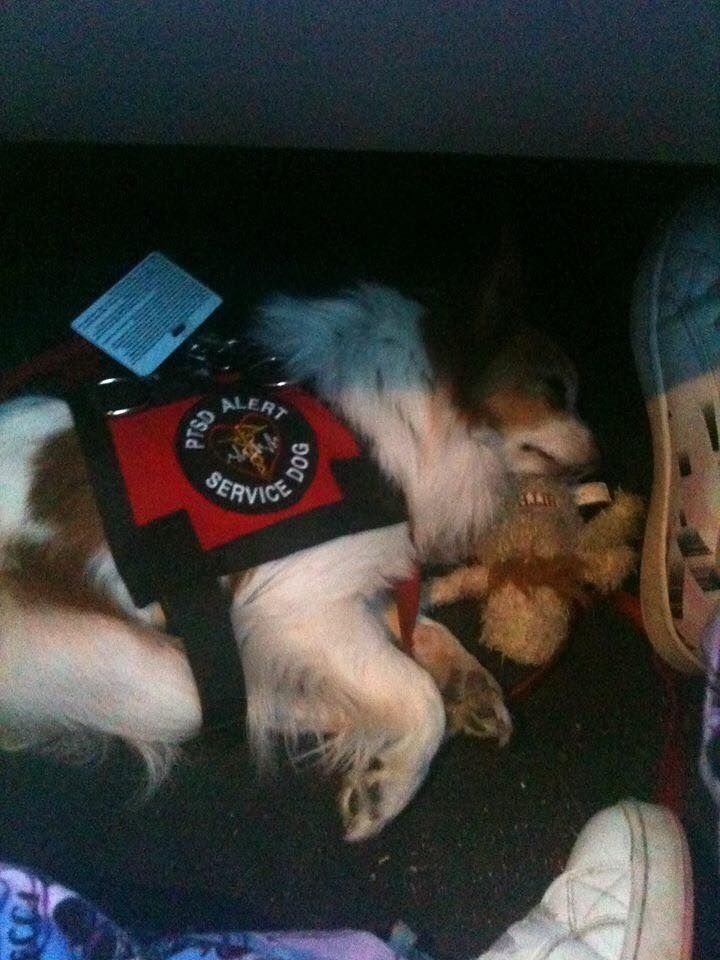
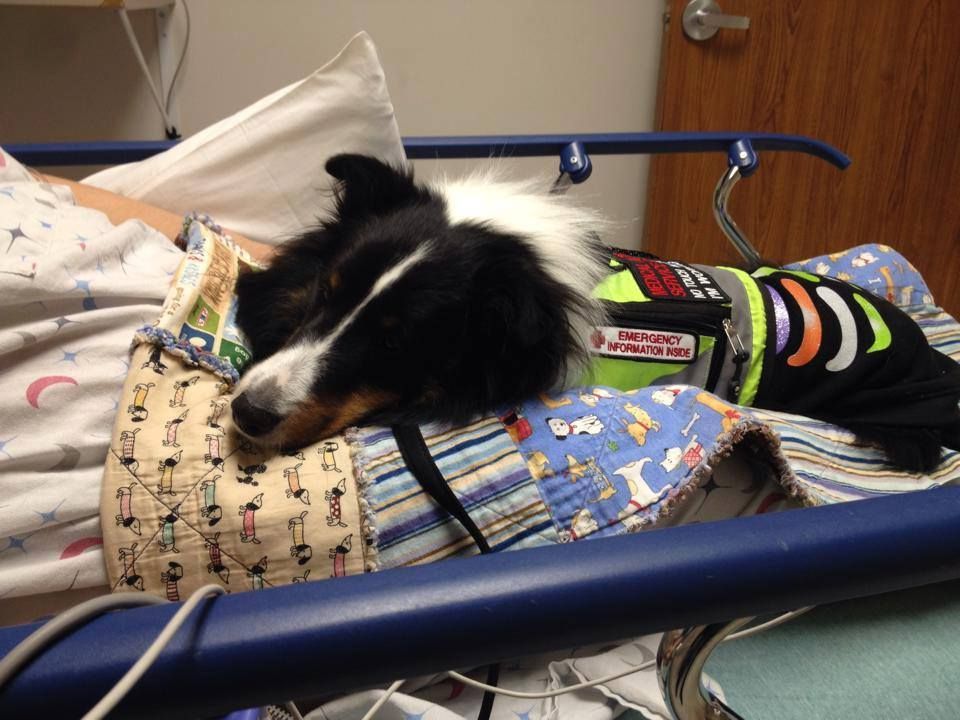
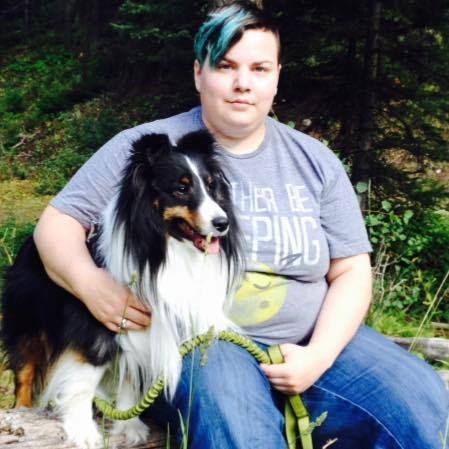
Breed: Shetland Sheepdog
Status: Fully trained service dog (owner trained)
Job Description: Medical alerts (including blood sugar, migraine, low blood pressure, and heart rate spikes). Psychiatric work such as deep pressure therapy, interrupting self-harm behavior, and response to panic attacks.
Favorite Task: Engaging with his handler to interrupt flashbacks
Favorite Off-duty Activity: Playing with a flirt pole
Naughty Moment: Gir enjoys counter-surfing for goodies.


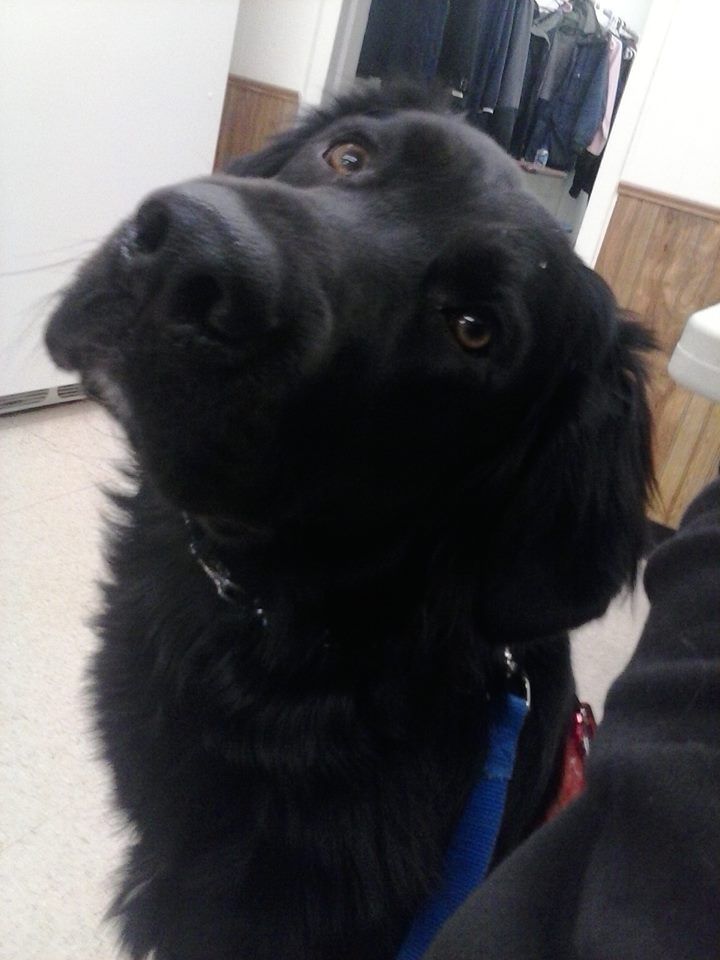
Rory
Age: 2
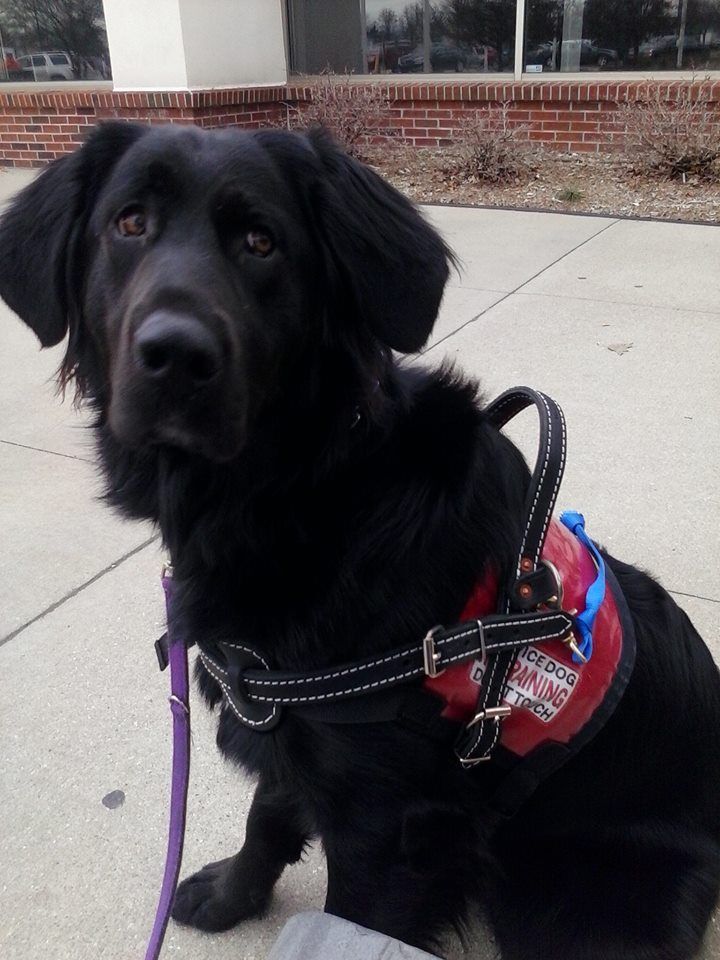
Breed: German Shepherd/Newfoundland mix
Status: Service dog in training (owner trained)
Job Description: Mobility support and psychiatric tasks
Favorite Task: Retrieving objects
Favorite Off-duty Activity: Swimming


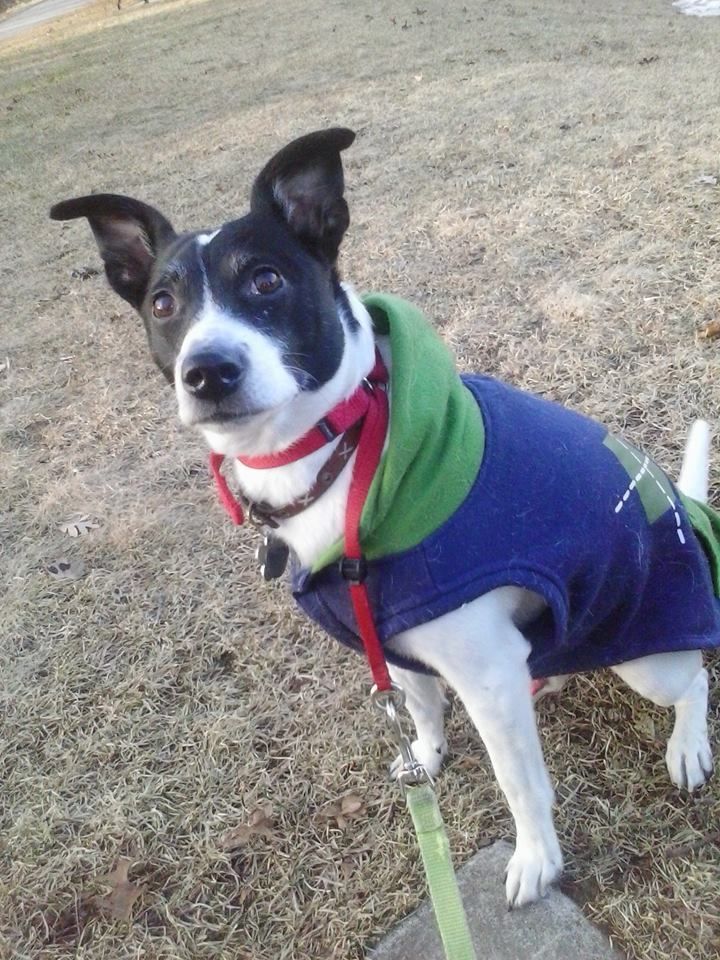
Parker
Age: 8 years
Breed: Rat Terrier mix
Status: Fully trained service dog (owner trained)
Job Description: Psychiatric support, minor mobility tasks, retrieving
Favorite Task: Searching rooms before his handler enters
Favorite Off-duty Activity: Killing and unstuffing squeaky toys


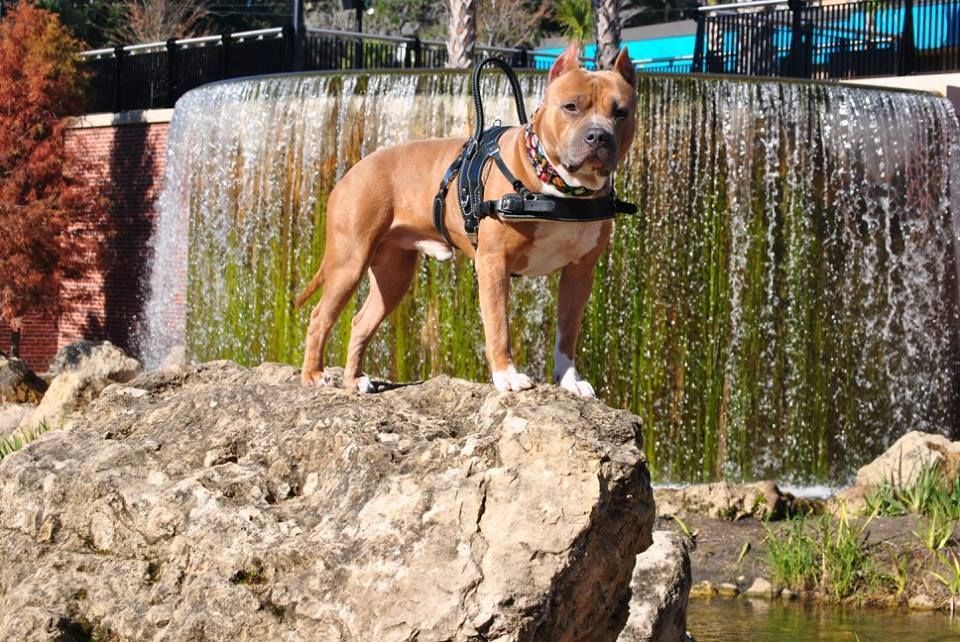
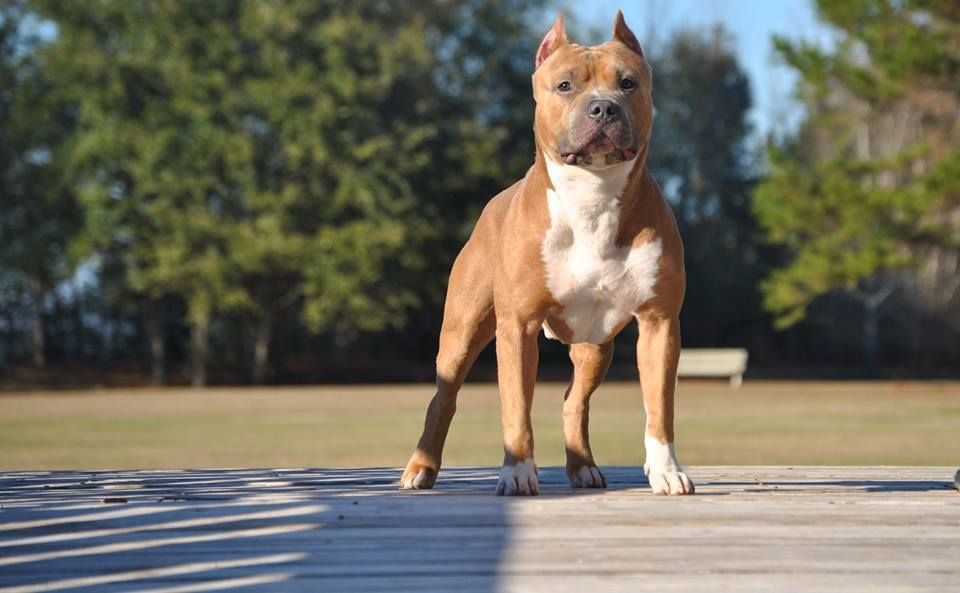
Doogan (Full Name: URO1 CH'PR'PPK's Sir Doogan Gooseberry CGC TT)
Age: 3.5 years
Breed: American Pit Bull Terrier
Status: Fully trained service dog (owner trained)
Job Description: Medical alert and mobility assistance
Favorite Task: Carrying all the things, no matter what the objects happen to be
Favorite Off-duty Activity: Posing for the camera and strutting his stuff in the show ring


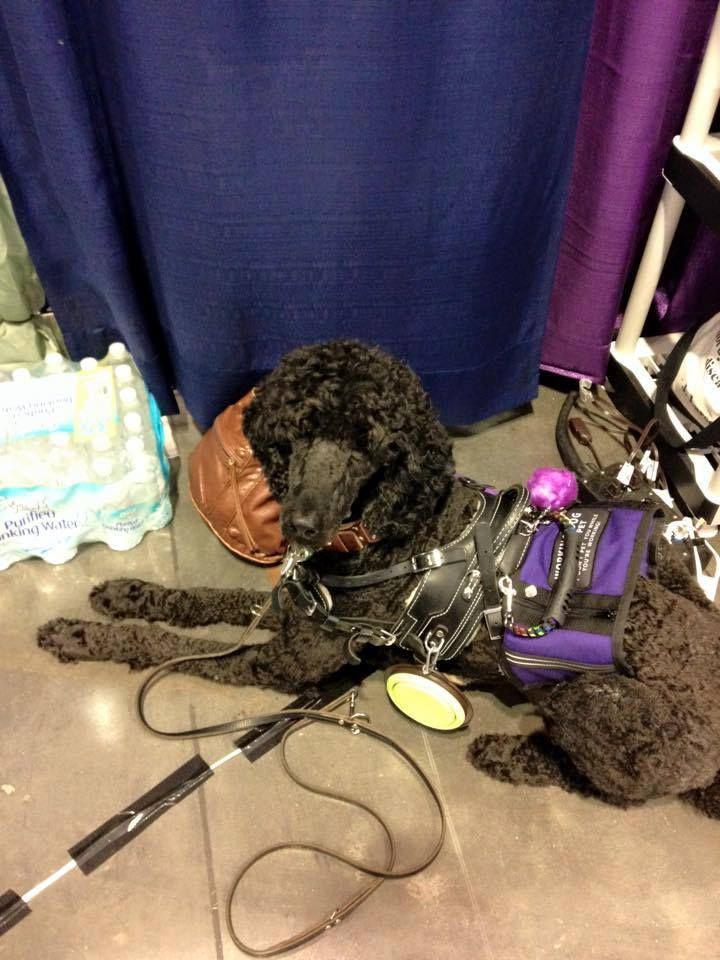
Watson
Age: 2.5 years
Breed: Standard Poodle
Status: Fully trained service dog (owner- and program-trained by Dreamrun Dog Training LLC)
Job Description: Mobility/balance, medical alert & response, anxiety alert & response
Favorite Task: Finding "grandma" and picking things up
Favorite Off-duty Activity: Playing with his frisbee, flirt pole, or tennis ball launcher
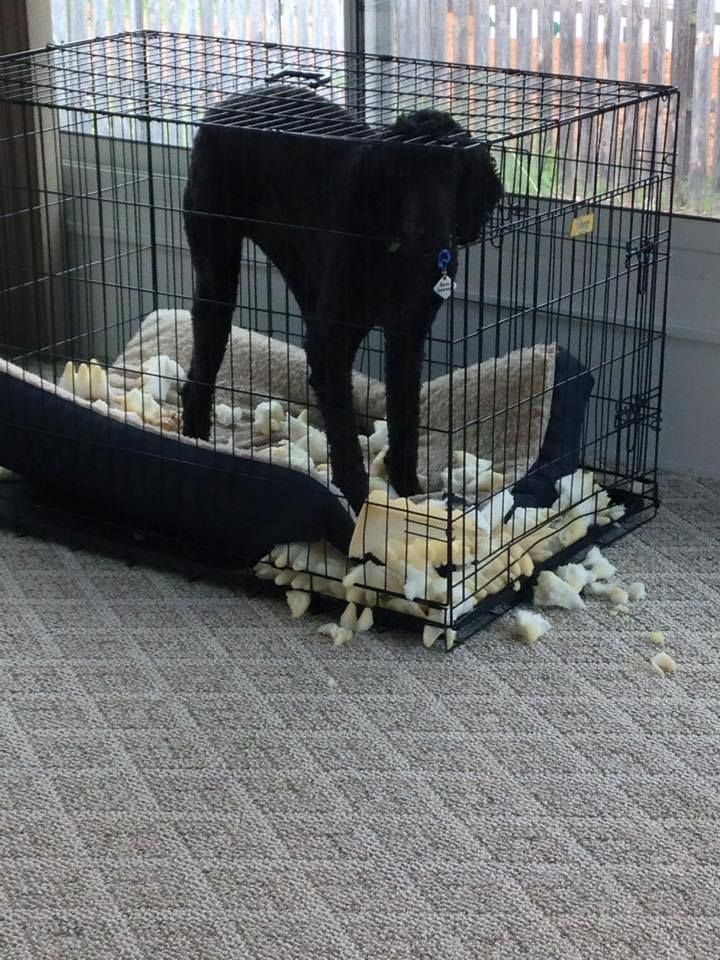
Naughty Moment: Watson once destroyed his bed inside his crate.


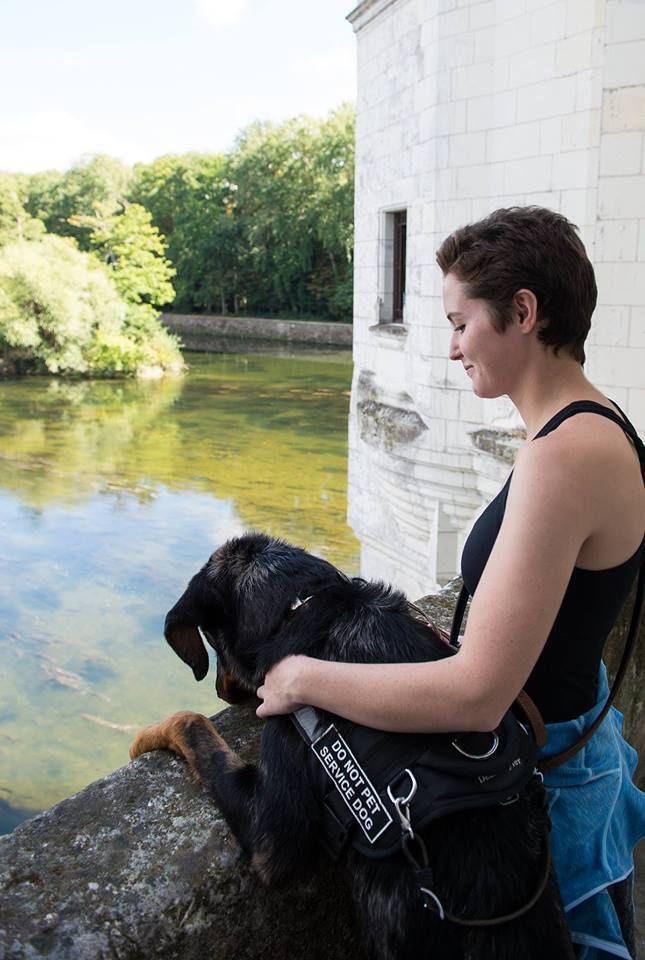
Voltaire
Age: 2 years
Breed: Beauceron
Status: Fully trained service dog (owner trained)
Job Description: Mobility assistance and medical alerts
Favorite Task: Retrieving objects
Favorite Off-duty Activity: Playing ball, raising puppies, swimming, swimming while retrieving balls
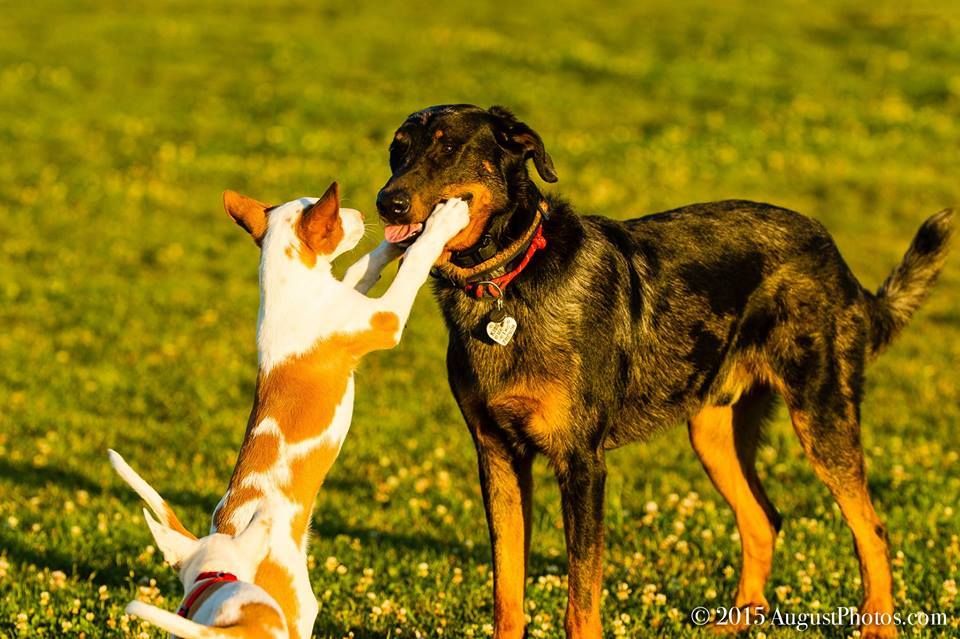
Fun Facts: Voltaire is originally from Burgundy, France, and was able to fit under the airplane seat as an eight-week-old puppy. He is now over 100 pounds!
Voltaire with one of "his" puppies


Bruce
Age: 6.5 years
Breed: Doberman
Status: Fully trained service dog (owner trained)
Job Description: Psychiatric and light mobility assistance
Favorite Task: Deep pressure therapy and interrupting behaviors
Favorite Off-duty Activity: Running on the beach
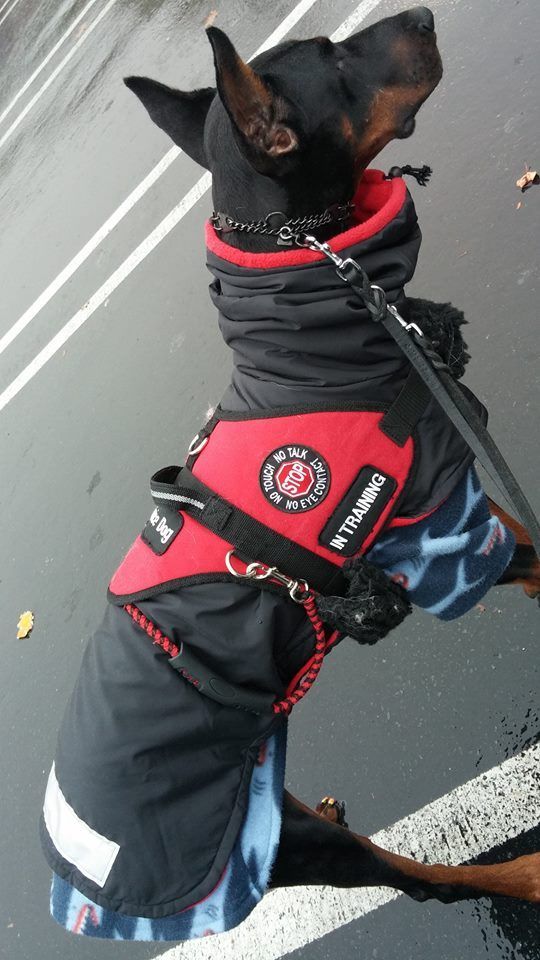
Fun Fact: Bruce, being a Doberman, is pretty high maintenance when it comes to chilly weather. No matter how many layers he's wearing, though, he's always professional.


Colt